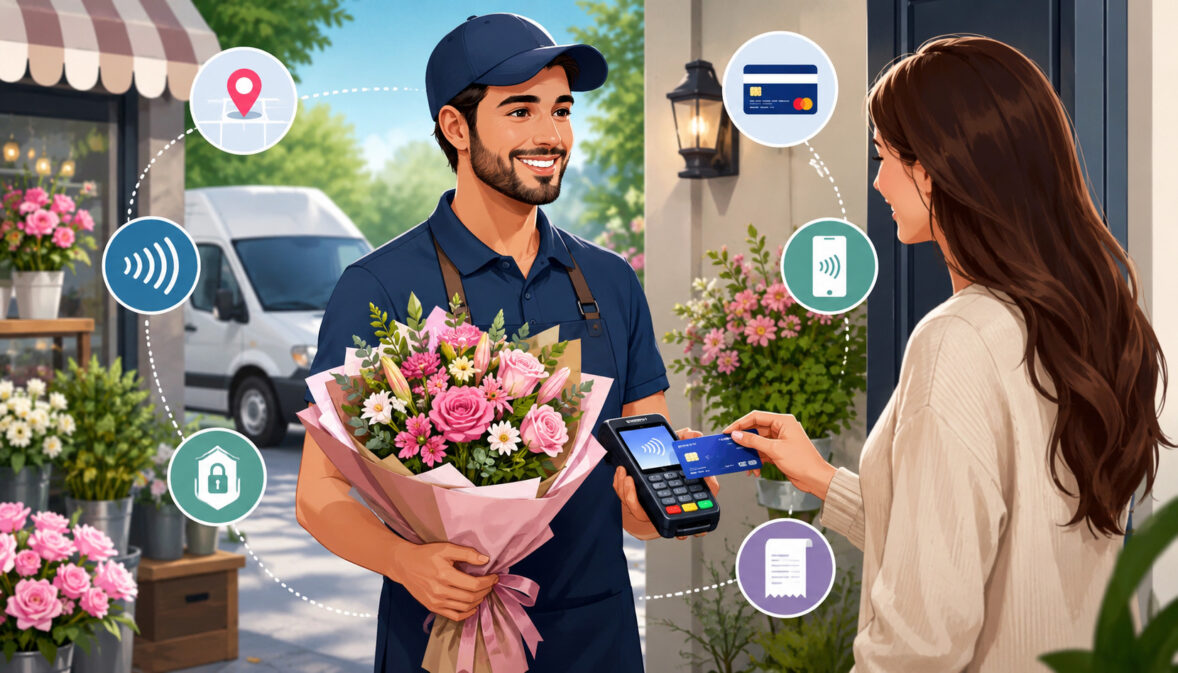
Flower delivery has always depended on timing, trust, and convenience. A customer may order sympathy flowers by phone, request a birthday bouquet online, add chocolates during curbside pickup, approve a wedding balance, or ask for a last-minute delivery upgrade. In each of these moments, payment needs to be simple, secure, and easy to confirm.
That is why mobile credit card readers for flower delivery services have become useful tools for many floral businesses. Instead of limiting payment acceptance to the front counter, a mobile reader allows a florist, delivery driver, event team member, or seasonal seller to accept card payments wherever the customer and order meet.
For flower shops, payment activity often happens across several channels. A single business may handle walk-in sales, online orders, phone orders, subscriptions, corporate deliveries, event invoices, wedding deposits, pop-up sales, and delivery payments. Mobile readers help connect these payment moments to the broader order workflow.
They can also reduce friction for customers. Many people no longer carry cash, and they may prefer chip cards, tap-to-pay cards, digital wallets, or NFC payments. A portable reader makes the payment experience feel familiar, whether the customer is at home, at a venue, at a pickup curb, or buying flowers at a temporary stand.
For florists, the benefits go beyond convenience. Mobile card readers can support better payment tracking, reduce unpaid balances, help drivers stay on schedule, improve delivery confirmation, and make receipts easier to send.
They can also support better reconciliation when mobile payments are matched to orders, routes, drivers, invoices, refunds, and daily batch reports.
This guide explains how mobile credit card readers work, when they make sense for flower delivery payment processing, what fees and security controls to review, and how flower shops can choose a setup that fits their business model.
What Are Mobile Credit Card Readers for Flower Delivery Services?
Mobile credit card readers are portable payment devices that allow florists to accept card payments away from a fixed checkout counter. These readers usually connect to a smartphone, tablet, mobile POS device, or payment app. Some are small Bluetooth readers, while others are handheld terminals with built-in screens, receipt options, and cellular connectivity.
For flower delivery businesses, the main purpose is simple: accept payments where the transaction happens. That might be at a customer’s doorstep, in a wedding venue, at a corporate office, at a farmers market, during curbside pickup, or at a seasonal flower stand.
Mobile credit card readers for flower delivery services are especially useful because floral orders can change quickly. A customer may add a vase, choose a larger arrangement, request a rush delivery, include balloons, or pay a remaining balance when the flowers arrive.
Instead of asking the customer to call the shop, wait for an invoice, or use cash, the driver or staff member can complete payment on-site.
These tools can be part of a larger flower delivery POS system, a mobile POS for florists, or a standalone payment app. In some setups, mobile payments sync with product lists, order numbers, tax settings where applicable, tips, delivery fees, customer notes, and receipts. In others, the payment is recorded separately and later reconciled with the flower order.
A mobile reader is not only a piece of hardware. It is part of a payment workflow. Florists should think about device setup, staff permissions, receipts, refund handling, chargeback records, funding speed, payment authorization, and reporting before sending readers out with delivery drivers.
How Mobile Credit Card Readers Work
Mobile credit card readers accept payment information from a customer’s card or mobile wallet. Depending on the reader, the customer may insert a chip card, swipe a magnetic stripe card, tap a contactless card, or use a digital wallet through a smartphone or watch.
The basic payment flow is usually straightforward. The florist or driver enters the payment amount in a mobile payment app or POS device. The customer presents a card or wallet.
The payment is sent for authorization through the payment processor, and the transaction is either approved or declined. After approval, the customer can receive a digital receipt by text or email, and the payment is recorded for reporting.
Chip cards and contactless payments are often preferred over manual card entry because the card data is captured through a secure device. Manual keyed transactions may still be available in some systems, but florists should understand that keyed payments may carry different risk, fee, and verification considerations.
A mobile reader may connect by Bluetooth to a phone or tablet. Other devices use Wi-Fi or cellular service. Some mobile POS devices include a built-in reader and do not need a separate phone. The right option depends on where the florist accepts payments, how many drivers need devices, and whether payments must be processed in areas with limited connectivity.
Secure mobile card payments rely on several protections, including encryption, tokenization, secure device design, user logins, app updates, and payment platform controls. Florists should also review general payment security guidance from the PCI Security Standards Council when building payment procedures.
Why Flower Delivery Businesses Use Mobile Card Readers
Flower delivery businesses use mobile card readers because floral payments often happen outside the shop. A delivery driver may need to collect a remaining balance.
An event florist may need to accept an on-site add-on payment. A seasonal seller may need to take card payments at a temporary booth. A floral designer may need to collect a deposit during an off-site consultation.
Mobile card readers for florists can support several common payment situations:
- Delivery balance collection
- Curbside pickup payments
- Sympathy flower deliveries
- Corporate account deliveries
- Wedding and event add-ons
- Pop-up flower sales
- Farmers market sales
- Rush delivery fees
- Last-minute upgrades
- Gift add-ons such as cards, chocolates, balloons, or vases
They can also help reduce awkward payment moments. Instead of asking a customer to read card details over the phone or wait for a follow-up invoice, the florist can offer a familiar card-present checkout experience.
For many flower shops, mobile readers also make operations easier. Payments can be tracked by driver, order number, delivery route, or location. Receipts can be sent instantly. Refunds and adjustments can be documented. Reports can help the shop compare completed deliveries with completed payments.
Why Mobile Payments Matter for Flower Delivery Services
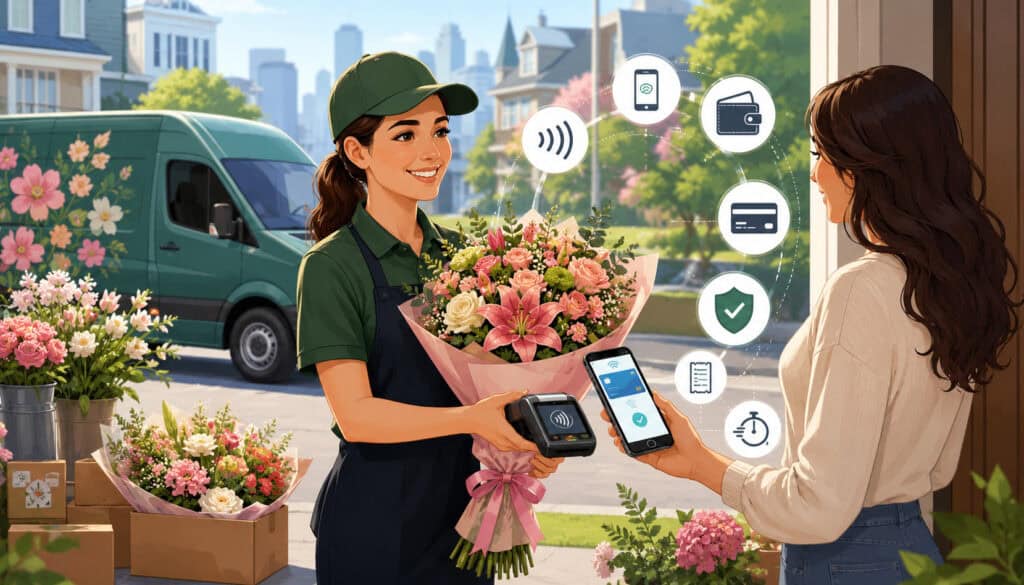
Flower delivery is a mobile business by nature. Even when orders begin online or by phone, fulfillment often happens at homes, offices, hospitals, event spaces, hotels, churches, reception halls, and outdoor venues. Payment tools need to support that movement.
Florist mobile payments matter because they reduce the gap between order completion and payment collection. When a customer is ready to pay at the point of delivery or pickup, a mobile reader can complete the sale immediately. That can be especially helpful for custom orders, balance payments, delivery changes, rush fees, and add-ons.
Without mobile payment processing for flower delivery, florists may rely on cash, phone payments, invoices, or payment links. These methods can still be useful, but they may create delays or require extra follow-up. A customer may miss an invoice, forget to click a link, be unavailable by phone, or not have cash ready.
Mobile checkout for florists gives the business another option. It allows payment to happen in the same moment the customer receives service. This can improve customer experience and reduce administrative work for the shop.
Mobile payments can also help delivery teams. Drivers can confirm the payment amount, process the transaction, send a receipt, and move to the next stop. For busy floral days, seasonal peaks, and event weekends, that speed can matter.
For customers, flexible payment options feel convenient. Many people expect to use chip cards, contactless payments, or digital wallets in everyday transactions. Offering those options during flower delivery can make the experience feel more organized and professional.
Making Delivery Payments More Convenient
Mobile credit card readers make delivery payments easier because they meet the customer where the payment happens. A customer can pay at the door, at an event venue, during curbside pickup, or at a pop-up flower stand without calling the shop or handling cash.
This convenience matters in floral delivery because many purchases are time-sensitive. Flowers are often ordered for birthdays, anniversaries, weddings, funerals, corporate events, holidays, and last-minute gestures. Customers usually want the process to be smooth and respectful.
For example, a customer receiving sympathy flowers may not want to repeat card details over the phone. A wedding client may need to pay an add-on charge during setup. A corporate receptionist may need to cover a delivery fee when arrangements arrive. A mobile reader helps complete these payments quickly.
Mobile card readers can also support tips and delivery fees when configured appropriately. If a florist allows tipping or collects delivery adjustments, the payment screen can show the customer the total before payment. This helps avoid confusion and gives the customer a chance to review the amount.
Digital receipts add another layer of convenience. Customers can receive a text or email receipt showing the payment amount, date, and payment method. This is useful for personal records, business expense tracking, event budgets, and gift purchases.
Reducing Payment Delays and Missed Collections
Payment delays can create unnecessary work for flower shops. A small unpaid balance may require phone calls, emails, invoice reminders, or manual notes. When many orders are moving through the shop, these small follow-ups can add up.
Mobile payment processing for flower delivery can reduce missed collections by allowing payment at the moment of service. If a balance is due, the driver or staff member can collect it before leaving the delivery location. This is especially useful for partial deposits, final event balances, rush fees, delivery upgrades, and substitutions that affect the order total.
It can also help with accountability. When mobile payments are tied to order numbers or delivery routes, managers can see which payments were collected and which orders still need attention. This improves daily reconciliation and helps prevent confusion between the sales team, design team, and delivery staff.
For event florists, immediate payment can be helpful when changes happen on-site. Extra arrangements, additional installation time, rental items, or last-minute design adjustments may need approval and payment. A mobile reader can support that process when the business has clear policies in place.
Flower shops should still use good judgment. Not every payment should happen at the door. Prepaid orders, large event contracts, corporate invoices, and card-on-file arrangements may be better handled before delivery. The value of mobile readers is that they add flexibility when on-site payment is appropriate.
Common Uses for Mobile Card Readers in Florist Businesses
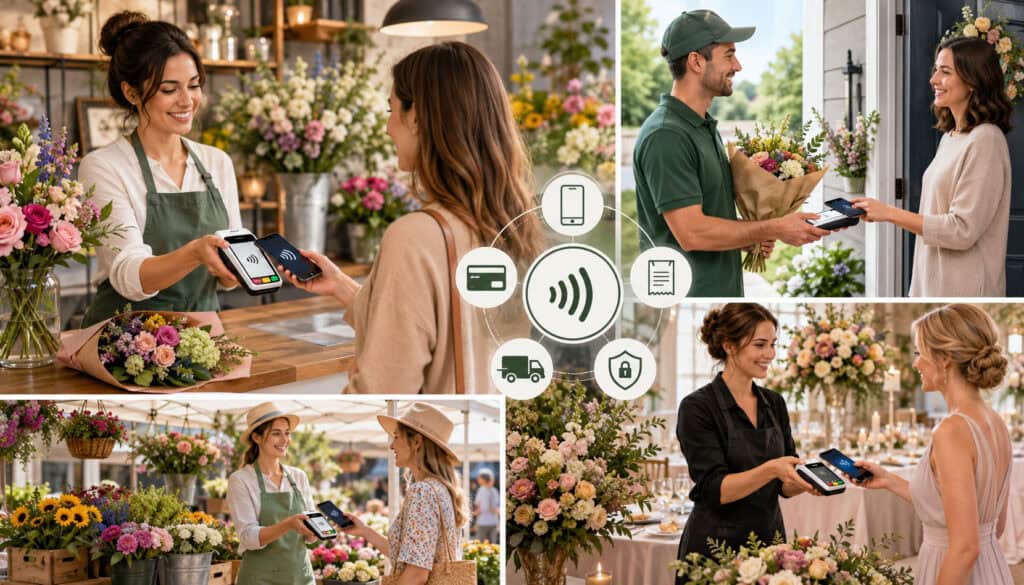
Mobile credit card readers can support many parts of a floral business, not only doorstep delivery. Because florists often sell through multiple channels, portable payment tools can help wherever the shop interacts with customers outside the main checkout counter.
For flower delivery services, mobile readers are often used to collect remaining balances, delivery charges, rush fees, substitutions, upgrades, and add-ons. A customer may want to add a greeting card, premium vase, box of chocolates, balloon bundle, or extra arrangement after the original order is placed. A reader lets the florist collect payment without delaying fulfillment.
For wedding and event florists, mobile readers can support final payments, add-on invoices, rental deposits, setup charges, and extra arrangement payments. They can also be helpful during consultations, venue walkthroughs, and installation days when approved charges need to be collected.
Seasonal floral sellers may use mobile readers for holiday pop-ups, farmers markets, roadside stands, school events, community markets, and local festivals. In these settings, customers often expect quick card or contactless payment options.
Gift shop operators that sell flowers as part of a broader product mix may also benefit from mobile POS for florists. A portable reader can help with sidewalk sales, curbside pickup, local deliveries, or temporary promotional displays.
Corporate flower accounts may use invoices or card-on-file payments, but mobile readers can still help with special one-off orders. For example, a business may request extra arrangements for a meeting or need a quick payment option for a last-minute lobby display.
Flower Delivery and Curbside Pickup Payments
Flower delivery and curbside pickup are two of the most practical uses for mobile credit card readers. Both involve customers receiving products outside a traditional checkout lane, and both may include last-minute changes. During delivery, a driver may collect a remaining balance, delivery adjustment, upgrade fee, or add-on charge.
For example, a customer may approve a larger arrangement after seeing available stems, or a sender may add a premium vase before the delivery leaves the shop. If the recipient or buyer is present and payment is due, a mobile reader can complete the transaction quickly.
Curbside pickup can also benefit from mobile checkout for florists. A customer may arrive to pick up an arrangement and decide to add a card, chocolates, balloons, candles, plush gift, or extra bouquet. Instead of sending the customer inside or taking payment over the phone, staff can process the card at the vehicle.
This helps during busy holidays when foot traffic is high and parking areas are crowded. It can also support accessibility by allowing customers to pay without leaving the vehicle.
For smooth service, staff should confirm the order total before charging. The receipt should show the correct amount, including any delivery fee, tip, tax where applicable, or add-on item. This protects both the customer and the shop.
Weddings, Events, and On-Site Floral Payments
Wedding and event florists often work in changing environments. Venue access times shift, clients request additional décor, planners add tables, weather changes outdoor layouts, and setup teams discover new needs on-site.
While major event payments should usually be handled through clear agreements before the event, mobile readers can help with approved on-site charges.
For example, a florist may need to collect payment for extra centerpieces, rental deposits, delivery changes, additional setup labor, replacement items, or last-minute floral additions. A mobile reader gives the business a way to accept card payments without returning to the shop.
This can also be useful for corporate events, memorial services, holiday installations, hotel arrangements, and community functions. Event clients often need receipts for budgeting, reimbursement, or accounting. Digital receipts can provide quick confirmation.
Clear procedures are important. Staff should know who is authorized to approve event add-ons, how to document the charge, and how to connect the payment to the event order. The payment amount should match the approved invoice, estimate, or change order whenever possible.
Florists should avoid surprise charges. Mobile payments work best when pricing, fees, and payment expectations are communicated before the event or clearly approved on-site.
Mobile Credit Card Reader Options for Florists
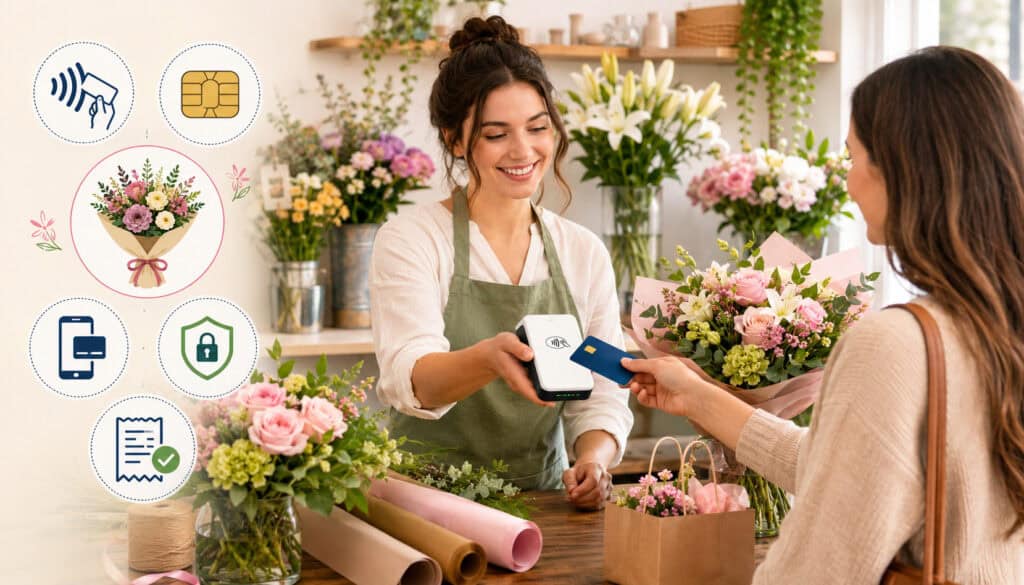
There are several types of mobile credit card readers and related payment tools. The right choice depends on how your flower shop sells, how many delivery drivers accept payments, what devices your staff already uses, and whether you need a full mobile POS or only basic payment acceptance.
Bluetooth card readers are common. These small devices pair with a smartphone or tablet and usually accept chip cards, swipe cards, and contactless payments depending on the model. They are portable and useful for delivery drivers, curbside teams, and pop-up sellers.
Plug-in readers connect directly to a phone or tablet. They may be simple and affordable, but compatibility can be limited by device ports, operating systems, and payment app requirements. Many shops prefer wireless readers because staff devices vary.
Mobile POS devices are more complete. They may include a card reader, touchscreen, receipt tools, product lists, taxes where applicable, tip options, refunds, reporting, and user permissions. Some include cellular connectivity, which can be useful for delivery routes.
Tap-to-pay terminals and smartphone tap-to-pay options allow customers to use contactless cards or digital wallets. This can make checkout faster and reduce the need for physical contact with the device.
Payment apps and payment links can also support mobile payment processing for flower delivery. A payment link is not the same as a mobile reader, but it can be a useful backup when the customer is not physically present.
Chip, Swipe, and Tap-to-Pay Readers
Chip, swipe, and tap-to-pay readers all capture card payments, but they do it in different ways. A swipe reader uses the magnetic stripe on the back of a card. A chip reader reads the embedded chip when the card is inserted. A tap-to-pay reader accepts contactless cards and digital wallets through NFC payments.
For florists, chip and tap payments can create a smoother and more secure customer experience than manually keyed transactions. Customers are familiar with inserting or tapping cards, and the payment process often feels more professional than writing down card details or reading numbers over the phone.
Tap-to-pay can be especially convenient during deliveries and curbside pickup. The customer can tap a card or mobile wallet, receive a receipt, and complete the payment quickly. This can help drivers move through routes without long delays.
Swipe functionality may still be useful as a backup when a chip card cannot be read, but florists should understand how their processor treats different transaction types. Card-present transactions, keyed transactions, and fallback transactions may have different risk and fee considerations.
The best card readers for flower shops often support multiple payment methods. That gives staff flexibility when customers have different cards, wallets, or preferences.
Mobile POS Devices and Payment Apps
A mobile POS for florists does more than accept a card. It can help staff enter products, apply delivery fees, show order notes, collect tips where appropriate, send digital receipts, process refunds, and record sales activity.
This can be valuable for flower shops that sell in multiple locations. A driver can process a delivery balance. A designer can collect a consultation deposit. A pop-up seller can sell wrapped bouquets. A curbside employee can add small gift items. Each payment can be tied back to reporting.
Payment apps may be simpler. They allow staff to enter an amount, process the card, and send a receipt. This may be enough for small shops or occasional off-site payments. However, simple apps may require more manual reconciliation if they do not connect directly to the flower order.
When comparing mobile POS devices and payment apps, florists should review user permissions. A delivery driver may only need permission to accept payments and send receipts. A manager may need access to refunds, reports, item edits, and settings. Limiting permissions helps reduce mistakes and protect sensitive business functions.
Payment apps should also be kept updated. Outdated apps may create login issues, device compatibility problems, or security concerns. Staff should test the app before leaving for deliveries.
Mobile Credit Card Readers vs Other Flower Delivery Payment Methods
Mobile credit card readers are useful, but they are not the only payment option for flower delivery services. Florists often use a mix of online checkout, payment links, phone payments, invoices, cash, and card-on-file arrangements.
Each method has a place. Online checkout works well for prepaid website orders. Payment links work well when the customer is remote. Invoices are useful for corporate accounts and events. Card-on-file can support subscriptions and repeat clients.
Cash may still be preferred by some customers. Phone payments can help with custom orders, though manually keyed card details may involve different risk and cost considerations.
Mobile readers are best when the customer is present. They create a card-present payment experience during delivery, pickup, event setup, or pop-up selling. They can also reduce the need for drivers to carry cash or return to the shop with payment notes.
Here is a practical comparison:
| Payment Method | Best For | Benefits | Things to Review |
| Mobile credit card readers | Delivery and on-site payments | Fast, portable, convenient | Connectivity, fees, and device security |
| Payment links | Remote follow-up payments | Easy to send by text or email | Link security and payment confirmation |
| Online checkout | Website flower orders | Smooth digital ordering | Delivery zones and checkout clarity |
| Phone payments | Custom or last-minute orders | Helpful for quick order taking | Higher risk if keyed manually |
| Cash | Small local orders | Simple for some customers | Harder to track and reconcile |
| Invoices | Corporate and event orders | Useful for larger balances | Payment deadlines and follow-up |
| Card-on-file | Subscriptions and repeat clients | Convenient repeat billing | Authorization and security rules |
A strong flower shop payment processing setup usually includes more than one method. The goal is not to force every customer into the same checkout path. The goal is to match the payment method to the order, customer, location, and risk level.
When Mobile Card Readers Are the Best Fit
Mobile card readers are the best fit when the customer is physically present and ready to pay. This includes doorstep delivery, curbside pickup, pop-up flower sales, farmers markets, event setup, venue walkthroughs, and off-site floral services.
They are also helpful when the order amount changes after the original sale. A customer may add a delivery fee, upgrade the arrangement, request a rush order, purchase a gift add-on, or cover a final event balance. A mobile reader allows the payment to happen immediately after the customer confirms the amount.
Mobile readers are especially useful for card-present payments. Instead of manually entering card details, the customer can insert, swipe, or tap a card. This may create a better experience and can help reduce errors caused by reading card numbers over the phone.
They can also help staff appear prepared. A delivery driver who can accept secure mobile card payments, send a receipt, and confirm payment looks more organized than a driver who has to call the shop for every payment issue.
However, mobile readers should be used with clear procedures. Drivers should know when payment is required, what amount to collect, how to handle declined transactions, and when to contact the shop.
When Payment Links or Online Checkout May Work Better
Payment links and online checkout may work better when the customer is not physically present. If a sender orders flowers for someone else, the recipient may not be responsible for payment. In that case, collecting payment before delivery through online checkout, a payment link, or an invoice may be more appropriate.
Payment links are useful for custom orders, remote approvals, and follow-up balances. A florist can send a secure link by text or email, and the customer can pay from their own device. This is often easier than waiting until delivery.
Online checkout is useful for standard website orders. Customers can choose products, enter delivery details, review fees, and pay before the order reaches the design team. This reduces the chance of unpaid deliveries.
Invoices are often better for corporate accounts, wedding balances, and larger event orders. They provide a record of the amount due, payment deadline, services included, and any related terms.
Card-on-file may be useful for subscriptions, weekly office flowers, or repeat clients. However, florists should use proper authorization procedures and avoid storing sensitive card details insecurely.
The best setup often combines these options. Mobile readers do not replace online checkout or invoices. They fill the gap when payment needs to happen face-to-face.
Benefits of Mobile Credit Card Readers for Flower Delivery Services
Mobile credit card readers for flower delivery services can improve both customer experience and business operations. They help florists accept payments wherever service happens, which is valuable for a business built around movement, timing, and personal delivery.
One major benefit is faster checkout. Customers can pay at the door, at the curb, at an event site, or at a pop-up stand. The transaction can be completed in seconds when the reader, app, and connection are working properly.
Another benefit is fewer unpaid balances. If a delivery fee, add-on, or final balance is due, staff can collect it while the customer is present. This reduces follow-up calls and invoice reminders.
Mobile readers also give customers more payment flexibility. Customers may prefer chip cards, tap-to-pay cards, digital wallets, or contactless payments for florists. Offering these options can make the flower delivery experience feel easier and more current.
For the shop, mobile readers can improve reporting. Payments can be connected to drivers, routes, dates, order numbers, and receipt records. This helps managers reconcile mobile payments with the day’s orders.
They can also create a more professional impression. A secure reader, clear payment screen, and digital receipt may feel more trustworthy than handwritten card notes or informal payment collection.
Faster Checkout at the Door or Event Site
Speed matters in flower delivery. Drivers may have several routes, tight timing, weather challenges, building access issues, and perishable products in the vehicle. A slow payment process can affect the rest of the schedule.
Mobile card readers can reduce payment friction. The driver confirms the amount, the customer taps or inserts a card, the payment is authorized, and a receipt is sent. This is usually faster than calling the shop, waiting for a payment link, or handling cash and change.
At event sites, quick payment can also help. If an approved add-on charge needs to be collected, the florist can process it without leaving the venue. This keeps the setup moving and creates a clear payment record.
Faster checkout also reduces confusion. When the payment happens at the point of service, the customer can review the amount immediately. Digital receipts help confirm what was charged.
Florists should still avoid rushing the customer. Staff should clearly state the total, explain any delivery fee or add-on, and allow the customer to confirm before charging the card. Speed should support clarity, not replace it.
Better Customer Experience and Payment Flexibility
Many customers expect flexible payment options. They may not carry cash. They may prefer digital wallets. They may want a receipt by email for business records. They may want to pay at curbside pickup without entering the shop.
Mobile credit card readers help meet these expectations. They allow flower shops to accept chip cards, contactless cards, and mobile wallets depending on the device. This creates a more convenient payment experience.
Payment flexibility can be especially helpful for gift orders. A customer buying flowers may also add a card, candle, plush toy, balloon, or chocolate item at the last minute. A mobile reader makes it easy to complete the updated purchase.
It can also support customers who are busy, elderly, managing an event, or receiving flowers during an emotional moment. A simple card payment may be easier than finding cash or calling the shop.
A good mobile payment experience should be polite and transparent. Staff should explain the amount, show the payment screen when possible, send a receipt, and thank the customer. Small details build trust.
Flower Delivery Payment Processing and Fees
Flower delivery payment processing includes more than the card reader itself. Florists should review transaction fees, hardware costs, monthly fees, chargeback fees, refund handling, batch settlement, funding speed, and any fees related to keyed transactions or optional features.
Card-present payments are generally payments where the customer’s card or digital wallet is physically used with a reader. Keyed transactions happen when card details are manually entered. Florists should understand how their payment provider treats each transaction type because costs and risk handling may differ.
Mobile reader costs can vary. Some readers are basic and low-cost, while mobile POS devices may cost more because they include added features. A shop should compare hardware cost with transaction rates, reporting tools, support, security features, and integration options.
Monthly fees may apply depending on the payment setup. Some systems may charge for software, reporting, additional users, device management, or POS features. Florists should review the full agreement rather than focusing only on the reader price.
Chargebacks are another consideration. A chargeback happens when a cardholder disputes a transaction. Flower shops should keep delivery confirmations, receipts, customer communications, refund records, and order details organized so they can respond to disputes when appropriate.
Refund processing should also be reviewed. Florists need to know whether drivers can issue refunds, whether only managers can process them, and how refunds appear in reports.
Card-Present vs Keyed Delivery Payments
Card-present and keyed delivery payments can look similar to a customer, but they are different from a processing perspective. A card-present payment usually means the customer’s card or wallet is used directly with the mobile reader through chip, swipe, or tap. A keyed payment means staff manually enter the card number, expiration date, and other details.
For florists, card-present payments are often preferable when the customer is physically present. They reduce manual entry errors and avoid writing down sensitive card details. They also create a more familiar checkout experience for the customer.
Keyed transactions may still be needed for phone orders or remote customers. However, florists should avoid using manual entry as the default when a card reader is available. Excessive keyed transactions may increase risk, create more room for mistakes, and affect processing costs depending on the payment agreement.
Drivers should be trained to use the reader first whenever possible. If the card will not read, staff should follow the shop’s approved fallback procedure. That procedure may include trying another payment method, contacting the shop, sending a payment link, or documenting the issue.
Clear policies protect both the shop and the customer. Staff should never write full card numbers on paper, in delivery notes, or in personal phones.
Funding Speed and Deposit Timing
Funding speed refers to how quickly card payments reach the business bank account after transactions are processed. For flower shops, this matters because cash flow supports payroll, vendor payments, supplies, rent, fuel, packaging, and seasonal inventory.
Mobile reader payments may settle with the rest of the shop’s card payments, or they may follow a separate batch schedule depending on the system. Florists should review batch cutoff times, deposit timing, weekend and holiday handling, and whether certain transactions may be delayed for risk review.
Refunds and chargebacks can also affect deposits. A refund may reduce a future deposit. A chargeback may temporarily remove funds while the dispute is reviewed. Florists should understand how these adjustments appear in reports.
Funding timelines are especially important during high-volume floral periods. A busy holiday can create a large amount of card activity in a short time. Knowing when funds are deposited helps the business plan purchases, staffing, and delivery expenses.
Florists should also review whether mobile payments are included in daily deposit reports. If mobile transactions are batched separately, reconciliation may require extra steps. Matching deposits to order reports helps prevent confusion.
Payment Security for Florist Mobile Payments
Secure mobile card payments are essential for flower delivery services. Customers trust florists with personal details, delivery addresses, gift messages, and payment information. A poor payment process can damage that trust.
Payment security starts with using secure devices and approved payment apps. Mobile readers should encrypt payment data during transmission, and payment systems should use tokenization where appropriate. Tokenization replaces sensitive card data with a token that can be used for processing without exposing the full card number.
Florists should also consider PCI compliance responsibilities. The PCI Security Standards Council provides small merchant payment security guidance through resources such as its Guide to Safe Payments, which focuses on protecting payment data and reducing security risks.
Device security matters too. Phones, tablets, and mobile POS devices should use passcodes, automatic lock settings, updated apps, and secure networks. If a device is lost or stolen, the shop should have a procedure for remote lock, password changes, and payment account review.
Staff permissions are another important control. Not every employee needs access to refunds, reports, customer records, or account settings. Delivery drivers may only need permission to accept payments and send receipts.
Florists should also avoid outdated practices. Writing down card numbers, storing photos of cards, texting card details, or saving card information in unapproved notes can create serious security risks.
Protecting Customer Card Data During Deliveries
Delivery drivers and floral staff should never write down full card numbers or store sensitive payment information insecurely. Even if the intention is to process the payment later, handwritten card details can create avoidable risk.
A secure mobile reader helps prevent this problem. The card is inserted, tapped, or swiped through the device, and the payment app handles the transaction. Staff do not need to see or store full card details.
Digital receipts also help. Instead of writing payment notes on paper, the system can send a receipt by text or email. The shop can retain transaction records inside the payment platform or POS system.
Drivers should be trained to protect the payment screen from unnecessary viewing. They should also avoid using public or unsecured networks when processing payments, unless the device and provider have approved secure connectivity options.
If a customer asks whether the payment is secure, staff should answer confidently but accurately. They can explain that the card is processed through the mobile payment system and that the shop does not write down full card numbers.
Staff Access Controls and Device Security
Staff access controls help prevent errors and protect sensitive information. Each employee who uses mobile payment tools should have a unique login. Shared logins make it harder to know who processed a payment, issued a refund, or changed a setting.
Permissions should match job duties. A delivery driver may need to accept payments and send receipts. A manager may need to process refunds, view reports, change settings, and review disputes. A seasonal employee may need limited access for a specific period.
Device security should also be part of daily operations. Mobile devices should have passcodes, screen locks, updated operating systems, updated payment apps, and remote lock options when available. Devices should not be left unattended in delivery vehicles or public areas.
Flower shops should assign devices clearly. If multiple drivers use readers, the shop should track who has each reader, which phone or tablet it pairs with, and when it is returned. This supports accountability.
Lost or stolen device procedures should be written down. Staff should know who to call, what to report, and how quickly access should be disabled.
Mobile Credit Card Reader Checklist for Flower Shops
Before choosing mobile credit card readers, flower shops should review their payment needs, delivery process, staff roles, and reporting requirements. A reader that works well for a small occasional delivery operation may not be enough for a busy florist with multiple drivers and event teams.
The checklist below can help florists evaluate mobile payment readiness:
| Setup Area | What to Review | Why It Matters |
| Reader type | Chip, swipe, tap, or mobile POS | Matches delivery payment needs |
| Connectivity | Bluetooth, Wi-Fi, or cellular use | Supports payments on the road |
| Payment methods | Cards and digital wallets | Improves customer convenience |
| Fees | Transaction, monthly, and device costs | Helps protect margins |
| Security | PCI, tokenization, user permissions | Protects customer data |
| Receipts | Text or email receipt options | Improves transparency |
| Reporting | Driver, order, and deposit reports | Supports reconciliation |
| Refunds | Mobile refund workflow | Helps resolve order issues |
| Staff training | Driver payment procedures | Reduces errors |
| Support | Help with device or transaction issues | Keeps deliveries running smoothly |
This checklist should be reviewed before the shop sends payment devices into the field. It is easier to fix setup issues during planning than during a busy delivery route.
Florists should also test the full workflow. Enter a sample payment, process a small test transaction if appropriate, send a receipt, review the report, check refund permissions, and confirm that the payment can be matched to an order.
Questions to Ask Before Choosing a Mobile Reader
Before choosing a mobile reader, florists should ask practical questions about how the device will be used. The best option depends on the shop’s payment volume, delivery style, staff size, and customer expectations.
Useful questions include:
- Does the reader accept chip cards, swipe cards, tap-to-pay cards, and digital wallets?
- Does it connect to the phones or tablets staff already use?
- Does it require Bluetooth, Wi-Fi, or cellular service?
- What happens if connectivity is weak during delivery?
- Are transaction fees different for card-present and keyed payments?
- Are there monthly software or account fees?
- How quickly are mobile payments deposited?
- Can receipts be sent by text and email?
- Can payments be tied to order numbers, drivers, or routes?
- Who can process refunds?
- Can staff permissions be limited by role?
- What PCI and security tools are included?
- Does the system integrate with POS, accounting, delivery, or order software?
- What support is available if a reader fails during a delivery day?
These questions help florists compare total value, not just device appearance. A low-cost reader may be less helpful if it lacks reporting, support, connectivity, or security features the shop needs.
Documentation Flower Shops Should Maintain
Good documentation helps flower shops manage payments consistently. Mobile payment procedures should be written down so staff know what to do during deliveries, curbside pickup, events, and pop-up sales.
Documentation may include staff training records, device assignments, receipt procedures, refund steps, chargeback records, delivery confirmations, payment reports, and processor agreements. These records help managers review what happened if a customer has a question or dispute.
Delivery confirmations are especially useful. If a customer disputes a flower delivery card payment, the shop may need to review the order details, delivery time, recipient confirmation, receipt, and communication history.
Refund documentation also matters. Floral products are perishable, and refund policies may depend on timing, product condition, delivery accuracy, and customer communication. Staff should document the reason for any refund or adjustment.
Processor agreements should be kept in an accessible place for management. Florists should know where to find details about fees, funding, chargebacks, support, hardware, and cancellation terms.
Good records do not need to be complicated. The goal is to make payment activity easy to verify.
Best Practices for Using Mobile Card Readers in Flower Delivery
Mobile card readers work best when they are supported by clear procedures. A reader alone does not guarantee smooth payments. Staff training, device care, customer communication, and reconciliation all matter.
Florists should choose readers that support chip and contactless payments when possible. Customers increasingly expect tap-to-pay, digital wallets, and quick checkout. A reader that supports multiple methods gives the shop more flexibility.
Delivery drivers should be trained before accepting payments. They need to know how to confirm totals, process payments, send receipts, handle declined cards, protect devices, and contact the shop for help.
Security should be built into the process. Use secure logins, device passcodes, app updates, and role-based permissions. Avoid writing down card details or storing payment information in unsafe places.
Receipts should be sent automatically or immediately after payment. This helps customers verify the amount and gives the shop a clear record.
Reconciliation should happen daily or on a regular schedule. Mobile payments should be matched to flower orders, delivery confirmations, refunds, and batch reports.
Helpful best practices include:
- Choose readers that support chip and contactless payments.
- Train delivery drivers before accepting payments.
- Use secure logins and device passcodes.
- Send digital receipts automatically.
- Avoid writing down card details.
- Confirm the payment amount before charging.
- Use clear delivery and refund policies.
- Keep devices charged and updated.
- Test connectivity in delivery areas.
- Reconcile mobile payments with orders.
- Track payments by driver or delivery route.
- Review mobile transaction fees regularly.
- Keep backup payment options available.
- Document refunds and disputes.
- Protect devices from loss or theft.
Training Delivery Drivers on Payment Procedures
Delivery drivers may be the only staff members a customer sees during the payment moment. Their training should cover both technical steps and customer communication.
Drivers should confirm the order total before processing payment. If the total includes delivery fees, tips, add-ons, or taxes where applicable, the customer should be able to review the amount before paying.
Drivers should know how to use the reader, pair Bluetooth devices, select the correct order, process chip or tap payments, send receipts, and handle declined payments. They should also know when not to proceed without contacting the shop.
Customer service matters. Drivers should be polite, patient, and clear. If a customer has a question about pricing, substitutions, or refunds, the driver should know whether to answer directly or refer the customer to the shop.
Security training is also essential. Drivers should not write down card numbers, take photos of cards, share logins, leave devices unattended, or use unapproved apps for payment collection.
Training should include practice transactions before drivers accept real payments. This builds confidence and reduces errors during busy routes.
Reconciling Mobile Payments With Flower Orders
Reconciliation means matching payment records to flower orders. This step helps the shop confirm that every collected payment is connected to the correct order, customer, driver, route, and deposit.
Mobile payments should be matched to order numbers whenever possible. If the payment app allows notes, staff can enter the order number or delivery reference. If the POS system integrates with delivery software, the process may be easier.
Daily reconciliation should include completed deliveries, mobile payment receipts, refund records, chargeback notices, and batch settlement reports. This helps managers identify missing payments, duplicate charges, incorrect amounts, or unassigned transactions.
Reconciliation is especially important during holidays. High order volume, temporary staff, substitutions, and delivery changes can increase the chance of mistakes. A clear process helps the shop stay organized.
Reports by driver or route can also help. If each driver’s payments are tracked separately, managers can review collections and resolve questions quickly.
The goal is not only accounting accuracy. Good reconciliation protects customer trust by ensuring that payments, receipts, and orders match.
Common Mistakes to Avoid With Mobile Card Readers
Mobile credit card readers are helpful, but mistakes can create payment delays, security risks, and customer frustration. Many problems happen because the shop focuses on the device but not the workflow around it.
One common mistake is poor driver training. If drivers do not know how to use the reader, pair the device, send receipts, or handle declined cards, the customer experience suffers.
Another mistake is weak connectivity planning. Some delivery areas may have poor cellular service. Some venues may have limited Wi-Fi. Florists should test readers in common delivery zones and have backup procedures.
Unclear fees can also cause problems. Florists should understand transaction rates, keyed payment fees, software fees, refund costs, chargeback fees, and hardware costs before relying on mobile payments.
Manual card storage is a serious mistake. Writing down card numbers or saving card photos creates avoidable risk. Secure payment tools should replace those practices.
Other common issues include failing to send receipts, sharing one login among multiple employees, skipping reconciliation, not updating payment apps, forgetting to charge devices, and failing to document refunds or disputes.
Not Testing Readers Before Deliveries
A mobile reader should be tested before it goes out on delivery. This is especially important before holidays, event weekends, and busy delivery days.
Testing should include battery life, Bluetooth pairing, app login, card acceptance, receipt delivery, refund tools, connectivity, and reporting. Staff should also confirm that the reader is assigned to the correct user or location.
A reader that is not charged can delay a route. A reader that is not paired can frustrate the driver. An app that requires an update can prevent payment acceptance at the worst moment.
Testing should not be limited to the shop’s Wi-Fi. Florists should consider how the device performs on the road, in venues, at outdoor markets, and in common delivery areas.
Drivers should know basic troubleshooting steps. For example, they may need to restart the app, reconnect Bluetooth, check battery level, switch networks, or contact the shop.
A simple pre-route checklist can prevent many problems.
Using Manual Card Entry Too Often
Manual card entry can be useful in some situations, but it should not become the default when a customer and card are present. Keyed transactions may involve higher risk and different fees depending on the payment agreement.
Using manual entry too often can also increase the chance of errors. A mistyped card number, expiration date, or billing detail can lead to a declined payment. It can also slow down delivery.
Manual entry may tempt staff to collect card details in unsafe ways. For example, a driver might write down a card number to enter later. This should be avoided.
Florists should train staff to use chip, swipe, or tap payments whenever possible. If the reader fails, the shop should have a secure backup process, such as sending a payment link or calling the shop for support.
The key is consistency. Staff should know which payment method to use first, what fallback options are approved, and what practices are not allowed.
Mobile Credit Card Readers and Customer Trust
Customer trust is central to flower delivery. People send flowers for meaningful moments, including celebrations, apologies, sympathy, gratitude, romance, and major life events. Payment should support that trust, not create worry.
Professional mobile payment tools can help customers feel more confident. A clear payment screen, secure card reader, polite explanation, and digital receipt show that the shop takes the transaction seriously.
Transparency is important. Customers should know what they are paying for, including the arrangement, delivery fee, add-ons, tips, or taxes where applicable. If the total changed from the original order, staff should explain why before processing payment.
Receipts help customers verify the transaction. They can see the amount, date, and payment method. For corporate clients and event customers, receipts may also support reimbursement or bookkeeping.
Secure checkout also matters. Customers may feel uncomfortable giving card numbers over the phone or writing details on paper. A mobile reader can make payment feel more secure and familiar.
Florists should communicate payment expectations before delivery whenever possible. If payment is due at delivery, the customer should know in advance. This reduces surprises and helps the delivery go smoothly.
Providing Clear Receipts and Payment Confirmation
Digital receipts are one of the simplest ways to build trust. They confirm that payment was completed and give the customer a record of the transaction.
A good receipt should show the total amount charged, payment date, payment method, and business details. If the system allows itemized receipts, it may also show the arrangement, delivery fee, add-ons, tip, and taxes where applicable.
Receipts are helpful for customers who buy flowers as gifts. They may want confirmation that the order was paid for but not included with the recipient’s delivery. Text or email receipts can solve that problem.
For event and corporate orders, receipts are often necessary for records. A planner, office manager, or bookkeeper may need proof of payment.
Payment confirmation also helps staff. If a customer later asks whether payment went through, the shop can review the receipt and transaction record. This reduces confusion and supports better service.
Florists should make receipt sending part of the standard mobile payment workflow.
Communicating Payment Options Before Delivery
Customers should know payment expectations before the driver arrives. If payment is due at delivery, the shop should explain which payment methods are accepted and when payment will be collected.
This information can appear in order confirmations, delivery notes, invoice messages, or customer service scripts. For example, a confirmation may state that card payment can be accepted at delivery through a secure mobile reader.
Clear communication prevents awkward moments. A customer who expects to pay later may be surprised if a driver requests payment at the door. A customer who planned to use a digital wallet may be frustrated if the reader does not support contactless payments.
Staff should also communicate politely. Payment conversations should be direct but respectful, especially for sympathy flowers, event deliveries, or gifts.
A simple script can help drivers. For example, the driver can say that a balance is due, confirm the amount, and ask whether the customer would like to pay by card or another approved method.
Clear communication supports both customer experience and payment collection.
How to Choose Mobile Card Readers for Florists
Choosing mobile card readers for florists requires more than comparing hardware prices. The right setup should match the shop’s payment volume, delivery workflow, staff structure, customer expectations, and reporting needs.
Device compatibility is a practical starting point. Florists should confirm whether the reader works with the phones, tablets, or POS devices staff use. Operating systems, Bluetooth versions, charging ports, and app requirements can all affect usability.
Payment method support is also important. A good mobile reader should support chip cards and contactless payments when possible. Swipe may be useful as a backup, but tap-to-pay and digital wallet support can improve customer convenience.
Fees should be reviewed carefully. Compare transaction fees, keyed rates, monthly software costs, hardware costs, chargeback fees, refund handling, and any optional service fees.
Security features should include encryption, tokenization where applicable, secure logins, user permissions, and device controls. Florists should also review general consumer payment and fraud awareness resources such as the FTC’s payment and fraud guidance.
Integration can make a major difference. If mobile payments connect with POS, delivery routing, order tracking, accounting, or reporting, the shop may spend less time reconciling payments manually.
Support should not be overlooked. If a reader stops working during a busy delivery day, the shop needs access to help. Support quality, availability, and troubleshooting resources can affect daily operations.
Matching Readers to Business Size and Delivery Volume
Different floral businesses need different mobile payment setups. A small flower shop with occasional deliveries may only need one or two simple mobile readers. A busy delivery florist may need multiple devices, driver permissions, route-level reporting, and reliable cellular connectivity.
Wedding florists may prioritize event payments, deposits, receipts, and invoice matching. They may need mobile payment tools that work well at venues and allow managers to control refund or adjustment permissions.
Seasonal sellers may need portable readers for holiday stands, markets, and temporary locations. Battery life, quick setup, and contactless payment support may be especially important.
Gift shop operators that sell flowers may need mobile readers that support both floral and non-floral items. Product lists, tax settings where applicable, and receipt clarity may matter more.
Multi-location flower shops may need centralized reporting. They may want to track payments by location, driver, device, or event team. User management becomes more important as the number of staff increases.
The reader should match the business model. Buying too little functionality can create manual work, while buying more complexity than needed can confuse staff.
Comparing Total Value, Not Just Device Cost
Device cost is only one part of the decision. A low-cost reader may become expensive if transaction fees are high, reporting is limited, support is weak, or reconciliation takes extra time.
Florists should compare total value. This includes reader price, transaction fees, monthly fees, funding speed, security tools, reporting, user permissions, support, refund tools, and integration capabilities.
Funding speed can affect cash flow. Reporting can affect bookkeeping. Security tools can affect customer trust. Support can affect delivery reliability. These factors may be more important than saving a small amount on hardware.
Florists should also consider scalability. A shop may start with one reader but later add drivers, events, pop-ups, or a second location. A payment setup that can grow with the business may be more practical.
Before choosing, flower shops should review their current payment pain points. Are unpaid balances common? Are drivers calling the shop for payments? Are invoices paid late? Are customers asking for contactless options? Are mobile payments hard to reconcile?
The best option is the one that solves real problems without creating new ones.
FAQs
What are mobile credit card readers for flower delivery services?
Mobile credit card readers for flower delivery services are portable payment devices that allow florists, delivery drivers, and event teams to accept card payments away from the shop. They usually connect to a smartphone, tablet, mobile POS device, or payment app.
They are useful for delivery balances, curbside pickup, event add-ons, pop-up flower sales, and other off-site payment situations. Depending on the reader, customers may pay with chip cards, swipe cards, tap-to-pay cards, or digital wallets.
How do mobile card readers for florists work?
Mobile card readers work by capturing payment details through a secure device and sending the transaction for authorization. The florist or driver enters the amount, the customer presents a card or digital wallet, and the payment is approved or declined.
After approval, the system can send a digital receipt by text or email. The transaction is then recorded in the payment app, mobile POS, or reporting system. Florists should match the payment to the related order or delivery record.
Are mobile credit card readers secure for flower delivery payments?
Mobile credit card readers can support secure payments when they are used with approved devices, secure payment apps, encryption, tokenization, user logins, and proper staff procedures. Security also depends on how the shop trains employees and protects devices.
Florists should avoid writing down full card numbers, storing card photos, sharing logins, or using unapproved apps. Staff should use secure readers, device passcodes, updated apps, and role-based permissions.
Can florists accept contactless payments during deliveries?
Yes, florists can accept contactless payments during deliveries if their mobile reader or mobile POS supports NFC payments. This may include tap-to-pay cards and digital wallets.
Contactless payments for florists can make checkout faster and more convenient. They are especially useful for doorstep delivery, curbside pickup, pop-up sales, and event payments where customers want a quick transaction.
What fees should flower shops review before using mobile readers?
Flower shops should review transaction fees, keyed payment fees, monthly software fees, hardware costs, refund handling, chargeback fees, batch fees, and funding timelines. They should also ask whether mobile payments are priced differently from in-store payments.
Florists should compare the full cost of payment processing for flower delivery, not just the price of the card reader. Reporting, support, security, and integration can also affect overall value.
How can mobile readers help reduce unpaid flower delivery balances?
Mobile readers help reduce unpaid balances by allowing payment to be collected at the moment of delivery, pickup, or event service. If a customer owes a final balance, delivery fee, rush charge, or add-on amount, staff can process the payment immediately.
This reduces the need for follow-up calls, delayed invoices, and missed payment reminders. It also gives the shop a clear receipt and transaction record.
What should delivery drivers know before accepting card payments?
Delivery drivers should know how to confirm the order total, process chip and tap payments, send receipts, handle declined cards, protect the device, and contact the shop for support. They should also know the shop’s policies for refunds, tips, delivery fees, and payment disputes.
Drivers should never write down full card numbers or store card details on paper, in photos, or in personal notes. They should use the approved mobile reader and follow the shop’s payment procedure.
How can flower shops choose the right mobile card reader?
Flower shops should choose a mobile card reader by reviewing device compatibility, payment method support, connectivity, fees, funding speed, security tools, receipts, reporting, refunds, support, and POS integration.
The right reader depends on the shop’s size and workflow. A small florist may need a simple reader, while a busy delivery shop may need mobile POS features, multiple user permissions, driver tracking, and stronger reporting.
Conclusion
Mobile credit card readers for flower delivery services can help florists accept payments more conveniently, reduce unpaid balances, and improve the customer experience. They give flower shops a practical way to accept card payments at the door, at curbside pickup, at event venues, at pop-up stands, and anywhere floral service happens away from the checkout counter.
For customers, mobile readers support familiar payment options such as chip cards, tap-to-pay cards, contactless payments, and digital wallets. For florists, they can improve payment tracking, receipt delivery, delivery workflow, driver accountability, and daily reconciliation.
The best results come from choosing the right setup and building clear procedures around it. Flower shops should review payment methods, transaction fees, funding timelines, security controls, device compatibility, staff permissions, receipts, reporting, refund tools, customer communication, and support before choosing a mobile payment solution.
Mobile readers are not a replacement for every payment method. Online checkout, payment links, invoices, phone payments, and card-on-file arrangements may still be useful. But when the customer is present and payment needs to happen on the go, mobile card readers can be one of the most practical floral delivery payment solutions available.
A thoughtful mobile payment setup helps florists keep deliveries moving, protect customer trust, and create a smoother checkout experience from the shop counter to the customer’s door.