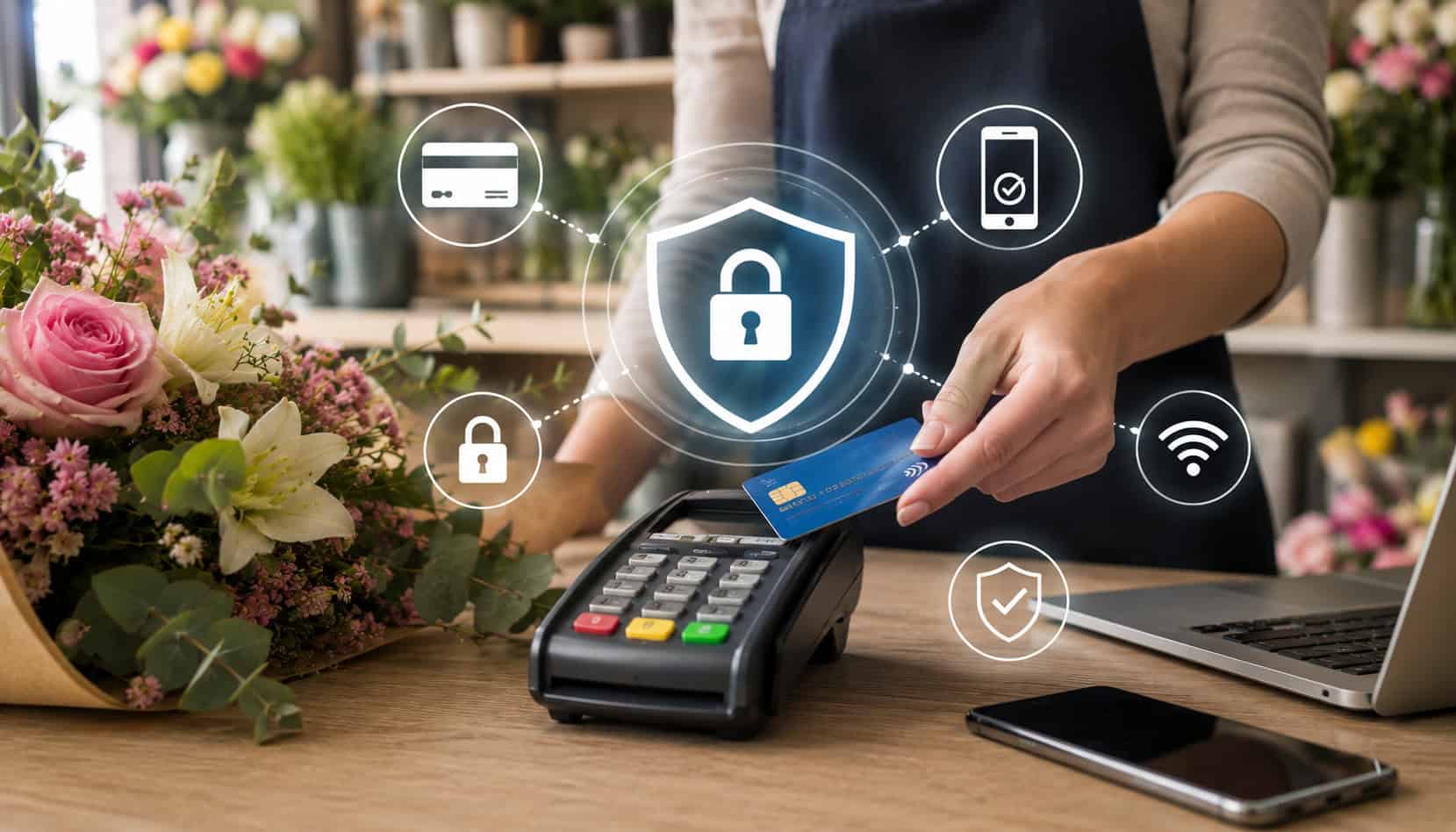
Secure credit card payments for floral businesses are essential because florists sell through many channels at once. A single shop may accept walk-in purchases, online flower orders, phone payments, wedding deposits, delivery fees, sympathy arrangements, event retainers, and last-minute seasonal rush orders on the same day.
That variety creates opportunity, but it also creates risk. A customer buying a bouquet in person may tap a card at the counter, while another customer may place a card-not-present order through a website, over the phone, or by invoice link. Each payment path needs the right safeguards.
For florists, payment security is not only about technology. It is also about customer trust, organized order records, delivery documentation, clear refund policies, and staff habits that protect sensitive payment data. Strong florist secure payment processing helps prevent fraud, reduce chargebacks, and make checkout smoother for customers.
When a flower shop handles payments securely, customers feel more comfortable ordering online, paying deposits, and trusting the business with meaningful occasions. Secure tools also help staff work faster during busy periods without cutting corners.
What Are Secure Credit Card Payments for Floral Businesses?
Secure credit card payments for floral businesses refer to the systems, tools, and workflows used to accept card payments while protecting customer data from theft, misuse, and unnecessary exposure.
For a florist, this includes in-store terminals, ecommerce checkout pages, mobile readers, virtual terminals, payment links, invoices, recurring deposits, and any software connected to order management.
A secure payment environment uses encryption to help protect transaction data while it moves through the payment process. It may also use tokenization, which replaces sensitive card details with a secure token that can be used for future transactions without storing the actual card number inside the flower shop’s systems.
Security also includes how employees handle payments. A florist should avoid writing card numbers on paper, saving card details in order notes, or sending payment information through text messages. These habits can expose customer data and create unnecessary liability.
A secure payment setup should support both the creative and operational sides of a floral business. Staff need to take orders quickly, process deposits, adjust delivery fees, issue receipts, and document special requests. At the same time, the system should limit access to sensitive data, provide transaction records, and help prevent suspicious activity.
Useful tools may include:
- Secure POS systems for florists
- Hosted ecommerce checkout pages
- Payment links for deposits and phone orders
- Fraud filters for online transactions
- Digital receipts and order confirmations
- User permissions for staff accounts
- Refund controls and audit logs
- PCI-aware payment workflows
Florists can also review payment security basics through the official PCI Security Standards Council payment data security resource, which explains the standards used to protect cardholder data.
Why Payment Security Matters for Florists
Payment security matters for florists because floral purchases are often emotional, urgent, and time-sensitive. Customers are ordering birthday flowers, funeral arrangements, anniversary bouquets, hospital deliveries, wedding flowers, and corporate gifts. They expect the experience to feel smooth, reliable, and safe from checkout through delivery.
Flower shop credit card security is especially important because florists frequently handle card-not-present transactions. Online flower orders, phone orders, emailed invoices, and delivery payments carry more fraud and dispute risk than a typical in-person chip or contactless sale.
A buyer may be different from the recipient, the delivery address may differ from the billing address, and the product may be perishable or customized.
That creates common dispute scenarios. A customer may claim an arrangement was not delivered, did not match expectations, was delivered late, or was charged incorrectly. Without strong records, even a legitimate order can become difficult to defend.
Floral business payment security solutions help reduce these risks by combining secure checkout tools with practical documentation. A secure payment system should make it easy to capture order details, delivery notes, customer confirmations, refund activity, and receipts.
| Security Area | Why It Matters | Best Practice |
| Online checkout | Reduces exposure during floral ecommerce payments | Use secure hosted checkout, fraud filters, and digital receipts |
| Phone orders | Prevents unsafe manual card handling | Send payment links or use a secure virtual terminal |
| Delivery payments | Helps prove fulfillment | Record delivery time, location, recipient notes, and confirmation |
| Refunds | Reduces internal errors and abuse | Limit refund permissions and document reasons |
| Staff access | Protects customer and transaction data | Use unique logins and role-based permissions |
| Stored card data | Reduces breach risk | Use tokenization instead of saving card numbers |
| Disputes | Helps with chargeback protection | Keep receipts, order notes, policies, and delivery proof |
Strong flower shop payment security also protects reputation. Customers may not understand every technical security feature, but they notice whether checkout feels professional, receipts are clear, and the shop communicates promptly when questions arise.
Secure Online Payments for Flower Shops
Secure online payments for flower shops begin with a checkout experience that protects both the buyer and the business. A floral ecommerce payments setup should use a secure payment gateway, encrypted checkout, clear order summaries, and confirmation messages that show exactly what the customer purchased.
Online flower orders often include delivery dates, recipient names, card messages, substitutions, add-ons, and special instructions. These details should flow into the order system without exposing card data to staff who do not need it. A hosted checkout page or integrated gateway can help reduce the amount of sensitive payment data handled directly by the flower shop.
Fraud filters are also important. Address verification, CVV checks, velocity controls, IP review, and order-risk rules can help identify suspicious orders before they become losses. This is especially useful for high-value arrangements, sympathy orders, and same-day delivery requests placed under pressure.
Digital receipts should include the business descriptor, order amount, delivery details, and contact information. Clear receipts reduce confusion and help customers recognize the charge later.
Flower Shop Credit Card Security for Phone Orders
Phone orders are convenient, but they create payment security concerns when staff manually collect card details. Writing card numbers on paper, typing them into unsecured notes, or repeating them aloud in a busy shop can expose sensitive information. Even well-meaning employees can create risk when the process is rushed.
A safer approach is to use payment links, secure invoices, or a virtual terminal designed for card-not-present transactions. With payment links, staff can build the order, send a checkout link, and allow the customer to enter card details through a secure page. This reduces the need for employees to hear, write, or store card numbers.
Virtual terminals can also be useful when phone payment is necessary, but access should be limited to trained staff. Each user should have a unique login, and the system should record who processed the transaction. Managers should review unusual refunds, duplicate charges, and large manual-entry payments.
Florist payment processing should make phone orders efficient without turning staff into payment-security weak points. A repeatable process helps employees handle busy days confidently.
Protecting Delivery and Custom Order Payments
Delivery and custom floral orders require extra documentation because the buyer, recipient, address, and occasion may all be different. This can complicate chargeback protection if a customer later claims non-delivery, late delivery, or dissatisfaction with the final arrangement.
For delivery orders, florists should document the delivery address, requested date, delivery window, recipient name, and any special instructions. Proof of delivery can include a timestamp, driver note, recipient signature, delivery photo where appropriate, or confirmation message. These records help connect the order to the completed delivery.
Custom arrangements, wedding flowers, sympathy pieces, and event orders should include written approvals, deposit terms, balance due dates, substitution policies, and change-request records. If a customer requests a design change, the update should be confirmed in writing and reflected in the order file.
Clear documentation protects both sides. Customers understand what they agreed to, and the florist has a record if questions arise. For more dispute-focused guidance, florists can review this practical resource on chargeback dispute preparation for floral orders.
Key Security Features Florists Should Look For
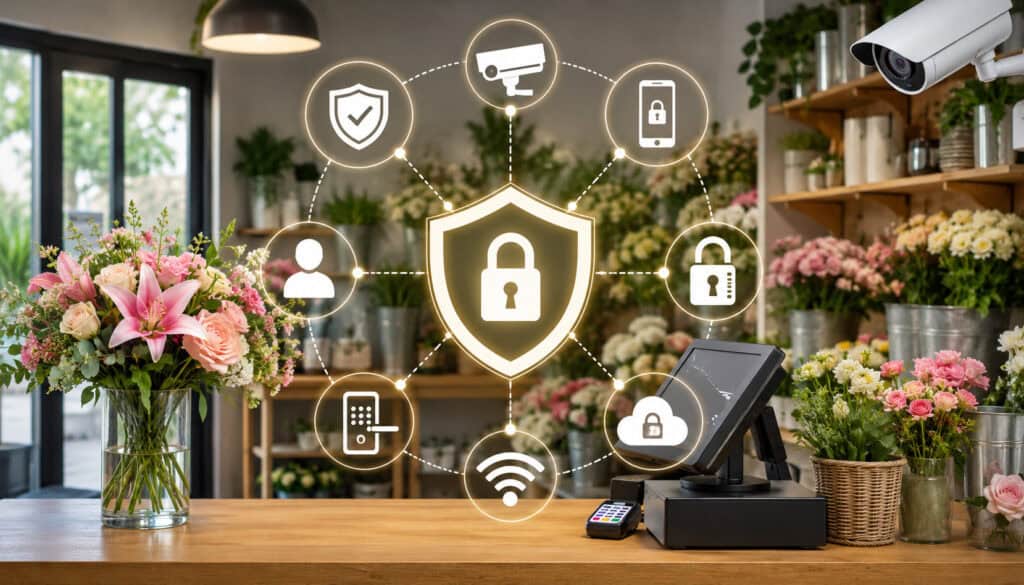
Florists should look for payment tools that combine strong security with everyday usability. A system that is technically secure but difficult for staff to use may lead to workarounds. A system that is easy but lacks controls may expose the shop to fraud, disputes, and operational mistakes.
Encryption is one of the core features. It helps protect payment data during transmission, making it harder for unauthorized parties to read sensitive information. For in-store card acceptance, modern terminals should support chip and contactless payments. For ecommerce, checkout should be secured through a trusted payment gateway.
Tokenization is another important feature. Instead of storing actual card numbers for future deposits, repeat customers, subscriptions, or installment payments, the system stores a token. This helps reduce the risk tied to saved payment information.
Secure POS systems for florists should also include staff permissions. Not every employee needs access to refunds, reports, customer profiles, or transaction adjustments. Role-based access helps prevent errors and misuse.
Look for features such as:
- End-to-end or point-to-point encryption where supported
- Tokenization for stored payment profiles
- Secure merchant accounts for florists
- Fraud monitoring for online and manual-entry payments
- PCI-aware payment workflows
- Unique employee logins
- Refund and void permissions
- Digital receipts and searchable transaction history
- Integration with ecommerce, delivery, and order management tools
The right setup should support florist-specific workflows. A shop may need to accept deposits for weddings, split payments for events, add delivery fees, handle substitutions, and process final balances. A secure system should make these tasks organized and traceable.
Florists comparing POS and payment options can start with a page covering payment processing and POS tools for flower shops.
Payment Fraud and Chargeback Prevention

Payment fraud prevention is especially important for flower shops because many orders are urgent, remote, or delivered to someone other than the cardholder. Fraudsters often take advantage of rushed staff, high-pressure delivery windows, and emotionally sensitive occasions.
Suspicious activity may include unusually large same-day orders, multiple cards attempted for one order, mismatched billing and delivery information, vague recipient details, requests for unusual delivery handling, or customers pressuring staff to bypass verification. None of these signs automatically prove fraud, but they should trigger a closer review.
Address verification and CVV checks can help screen online and phone transactions. For ecommerce orders, fraud filters can flag suspicious patterns such as repeated declines, mismatched location signals, or multiple orders from the same device. For higher-value custom work, a deposit agreement and written confirmation can reduce confusion later.
Chargeback protection depends heavily on documentation. Florists should keep order confirmations, payment receipts, delivery proof, customer messages, substitution approvals, refund terms, and photos of custom designs when appropriate. If a dispute occurs, organized evidence can make the response stronger.
Clear policies also help prevent disputes before they happen. A flower shop should explain delivery cutoffs, substitution practices, cancellation rules, refund eligibility, and product variation expectations before payment is completed. Flowers are natural products, so customers should understand that colors, blooms, and containers may vary based on availability.
Helpful practices include:
- Confirming high-value or unusual orders before fulfillment
- Using payment links instead of unsecured card collection
- Keeping proof of delivery for every delivered order
- Sending detailed receipts immediately
- Posting clear substitution and refund policies
- Reviewing suspicious orders before design or dispatch
- Training staff to pause when payment details feel unusual
For additional prevention ideas, see this guide on chargeback prevention strategies for online flower shops and this resource on preventing payment scams in floral businesses.
Secure POS and Ecommerce Setup for Florists
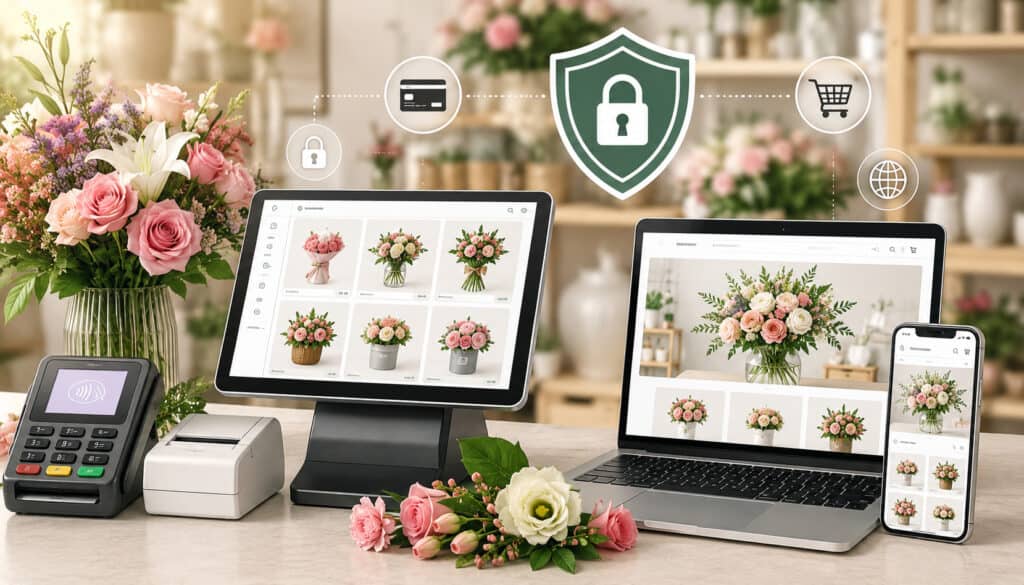
A secure POS and ecommerce setup should connect the florist’s sales channels without creating unnecessary security gaps. In-store payments, website orders, phone invoices, delivery payments, and event deposits should all feed into a consistent order and reporting process.
For in-store sales, the POS should support chip cards, contactless payments, digital wallets, printed receipts, email receipts, discounts, taxes, delivery fees, and product notes. It should also allow staff to search prior orders, apply refunds according to permission levels, and reconcile daily payments.
For online sales, the ecommerce checkout should be mobile-friendly and secure. Customers should be able to select arrangements, add delivery details, enter card messages, choose delivery dates, review substitution language, and complete payment without confusion. A secure checkout page should make the customer feel confident from product selection to confirmation.
Florists also need customization features. Floral orders often involve color preferences, occasion notes, delivery instructions, sympathy card wording, vase upgrades, chocolate or balloon add-ons, and delivery windows. These details should be captured in the order system, not scattered across sticky notes, text messages, and emails.
Secure reporting matters too. Owners and managers should be able to review sales, refunds, payment methods, deposits, and chargeback trends without exposing full card details. Reports should support reconciliation while keeping sensitive payment data protected.
A strong setup may include:
- Integrated POS and ecommerce order flow
- Secure checkout for online orders
- Mobile payment options for events and delivery situations
- Digital receipts for every transaction
- Product customization fields
- Delivery notes and confirmation records
- Inventory or design notes for seasonal items
- Permission-based access to refunds and reports
The goal is not only to process payments safely. The goal is to create one reliable workflow that supports busy floral operations while reducing payment risk.
Common Payment Security Mistakes Florists Should Avoid
One of the most common payment security mistakes is manually storing card information. A flower shop should not keep card numbers in notebooks, order forms, spreadsheets, email drafts, text messages, or customer profile notes. Even if the intent is convenience, this creates avoidable risk.
Weak passwords are another issue. Shared logins make it difficult to know who processed a refund, changed an order, or accessed sensitive information. Every staff member should use a unique login, and managers should remove access when employees leave.
Outdated terminals can also create problems. Older devices may lack modern security features, contactless support, or software updates. A terminal that frequently fails during busy periods may encourage staff to use less secure manual workarounds.
Unsecured checkout pages can hurt both security and conversion. If customers see warning messages, inconsistent branding, or a checkout process that feels suspicious, they may abandon the order. Secure online payments for flower shops should feel trustworthy and seamless.
Poor staff training is another hidden risk. Employees may not know how to spot suspicious orders, handle refund requests, or respond when a customer asks them to save a card for later. Training should be simple, repeated, and tied to real floral scenarios.
Avoid these mistakes:
- Writing card numbers on paper
- Saving card data in customer notes
- Using shared POS logins
- Allowing all staff to process refunds
- Ignoring software and terminal updates
- Using vague refund or substitution policies
- Failing to document deliveries
- Taking large phone orders without verification
- Sending card details through unsecured messages
Flower shop payment security improves when owners remove risky shortcuts. Staff are less likely to make mistakes when the secure process is also the easiest process.
Best Practices for Floral Business Payment Security
The best floral business payment security solutions combine technology, training, and documentation. Florists do not need a complicated process, but they do need a consistent one.
Start by using secure payment tools for every channel. In-store payments should run through modern terminals or secure POS systems for florists. Online payments should go through secure checkout pages. Phone orders should use payment links or secure virtual terminals whenever possible.
Next, document customer expectations. Product pages should explain size options, delivery timing, substitution policies, and refund terms. Custom orders should include written approvals, deposit records, and change confirmations. Delivery orders should include proof of delivery.
Staff training should focus on real situations. Employees should know what to do when a customer asks them to save a card, when a card declines repeatedly, when a delivery address seems incomplete, or when someone requests a refund without matching order details.
Review transactions regularly. Managers should check refunds, voids, high-value orders, failed payment attempts, and chargeback notices. This helps identify patterns before they become bigger problems.
Practical best practices include:
- Use tokenization for repeat billing or saved customer profiles
- Send payment links for deposits and phone orders
- Require unique employee logins
- Limit refund access to authorized staff
- Keep delivery confirmation records
- Use digital receipts for every transaction
- Review chargebacks for patterns
- Update terminals, plugins, and ecommerce tools
- Keep policies clear at checkout
- Train staff before busy seasonal periods
Security should also support customer experience. A secure process should not feel intimidating. It should feel professional: clear checkout, easy payment options, fast receipts, helpful communication, and reliable follow-through.
What are secure credit card payments for floral businesses?
Secure credit card payments for floral businesses are payment workflows that help protect customer card data during in-store, online, phone, mobile, delivery, and event transactions.
They may include encrypted card readers, secure ecommerce checkout, payment gateways, tokenization, fraud filters, digital receipts, and staff access controls.
For florists, security also includes order documentation. Because flower orders often involve delivery dates, recipient details, custom arrangements, substitutions, and deposits, the payment record should connect clearly to the order record. That makes transactions easier to verify and disputes easier to manage.
How can florists protect customer payment data?
Florists can protect customer payment data by avoiding manual card storage, using secure POS systems, sending payment links, and limiting access to payment tools. Staff should never write card numbers on order slips, save them in spreadsheets, or send them through unsecured messages.
A secure system should use encryption during payment transmission and tokenization for saved payment profiles. Managers should also use unique employee logins, strong passwords, refund controls, and regular transaction reviews. These practices reduce exposure and help create PCI-aware payment workflows.
Are online flower shop payments secure?
Online flower shop payments can be secure when they use a trusted payment gateway, secure checkout page, fraud filters, and clear confirmation records. Customers should see a professional checkout flow, accurate order summary, delivery details, and digital receipt after payment.
Security also depends on website maintenance. Ecommerce plugins, checkout integrations, and payment settings should be kept updated. Florists should avoid redirecting customers to unfamiliar payment processes or asking them to send card details manually after placing an online order.
Are phone payments risky for flower shops?
Phone payments can be riskier than in-person payments because the card is not physically present and staff may be tempted to write down card details. This can increase exposure, especially during busy periods when orders are handled quickly.
Safer alternatives include payment links, secure invoices, and virtual terminals with user permissions. These tools help florists accept phone orders while reducing the need to hear, store, or manually handle sensitive card information.
How can florists reduce chargebacks?
Florists can reduce chargebacks by using clear receipts, accurate product descriptions, visible refund policies, delivery confirmation, and strong customer communication. The more clearly the business documents what was ordered, paid for, delivered, and agreed to, the easier it is to prevent or respond to disputes.
Chargeback protection is especially important for delivery and custom orders. Florists should keep proof of delivery, design approvals, substitution notices, customer messages, and refund records. High-value or unusual orders should receive extra review before fulfillment.
What security features should florist POS systems include?
Florist POS systems should include secure card acceptance, user permissions, refund controls, digital receipts, searchable transaction history, and integration with order details. A good POS should support walk-in sales, deposits, delivery fees, custom notes, and ecommerce activity without exposing sensitive card data.
Additional features may include mobile payment support, inventory notes, reporting access controls, and audit logs. The system should help staff work quickly while giving owners visibility into sales, refunds, and unusual transaction activity.
Why is tokenization important?
Tokenization is important because it replaces sensitive card data with a secure token. Florists can use tokens for repeat customers, deposits, balances, subscriptions, or future payments without storing the actual card number in the shop’s systems.
This lowers the risk associated with saved payment details. If customer profiles, order records, or internal notes are accessed improperly, tokenization helps reduce exposure because the original card number is not stored where staff can view or misuse it.
How can flower shops prevent payment fraud?
Flower shops can prevent payment fraud by using fraud filters, reviewing suspicious orders, confirming high-value requests, and documenting delivery details. Address verification, CVV checks, velocity controls, and manual review rules can help identify risky online and phone orders.
Staff should be trained to watch for red flags, such as rushed large orders, repeated declined cards, mismatched information, vague delivery instructions, or pressure to bypass normal procedures. Payment fraud prevention works best when secure tools and staff judgment are used together.
Conclusion
Secure credit card payments for floral businesses help protect customers, reduce fraud, prevent disputes, and support smoother transactions across every sales channel. For florists, payment security must cover walk-in purchases, online checkout, phone orders, delivery payments, wedding deposits, and seasonal rushes.
The best approach combines secure technology with clear workflows. Encryption, tokenization, secure POS systems, payment links, digital receipts, fraud monitoring, and PCI-aware payment workflows all play a role. So do staff training, delivery documentation, refund controls, and clear customer communication.
When flower shops prioritize payment security, they build trust at the exact moment customers are making meaningful purchases. A secure payment process helps the business operate with confidence, serve customers professionally, and protect every order from checkout to delivery.