Floral shops sell more than stems and vases. They sell timing, emotion, freshness, delivery accuracy, and trust. That makes payment acceptance especially important. A florist may take a walk-in bouquet sale in the morning, a phone order for sympathy flowers at noon, a wedding deposit in the afternoon, and several online flower shop payments overnight.
Low-cost credit card processing for floral businesses helps keep those sales convenient without letting fees quietly cut into profit. The right setup supports in-store checkout, delivery payments, online orders, event invoices, recurring corporate accounts, and seasonal spikes without adding unnecessary complexity.
Because flowers are perishable and many orders are time-sensitive, florists also need payment systems that help reduce disputes. A missed delivery window, unclear substitution policy, or vague receipt can create refund pressure or chargeback risk. Good floral merchant services should help protect margins while creating a smooth customer experience.
What Is Low-Cost Credit Card Processing for Floral Businesses?
Low-cost credit card processing for floral businesses means accepting card and digital payments through a setup that keeps total costs reasonable, transparent, and aligned with how a florist actually sells. It is not just about the lowest advertised rate.
It includes the merchant account, card terminal, florist POS systems, payment gateway, ecommerce checkout, mobile payment tools, reporting, funding schedule, refund controls, and support.
A merchant account allows a flower shop to accept credit and debit card payments. A POS system handles in-store checkout, product categories, taxes, tips when applicable, receipts, customer records, and sometimes delivery or inventory workflows.
A payment gateway securely moves online or keyed transactions between the customer, the card network, and the processor. Ecommerce payment processing for florists supports website orders, delivery instructions, pickup options, add-ons, and custom arrangement payments.
The “low-cost” part comes from reducing avoidable fees. For example, dipped, tapped, or inserted card-present transactions usually cost less than manually keyed phone orders because they carry lower fraud risk.
Secure ecommerce checkout can also be more efficient than staff manually entering card details. Florists can review payment processing solutions for flower shops to understand how in-store, online, and mobile acceptance can work together.
A strong setup should make it easy to accept payments wherever the sale happens: at the counter, during delivery, through an invoice, on a website, or from a mobile device at an event consultation.
Why Processing Costs Matter for Florists
Florists operate with unique cost pressure. Fresh flowers have a limited shelf life, premium stems fluctuate in cost, labor is skilled, and rush delivery requires careful scheduling. When payment fees are not monitored, they can reduce margin on everyday bouquets and become even more painful during high-volume seasonal periods.
Flower shop payment processing fees affect several areas. Small add-on items may have thin margins after a percentage fee and flat per-transaction fee. Large wedding deposits may generate higher processing costs because the ticket size is larger.
Online orders may cost more than in-store transactions because card-not-present payments generally carry higher risk. Phone orders can be even more expensive if card details are manually keyed.
Cash flow also matters. A florist may need to buy inventory before a major event, pay delivery drivers, handle payroll, and replace damaged stems before card deposits arrive. Low-fee florist merchant services should offer predictable funding and clear reporting so owners can plan purchasing and staffing with confidence.
| Cost Area | What It Means | How Florists Can Reduce It |
| Transaction fees | Percentage and flat fees charged on card sales | Encourage card-present payments when possible and use secure online checkout |
| Keyed-entry costs | Higher costs for manually entered card details | Use payment links, invoices, and saved customer profiles with authorization |
| Gateway fees | Costs for processing online payments | Choose a gateway that integrates with the website and POS |
| Monthly fees | Account, statement, software, or service fees | Review statements and avoid duplicate tools |
| Chargeback costs | Fees and lost revenue from disputes | Use clear policies, delivery proof, and detailed receipts |
| Equipment costs | Terminals, card readers, or POS hardware | Avoid unnecessary leases and compare ownership options |
| Refund costs | Revenue loss and processing impact from returns | Publish clear substitution, cancellation, and refund policies |
Credit Card Transaction Fees
Credit card transaction fees usually include a percentage of the sale plus a small flat fee. For florists, that flat fee matters because many transactions are modest, such as single bouquets, balloons, greeting cards, or small add-ons. A low percentage rate may look attractive, but if the flat fee is high, smaller orders can become less profitable.
Card-present transactions happen when the customer taps, inserts, or swipes a card at the shop or through a mobile reader. Card-not-present transactions include website orders, phone orders, payment links, and keyed invoices. These usually cost more because fraud risk is higher. Rewards cards and business cards may also carry higher underlying costs.
Online order costs deserve special attention. A florist taking online flower shop payments needs fraud filters, address verification, delivery details, and a clear checkout experience. That may cost slightly more than a counter sale, but it can reduce manual work, improve accuracy, and support more orders after hours.
Monthly and Gateway Fees
Monthly merchant fees may include account maintenance, statements, PCI-related tools, gateway access, POS software, reporting, customer support, or add-on services. Some fees are reasonable when they support better operations. Others may be unnecessary if the florist is paying for overlapping systems.
Gateway fees apply to ecommerce and virtual terminal payments. Florist payment gateways are especially useful for online orders, sympathy arrangements, event deposits, recurring corporate billing, and invoice payments. However, a gateway should not be treated as a separate silo. It should connect with the website, POS, customer records, and reporting whenever possible.
POS software costs should also be evaluated carefully. A florist may benefit from customer profiles, delivery notes, product modifiers, card-on-file permissions, digital receipts, and order history. The best value is not always the cheapest subscription. It is the system that reduces manual work, prevents errors, and supports better payment security.
Chargeback and Refund Costs
Chargebacks can be especially costly for floral businesses because the product is perishable and often delivered to someone other than the buyer. A customer may dispute a charge because the arrangement looked different than expected, flowers were substituted, delivery timing was misunderstood, or the recipient was unavailable.
Refunds are different from chargebacks because the florist controls the customer service process. Chargebacks involve the cardholder’s bank and may include dispute fees, lost revenue, and documentation requirements. Helpful chargeback prevention resources can guide merchants on dispute workflows and evidence.
Florists can reduce chargeback exposure by keeping clear order notes, delivery confirmation, substitution policies, refund terms, and customer communications. Photos of completed arrangements, driver notes, timestamps, and digital receipts can make a major difference when resolving disputes.
Affordable Payment Processing Options for Florists
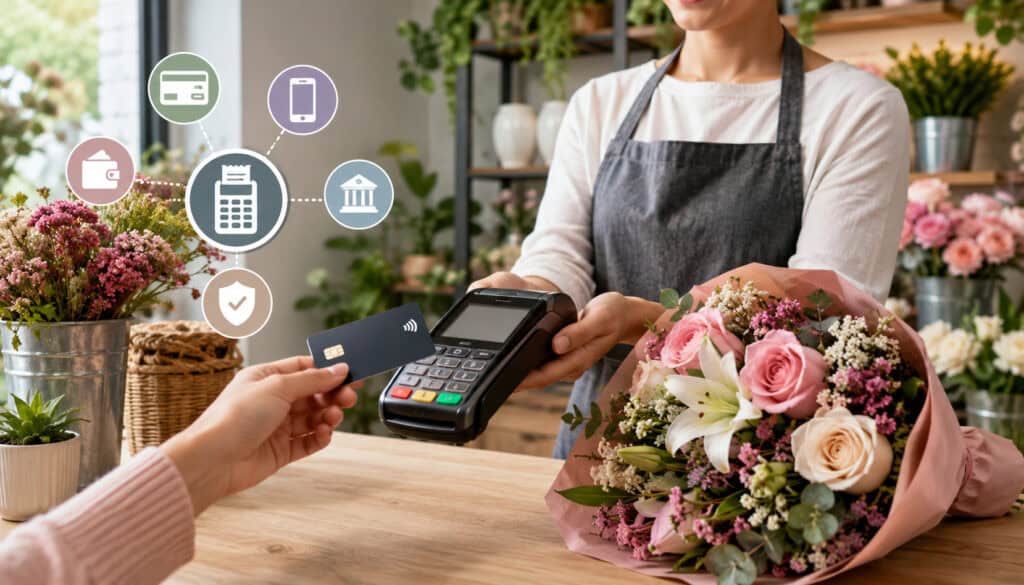
Affordable payment processing for florists should support the way customers actually buy flowers. Some customers walk in and pay at the counter. Others place phone orders for delivery. Many browse arrangements online and pay through a website. Wedding and event customers may pay deposits, installments, or final balances over time.
Credit and debit cards remain essential because they are familiar, fast, and convenient. Debit transactions may sometimes carry lower costs depending on the setup, while credit cards often provide customer rewards and buyer confidence. Mobile wallets and contactless payments help speed up counter checkout, especially during busy periods.
ACH payments can be useful for larger invoices, such as wedding flowers, corporate accounts, funeral home billing, weekly office arrangements, and event retainers. ACH is not ideal for every retail sale, but it may reduce costs on high-ticket payments when customers are comfortable using bank-based payments.
Payment links and online invoices are helpful for phone orders and custom quotes. Instead of writing down card numbers or keying details manually, staff can send a secure link for the customer to complete payment. This supports payment security and may reduce errors.
POS-integrated checkout is valuable because it keeps order records, receipts, taxes, refunds, and reporting in one place. Florists comparing POS systems for flower shops should look for solutions that support in-store, mobile, and online workflows without forcing staff to re-enter the same order multiple times.
How to Compare Cheap Merchant Accounts for Flower Shops
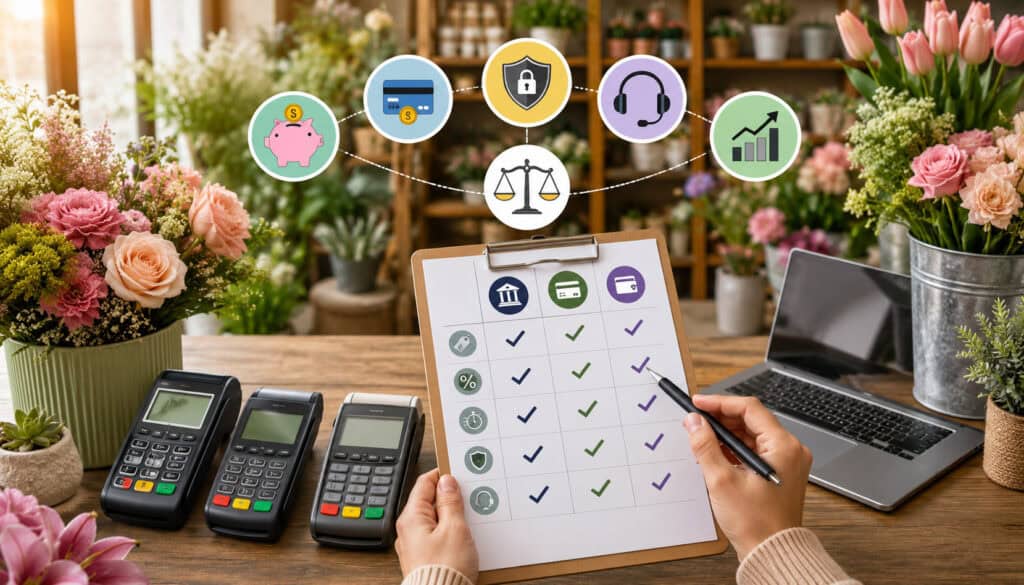
Cheap merchant accounts for flower shops should be compared by total value, not just the lowest quoted rate. A low headline rate may not include card brand fees, gateway costs, statement fees, PCI-related charges, batch fees, chargeback fees, monthly minimums, equipment leases, or early termination penalties.
Start with the pricing model. Flat-rate pricing is simple and predictable, but it may be more expensive for some established shops. Interchange-plus pricing can be more transparent because it separates underlying card costs from processor markup. Tiered pricing is often harder to evaluate because transactions may be grouped into broad categories.
Next, review contract terms. Florists should understand cancellation rules, equipment obligations, funding timelines, reserve requirements, and monthly minimums. Seasonal businesses should be careful with terms that penalize slower months.
Settlement timing is another key factor. A shop preparing for a major holiday or event season needs reliable deposits. Delayed funding can create problems when inventory must be purchased quickly.
Support matters too. A florist cannot afford payment downtime during a rush. Look for responsive support, clear onboarding, and help with ecommerce compatibility, POS integrations, chargeback tools, and gateway setup.
Finally, calculate total cost. Compare actual monthly statements, average ticket size, transaction types, online volume, keyed volume, and chargeback history. The cheapest option is the one that lowers long-term cost while still supporting secure, reliable checkout.
Ways to Lower Florist Credit Card Processing Fees
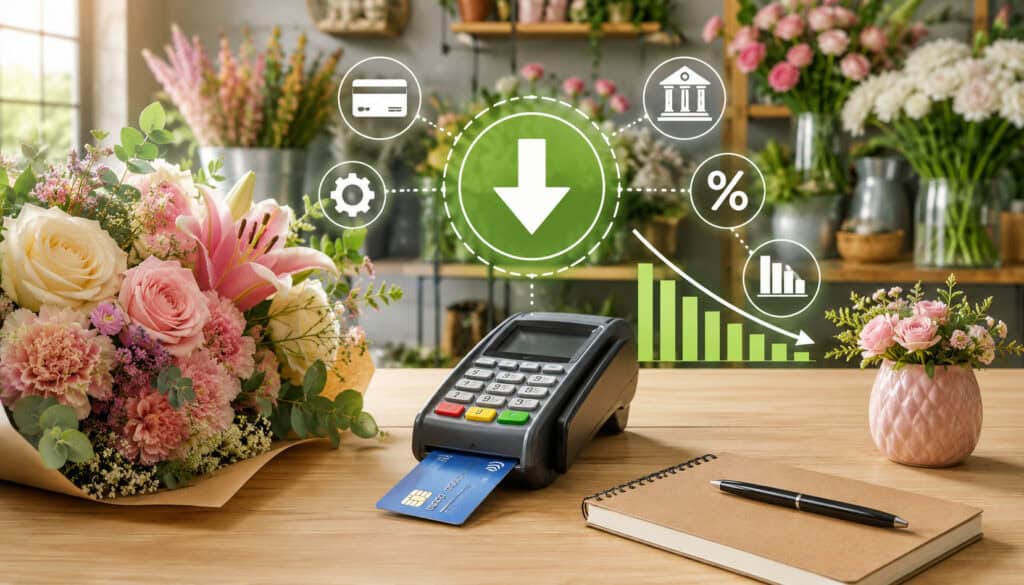
Florist credit card processing fees can often be lowered through better workflows. The first step is reducing keyed transactions. Phone orders are common in floral retail, but manually entering card data can raise costs and create security risk. A secure payment link lets the customer complete the transaction directly.
Use card-present methods whenever possible. Counter sales, curbside pickup, and delivery payments can often be processed through tap, chip, or mobile card readers. This may reduce risk and improve authorization quality.
Encourage ACH for large event orders. Wedding deposits, venue installations, sympathy contracts, and weekly business accounts may be good candidates. Florists should explain payment options clearly and make sure authorization is properly documented.
Review merchant statements regularly. Look for monthly fees, downgrade fees, chargeback fees, batch fees, gateway charges, and unexpected add-ons. If online payments are increasing, confirm the gateway pricing still makes sense.
Preventing chargebacks is another cost-saving strategy. Clear product photos, substitution policies, delivery windows, cancellation terms, and refund rules help customers know what to expect. Digital receipts should include the shop name, order details, delivery date, and contact information.
Other practical tactics include:
- Batch transactions on time.
- Keep terminals updated.
- Train staff to avoid duplicate charges.
- Use AVS for online and phone orders.
- Require clear approval for substitutions.
- Send confirmation messages for delivery orders.
- Keep signed or digital authorizations for event deposits.
Payment Security Best Practices for Floral Businesses
Payment security protects customers and the business. Florists handle sensitive data in many settings: counter checkout, phone orders, delivery payments, wedding consultations, and ecommerce checkout. A secure workflow reduces fraud risk, protects customer trust, and supports smoother operations.
Encryption helps protect payment data while it moves through the payment system. Tokenization replaces sensitive card data with a token, allowing future authorized payments without storing the actual card number. This is useful for event balances, recurring corporate accounts, and repeat customers.
PCI-aware workflows are important. Staff should not write card numbers on paper, store card details in notebooks, save photos of cards, or keep payment data in unsecured spreadsheets. If a customer calls in an order, it is safer to send a secure payment link or use a compliant virtual terminal rather than storing details manually.
Fraud filters should be used for online flower shop payments. Address checks, CVV verification, velocity controls, suspicious order reviews, and delivery address monitoring can help identify risky transactions. This is especially important for high-value arrangements, rushed delivery requests, or orders with mismatched billing and delivery details.
User permissions also matter. Not every employee needs access to refunds, reports, settings, or stored customer profiles. Refund controls, manager approvals, and audit logs reduce internal errors and misuse.
A secure payment setup also supports customer confidence. Florists can explore secure payment acceptance options that support online, in-store, and mobile transactions.
Common Mistakes Florists Should Avoid
One common mistake is choosing a processor only by advertised rates. A low rate may apply only to certain card-present debit transactions, while online, rewards, keyed, or business card transactions may cost more. Florists should ask how different transaction types are priced.
Another mistake is ignoring hidden or overlooked fees. Gateway fees, statement fees, PCI-related fees, chargeback fees, monthly minimums, batch fees, and equipment leases can add up. Reviewing a full sample statement is better than relying on a sales summary.
Weak refund policies can also create problems. Floral products are seasonal, perishable, and sometimes substituted. If customers do not understand cancellation deadlines, delivery limits, freshness expectations, or substitution rules, disputes become more likely.
Poor delivery documentation is another risk. A florist should keep delivery timestamps, recipient names when available, driver notes, photos when appropriate, and customer communication records. This documentation can help resolve disputes quickly.
Manual card storage should be avoided. Writing down card numbers for later use is risky and unnecessary when secure invoices, payment links, and tokenized card-on-file tools are available.
Outdated POS systems can increase errors. If online orders, phone orders, in-store sales, and delivery notes are handled in separate systems, staff may miss details or duplicate work. Integrated low-cost payment systems for flower shops help keep records cleaner.
Finally, many florists do not review merchant statements often enough. Fees can change, volume can shift, and online orders may grow. Regular reviews help keep costs under control.
Best Practices for Low-Fee Florist Merchant Services
Low-fee florist merchant services should make payment acceptance easier, not just cheaper. The goal is to support faster checkout, secure transactions, lower dispute risk, and better reporting across all sales channels.
Compare total costs before choosing a provider. Include transaction rates, gateway fees, equipment costs, software charges, chargeback fees, monthly fees, and contract terms. Use your real transaction mix rather than estimates whenever possible.
Integrate POS and ecommerce tools. When the website, POS, and payment gateway work together, staff spend less time reconciling orders. This helps with inventory planning, customer service, refunds, and reporting.
Document deliveries carefully. Floral delivery is one of the most dispute-prone areas because timing and presentation matter. Use delivery notes, confirmation messages, photos when appropriate, and clear recipient details.
Use digital receipts. Receipts should show the shop identity, order summary, payment amount, date, delivery or pickup details, and contact information. This helps customers recognize charges and reduces confusion.
Monitor seasonal volume. During peak periods, transaction volume, average ticket size, and refund requests may rise. Make sure terminals, mobile readers, ecommerce checkout, and staff permissions are ready before demand increases.
Train staff consistently. Employees should know when to use payment links, how to process refunds, how to verify customer details, how to handle substitutions, and how to avoid storing card data improperly.
Florists can also review resources on payment processing for flower shops to understand how merchant accounts, POS systems, equipment, and support can fit daily operations.
Conclusion
Low-cost credit card processing for floral businesses requires more than chasing the lowest rate. Florists need transparent pricing, secure payment tools, reliable funding, strong POS and ecommerce integration, and practical chargeback prevention.
The best setup supports walk-in sales, online flower orders, phone orders, delivery payments, wedding deposits, event balances, and seasonal spikes without creating unnecessary fees or security risks.
By reviewing statements, reducing keyed payments, documenting deliveries, using secure checkout, and training staff, flower shops can protect margins while giving customers a smooth payment experience.