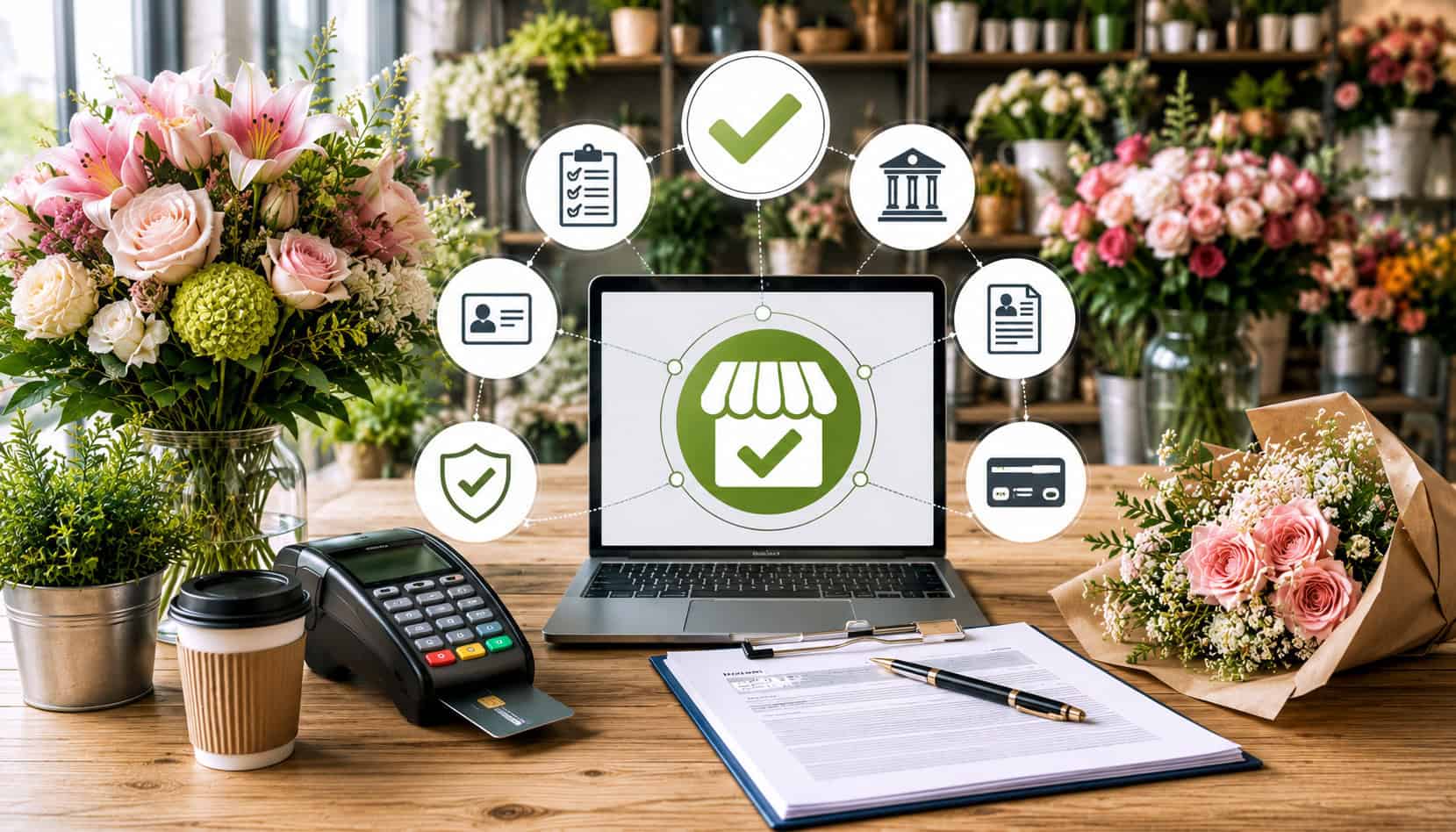
Flower shops need reliable ways to accept credit cards, debit cards, online payments, phone orders, delivery payments, event deposits, and ecommerce transactions. Before those payments can flow smoothly, most florists must pass merchant account review. That review is where flower shop merchant account approval requirements come in.
These requirements help processors confirm that the business is legitimate, financially stable, secure, and prepared to handle customer payments responsibly.
For florists, approval can involve more than a basic retail review because flower shops often take card-not-present orders, deliver perishable goods, accept deposits, and manage seasonal sales spikes.
A strong application can make the process faster. Clear business records, complete policies, secure checkout tools, and accurate sales projections all help underwriters understand how the shop operates.
What Are Flower Shop Merchant Account Approval Requirements?
Flower shop merchant account approval requirements are the business, financial, operational, and security standards a florist must meet before being approved to process card payments. In practical terms, a processor wants to know who owns the business, what the shop sells, how customers pay, how orders are fulfilled, and how disputes are handled.
The review usually starts with business verification. This may include the legal business name, ownership details, tax information, business address, contact information, and business bank account.
The processor checks whether the application matches official records and whether the business appears consistent across documents, website pages, invoices, and bank records.
Underwriters may also review processing history. If the shop has accepted cards before, prior merchant statements can show monthly sales volume, average ticket size, refunds, chargebacks, and transaction types. Newer businesses may be asked for projections, product lists, pricing examples, and bank statements instead.
For online florists, ecommerce review is especially important. The website should clearly show products, pricing, delivery areas, delivery timing, substitution policies, refund terms, contact details, and secure checkout. These details support flower shop payment processing approval because they reduce confusion and help prevent disputes.
Payment security is another major part of florist merchant account approval. Florists should use secure payment tools, avoid writing down card numbers, limit staff access, and use compliant systems for card acceptance.
PCI DSS is a key security framework for businesses that store, process, or transmit cardholder data, and merchants can learn more from this PCI compliance overview.
Why Florists Need Merchant Account Approval
Florists need merchant account approval because flower shop transactions often happen across several channels. A customer may buy a bouquet in person, order a sympathy arrangement by phone, pay a wedding deposit online, or request same-day delivery from a mobile device. Each payment type carries different operational and fraud considerations.
Walk-in transactions are usually lower risk because the cardholder is present. Chip and contactless payments help verify the card and create a stronger transaction record. However, many floral sales are not limited to the counter. Phone orders, online checkout, delivery payments, invoices, and event deposits create card-not-present exposure.
Seasonal spikes also matter. During peak floral periods, a shop may process several times its normal volume. Underwriters want to know whether the business can handle those spikes without excessive refunds, failed deliveries, or chargebacks. Accurate volume estimates help prevent account holds or reviews later.
Wedding and event deposits add another layer. A customer may pay weeks or months before fulfillment, and the final order may change. Clear invoices, signed agreements, payment schedules, and refund terms make the merchant account underwriting process easier.
Florists also sell perishable products. Substitutions may be necessary when specific flowers are unavailable. Without clear substitution and delivery policies, customers may dispute a charge because the final arrangement did not match expectations.
That is why floral business merchant services requirements often focus on website clarity, customer communication, and delivery proof.
For practical setup options, florists can review payment processing solutions for flower shops and compare how different tools support in-store, phone, delivery, and online payments.
| Requirement | What It Shows | Why It Matters for Flower Shops |
| Business registration | The shop is legally established | Confirms the merchant is legitimate |
| Ownership details | Who controls the business | Helps meet underwriting and identity checks |
| Bank statements | Cash flow and stability | Supports sales volume and funding review |
| Processing history | Past card sales and disputes | Helps assess chargeback risk |
| Website review | Policies, products, and checkout clarity | Reduces online order confusion |
| Refund policy | How customer issues are handled | Helps prevent disputes |
| Delivery policy | Fulfillment timing and responsibility | Important for perishable, time-sensitive orders |
| Payment security | How card data is protected | Supports safer florist payment processing |
Business Registration and Ownership Details
Business registration and ownership details are among the first items reviewed during florist merchant account approval. The processor needs to confirm that the flower shop is a real business and that the person applying has authority to open the account.
The application should match official records. The legal name, trade name, business address, phone number, website, tax details, and ownership information should be consistent. Inconsistencies can delay approval because underwriters may need extra documents to confirm the connection between the applicant and the business.
Operating history can also help. A long-standing shop may have leases, invoices, bank statements, supplier records, and prior processing statements. A newer florist can still be approved, but the application should explain the business model clearly, including expected sales channels, average order size, delivery practices, and ecommerce plans.
Bank Statements and Processing History
Bank statements and processing history help underwriters evaluate financial stability and payment risk. A processor may review deposits, cash flow, ending balances, returned items, and whether projected card volume seems realistic for the business.
Prior processing statements are especially useful. They show monthly volume, number of transactions, average ticket size, refunds, chargebacks, and card-present versus card-not-present activity. A florist with steady volume and low disputes may move through underwriting more smoothly.
New shops may not have processing statements. In that case, bank statements, sales forecasts, product pricing, event contracts, and ecommerce projections can help. Be realistic. Overstating expected volume can trigger later account reviews if actual processing behavior looks different from the approved profile.
Website and Ecommerce Review
Website review matters for floral ecommerce payments because online orders create more room for misunderstanding. Customers need to know what they are buying, when it will be delivered, and what happens if certain flowers are unavailable.
A florist website should include clear product descriptions, pricing, delivery fees, delivery cutoffs, service areas, refund terms, substitution policies, privacy information, and contact details. Checkout should be secure and should not ask customers to send card details through unsafe channels.
Underwriters may also check whether products match the merchant category. If the website includes unrelated or unsupported products, approval can slow down. Keep the site focused, current, and consistent with the application.
Common Documents Needed for Florist Merchant Account Approval
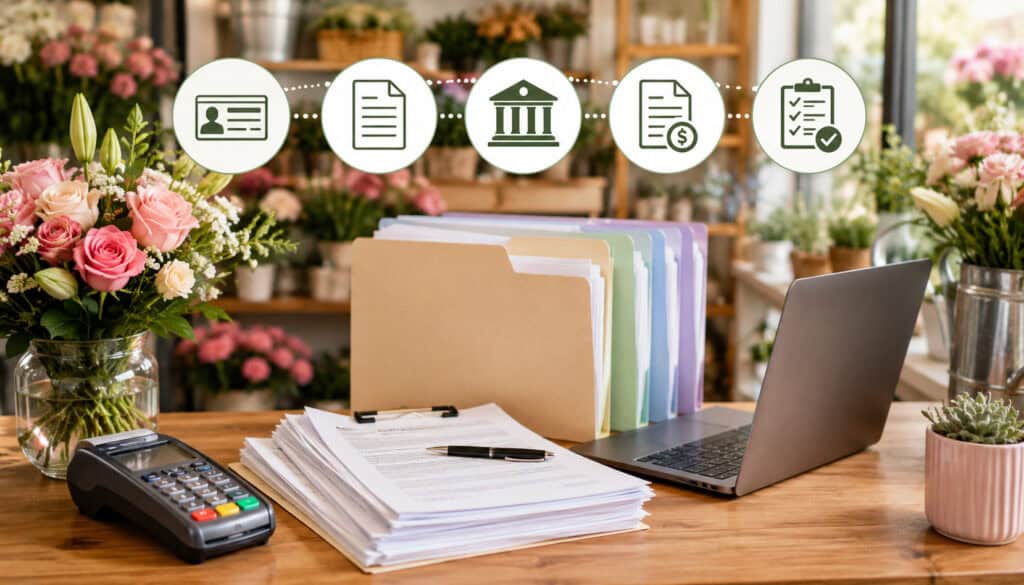
The documents needed for florist merchant account approval vary by processor, business size, transaction volume, and risk profile. However, most applications require proof that the business exists, the owner is identifiable, the bank account is valid, and the sales model is clear.
A typical document package may include a business license or registration record, tax identification details, owner identification, business bank account information, a voided check or bank letter, recent bank statements, prior merchant statements, website URL, product list, and written delivery and refund policies.
For ecommerce florists, the website often functions like a document. It should show what customers see before paying. A clear site can support payment gateway approval because it demonstrates transparency around products, pricing, delivery, substitutions, refunds, and customer service.
Florists that handle weddings, funerals, corporate accounts, or recurring deliveries may also provide sample invoices, event agreements, deposit terms, and recurring billing authorization language. These materials help underwriters understand how larger or future-dated transactions are managed.
Commonly requested items include:
- Business registration or license
- Owner identification
- Tax information
- Business bank account details
- Voided check or bank verification letter
- Recent business bank statements
- Prior processing statements, if available
- Website URL and product list
- Delivery, refund, cancellation, and substitution policies
- Expected monthly volume and average ticket size
- POS, ecommerce, or gateway details
Flower Shop Payment Processing Approval Process
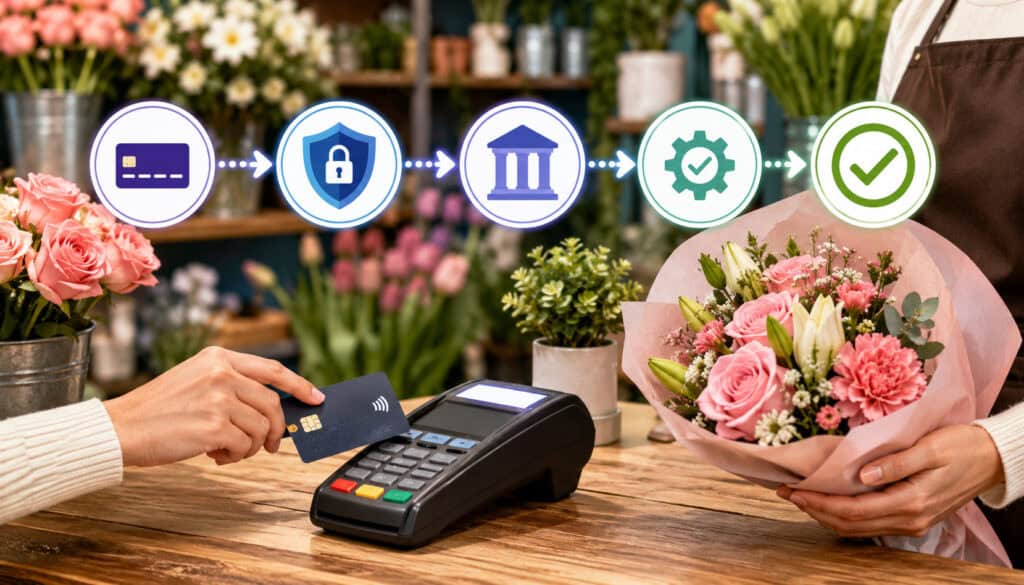
The flower shop payment processing approval process usually begins with an application. The florist provides business details, ownership information, bank account data, expected processing volume, average ticket size, sales channels, and website information. Accuracy matters because underwriting compares the application against supporting documents.
Next comes document verification. The processor may confirm identity, business registration, bank account ownership, website legitimacy, and whether the shop’s products and services match the requested merchant account setup. If documents are missing or inconsistent, approval may pause until the issue is resolved.
The underwriting team then evaluates risk. For florists, this often includes chargeback risk, refund patterns, card-not-present volume, event deposits, delivery policies, and ecommerce controls. A shop with many phone orders may need stronger fraud tools than a shop that mostly processes in-person transactions.
Once underwriting is satisfied, the processor provides pricing and account terms. These may include transaction pricing, monthly fees, gateway fees, chargeback fees, hardware costs, funding timelines, and any reserve requirements. Florists should read the terms carefully before activating the account.
After approval, setup begins. This may include payment gateway approval, POS configuration, terminal deployment, ecommerce integration, user permissions, fraud filters, and test transactions. Florists comparing systems can review POS systems for flower shops to understand features that support counter sales, inventory, delivery, and reporting.
The final step is live processing. Before taking real orders, the shop should test card-present sales, online checkout, refunds, receipts, settlement reports, and staff permissions.
Factors That Can Delay Approval
Approval delays usually happen when underwriters cannot verify the business, understand the sales model, or confirm that customer-facing policies are clear. Many delays are preventable with organized documentation.
Incomplete applications are the most common issue. Missing owner information, mismatched bank details, vague product descriptions, or absent website links can lead to follow-up requests. Even small errors can slow approval if they affect identity, funding, or business verification.
Inconsistent business names also cause problems. A florist may apply under a legal entity name, advertise under a shop name, and deposit funds into a bank account with another name. That can be acceptable, but the relationship must be documented clearly.
Unclear policies can delay ecommerce approval. A website without refund terms, delivery windows, substitution language, or contact information may appear risky. Florists should remember that underwriters review the site from a customer protection perspective.
High chargeback history can also extend review. If prior statements show frequent disputes, the processor may ask for explanations, updated policies, delivery proof practices, or mitigation steps. Chargebacks are not always disqualifying, but unexplained patterns raise concern.
Other delay factors include unsupported products, excessive projected volume, weak financial documentation, broken checkout pages, unsecured payment forms, and vague event deposit terms.
Payment Security Expectations for Florists
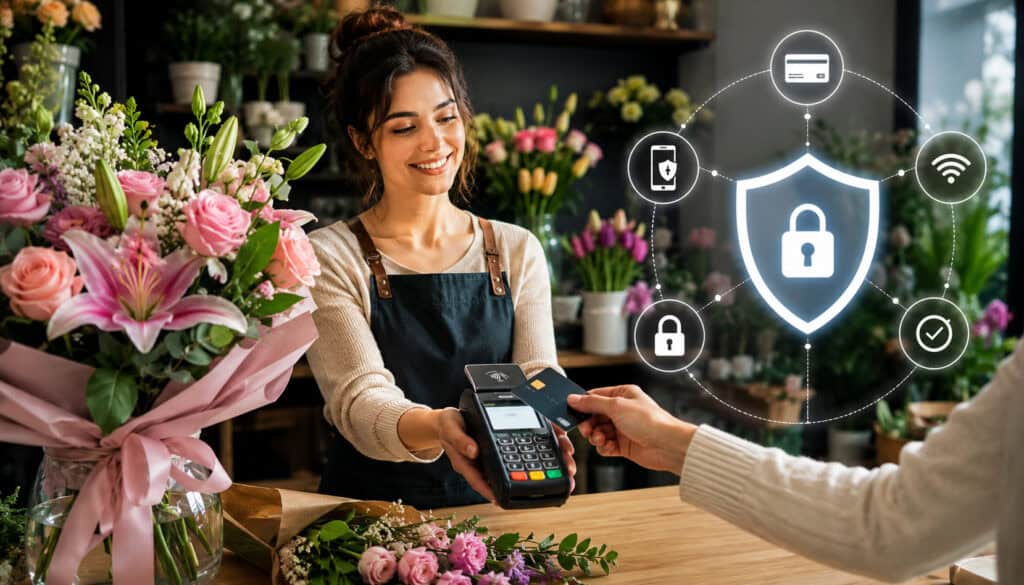
Payment security is central to florist credit card processing requirements. Florists handle card payments in-store, online, by phone, through invoices, during deliveries, and sometimes through recurring customer profiles. Each channel should protect cardholder data and reduce unauthorized access.
Secure payment tools should include encryption and tokenization. Encryption helps protect data during transmission, while tokenization replaces sensitive card data with a secure token for future use. This is especially helpful for repeat customers, corporate accounts, subscriptions, and event payment schedules.
Staff workflows matter too. Employees should not write card numbers on paper, store card images, save card details in spreadsheets, or send payment information through email or messaging apps. Role-based permissions can limit who can issue refunds, access reports, or adjust transactions.
For ecommerce, secure checkout is essential. A florist website should use secure payment pages, reputable gateways, fraud controls, address verification, CVV checks, and clear order confirmation records. If the checkout uses third-party scripts or plugins, those tools should be monitored and kept updated.
Florist POS systems should also support user permissions, audit trails, refund controls, and secure receipts. Delivery teams using mobile devices should use approved mobile payment tools rather than manually collecting card details.
Security is not only about compliance. It protects customer trust, reduces fraud losses, and supports smoother merchant account underwriting.
Merchant Account Fees Florists Should Understand
Florists should understand merchant account fees before signing an agreement. Payment processing costs can affect margins, especially when a shop handles mixed transaction types such as in-person sales, phone orders, online checkout, deposits, and delivery payments.
Transaction fees are the most visible cost. These may be charged as flat-rate pricing, interchange-plus pricing, tiered pricing, or another structure. Card-present transactions often price differently from keyed-in or ecommerce payments because risk and verification levels differ.
Monthly fees may cover account maintenance, reporting, support, PCI-related programs, or platform access. Gateway fees may apply when the florist accepts online payments, invoice payments, or payment links. Some gateways also charge per transaction.
Chargeback fees are another important cost. A chargeback can create both a fee and a temporary debit while the dispute is reviewed. Since floral orders are perishable and delivery-based, florists should keep strong records to defend valid sales.
POS equipment costs may include terminals, card readers, receipt printers, cash drawers, tablets, scanners, or software subscriptions. Some offers include equipment, but florists should check whether the cost is built into the processing rate or tied to contract terms.
Other possible fees include batch fees, statement fees, minimum fees, early termination fees, address verification fees, tokenization fees, and ecommerce plugin costs.
Common Mistakes Flower Shops Should Avoid When Applying
One major mistake is submitting incomplete documents. A rushed application can lead to avoidable delays, repeated requests, and confusion. Florists should prepare a clean application package before submitting.
Another mistake is having unclear refund and delivery policies. Floral orders are time-sensitive, emotional, and often purchased by someone other than the recipient. If a customer cannot understand delivery timing, substitution rules, or cancellation terms, disputes become more likely.
Weak ecommerce checkout is also risky. Broken forms, missing security indicators, vague product pages, and no customer support information can make underwriters hesitant. A professional checkout experience supports both approval and conversion.
Some florists still store card details manually for repeat customers. This is a serious mistake. Use tokenized card-on-file tools instead. Manual storage can create security exposure and undermine trust.
Ignoring chargeback risk is another problem. Florists should keep delivery proof, order confirmations, customer messages, refund logs, and substitution approvals. For more practical dispute guidance, see this guide on winning a chargeback dispute as a florist.
Finally, avoid choosing a provider based only on price. Florist merchant services should support the way the shop actually sells, including POS, ecommerce, phone orders, delivery, deposits, refunds, and reporting.
Best Practices to Improve Approval Chances
The best way to improve approval chances is to make the business easy to verify and easy to understand. Underwriters are not only reviewing documents; they are assessing whether the shop can process payments responsibly.
Start by organizing documents early. Keep business registration, bank records, owner identification, prior processing statements, policies, website links, and product lists in one folder. Make sure names, addresses, and bank details match.
Next, strengthen customer-facing policies. Delivery windows, same-day cutoffs, substitution terms, refund rules, cancellation deadlines, and contact options should be visible before checkout. Clear policies reduce customer confusion and chargeback risk.
Keep bank records updated. If the business has strong cash flow, stable deposits, and clean records, approval may be smoother. If the shop is new, provide realistic sales estimates and explain how orders will be generated.
Improve checkout security. Use secure payment gateways, tokenization, address verification, CVV checks, role-based permissions, and fraud filters. Avoid manual card storage and unsafe payment collection methods.
Document delivery practices. Delivery confirmation, timestamps, recipient notes, photos where appropriate, driver logs, and customer messages can help resolve disputes.
Florists should also choose tools that match their real workflow. A shop that sells online and in-store may benefit from integrated systems. For a broader overview, review credit card processing for flower shops.
What are flower shop merchant account approval requirements?
Flower shop merchant account approval requirements are the standards used to evaluate whether a florist can accept card payments safely and reliably.
They usually include business verification, ownership details, bank account confirmation, sales volume review, website review, processing history, chargeback risk assessment, and payment security controls.
For online florists, requirements may also include clear delivery, refund, cancellation, and substitution policies. The goal is to confirm that the business is legitimate, transparent with customers, and prepared to handle payments securely.
What documents do florists need for approval?
Florists may need business registration, tax details, owner identification, business bank account information, a voided check or bank letter, recent bank statements, prior processing statements, website URL, product list, and written policies.
New businesses may be asked for sales projections, supplier invoices, sample receipts, or event contracts. Existing shops can strengthen the application with processing history and clean dispute records.
Why do processors review florist websites?
Processors review florist websites because online orders can create higher dispute risk. The website shows how products are described, how pricing appears, how checkout works, and whether customers can understand delivery and refund terms before paying.
A strong website should include secure checkout, accurate product descriptions, delivery areas, order cutoffs, substitution terms, refund policies, and contact information. These details support payment gateway approval and reduce confusion.
Can florists accept online payments?
Yes, florists can accept online payments through ecommerce checkout, payment links, invoices, customer portals, or integrated POS systems. Online payment acceptance should be supported by secure checkout, fraud filters, clear receipts, and customer-friendly policies.
Floral ecommerce payments are especially useful for same-day orders, preorders, subscriptions, sympathy arrangements, corporate accounts, and event deposits.
What can delay flower shop payment processing approval?
Approval can be delayed by incomplete applications, inconsistent business names, missing bank verification, unclear website policies, broken checkout pages, high chargeback history, unsupported products, or unrealistic sales projections.
Florists can reduce delays by preparing documents early, checking website accuracy, matching business records, and explaining any unusual transaction patterns.
Are flower shops considered high risk?
Many flower shops are not automatically high risk, but certain sales patterns can increase review. Card-not-present orders, delivery disputes, event deposits, seasonal spikes, high refund activity, and unclear substitution policies may increase chargeback risk.
A florist with strong documentation, secure payments, clear policies, and low dispute rates may be viewed more favorably during merchant account underwriting.
How can florists reduce chargebacks?
Florists can reduce chargebacks by using clear product descriptions, accurate delivery windows, visible substitution policies, order confirmations, proof of delivery, refund logs, customer communication records, and secure fraud screening.
For event orders, signed agreements and deposit terms are important. For online orders, address verification, CVV checks, and clear checkout disclosures can help.
What payment security features should florists use?
Florists should use encryption, tokenization, secure payment gateways, PCI-aware workflows, role-based staff permissions, refund controls, fraud filters, and secure POS systems. They should avoid writing down card numbers or storing card data manually.
Secure systems protect customers and make florist payment processing safer across in-store, phone, online, mobile, and delivery channels.
Conclusion
Flower shop merchant account approval requirements usually involve business verification, financial records, website review, payment security, and chargeback risk assessment. The process helps processors understand how the florist sells, how customers pay, how orders are fulfilled, and how disputes are handled.
Florists can improve approval chances by organizing documents early, keeping business records consistent, publishing clear website policies, using secure payment tools, and documenting delivery practices.
Strong payment workflows also help after approval by reducing errors, preventing disputes, and supporting better customer experiences.
A prepared florist is easier to approve and easier to support. With the right flower shop merchant account setup, secure systems, and practical operating procedures, floral businesses can accept payments confidently across the counter, online, by phone, during delivery, and for future events.