Floral businesses depend on smooth payments at every point of the customer journey: walk-in bouquets, phone orders, wedding deposits, sympathy arrangements, event invoices, recurring lobby flowers, and last-minute delivery requests.
A strong merchant services setup guide for floral businesses helps flower shops accept payments securely, reduce checkout friction, and stay organized during seasonal rushes.
Reliable floral business payment processing is not only about accepting cards. It includes your merchant account, POS system, ecommerce checkout, payment gateway, delivery payment workflow, refund process, fraud controls, and reporting.
For more floral-specific setup help, review these resources on flower shop payment processing, florist POS systems, floral ecommerce payments, and merchant account setup.
What Are Merchant Services for Floral Businesses?
Merchant services are the tools and account services that allow a flower shop to accept and manage electronic payments. For florists, this usually includes card terminals, online checkout, mobile payments, payment links, invoicing tools, and the back-end processing that moves approved funds into the business bank account.
A florist merchant services setup often begins with a merchant account. This account connects your flower shop to the payment networks and allows transactions to be authorized, captured, settled, and deposited. For a retail florist, the setup must support in-person transactions, phone orders, online orders, event deposits, and delivery payments.
A payment gateway is another major part of flower shop payment processing setup. It securely connects your online flower shop checkout to payment processing tools. When a customer orders a birthday bouquet online, the gateway encrypts payment details, requests authorization, and sends the result back to the ecommerce platform.
Flower shop POS systems bring the front counter, inventory, taxes, receipts, tips, delivery fees, and customer notes together. A good POS setup should support add-ons, substitutions, special instructions, pickup windows, delivery addresses, and staff permissions.
Why Floral Businesses Need Specialized Payment Processing
Floral businesses handle a mix of fast retail transactions and highly customized orders. A customer may buy a wrapped bouquet in-store, while another customer places a sympathy order online with a delivery window, enclosure card, substitution preference, and special handling instructions. Generic payment tools may process the transaction, but they may not organize the operational details florists need.
Payment processing for florists also needs to account for seasonal spikes. Holidays, school events, graduations, weddings, and sympathy orders can create sudden volume increases. A processor may question unusual transaction activity if the shop has not planned for these spikes, so clear communication and proper account setup matter.
Florists also face more card-not-present payments than many retail shops. Phone orders, online invoices, payment links, and ecommerce orders all carry more dispute risk than a dipped or tapped in-person card. That makes receipts, order confirmations, delivery proof, refund policies, and customer communication essential.
| Merchant Service Feature | Purpose | Benefit for Floral Businesses | Best Use Case |
| Merchant account | Enables card payment acceptance and settlement | Supports in-store, online, phone, and invoice payments | Full-service flower shops |
| Payment gateway | Secures ecommerce payments | Enables online flower shop checkout | Website orders and delivery orders |
| POS system | Manages sales, inventory, receipts, and reports | Keeps orders and payments organized | Retail counter and pickup orders |
| Mobile payments | Accepts payments away from the counter | Useful for events, pop-ups, and deliveries | On-site floral installations |
| Online invoicing | Sends payable invoices digitally | Helps collect event balances and custom order payments | Weddings and corporate orders |
| Recurring billing | Automates repeat payments | Supports weekly or monthly floral programs | Office flowers and subscriptions |
Flower Shop Merchant Account Setup
A flower shop merchant account setup begins with basic underwriting. The provider may review business ownership, expected monthly volume, average ticket size, website details, refund policy, processing history, and bank information. This review helps determine whether the account is properly matched to how the floral business sells.
Florists should be accurate when estimating payment volume. A small daily average may jump during major floral holidays or wedding season, so the application should reflect realistic peak activity. Underestimating volume may cause delays, held funds, or extra review when sales rise.
Settlement timelines vary by setup, transaction type, and risk review. Most shops should understand when batches close, when funds are deposited, and how weekends or holidays affect funding. A clear settlement process supports better cash flow for perishable inventory, payroll, supplies, and delivery expenses.
Payment Gateway and Ecommerce Setup
Florist ecommerce payments require a secure payment gateway that connects the website checkout to the processor. The gateway should support mobile-friendly checkout, digital receipts, address fields, delivery notes, order confirmations, and clear payment status updates.
An online flower shop checkout should be simple, fast, and reassuring. Customers need to choose arrangements, add card messages, select delivery or pickup, enter recipient details, and pay without confusion. Too many checkout steps can increase abandoned carts, especially for time-sensitive orders.
Security is also important. A gateway should use encryption and tokenization so sensitive card data is not manually stored by staff. For helpful background on payment security, see this PCI compliance overview, which explains why businesses that store, process, or transmit card data must follow card data security standards.
POS Systems for Floral Businesses
Flower shop POS systems should do more than accept payments. Florists need tools for product categories, seasonal pricing, delivery fees, taxes, discounts, staff roles, customer profiles, and order notes. The POS should make it easy to record arrangement details, color preferences, enclosure card messages, and substitution approvals.
Inventory support is especially helpful because floral products are perishable. A POS that tracks vases, ribbons, add-ons, plants, cards, and common stems can help owners understand what sells, what spoils, and what should be reordered.
Reporting is another major benefit. Sales reports can show best-selling arrangements, peak order times, average ticket size, refund patterns, and staff performance. These insights help florists prepare for busy seasons and improve profitability.
Steps to Set Up Merchant Services for a Flower Shop
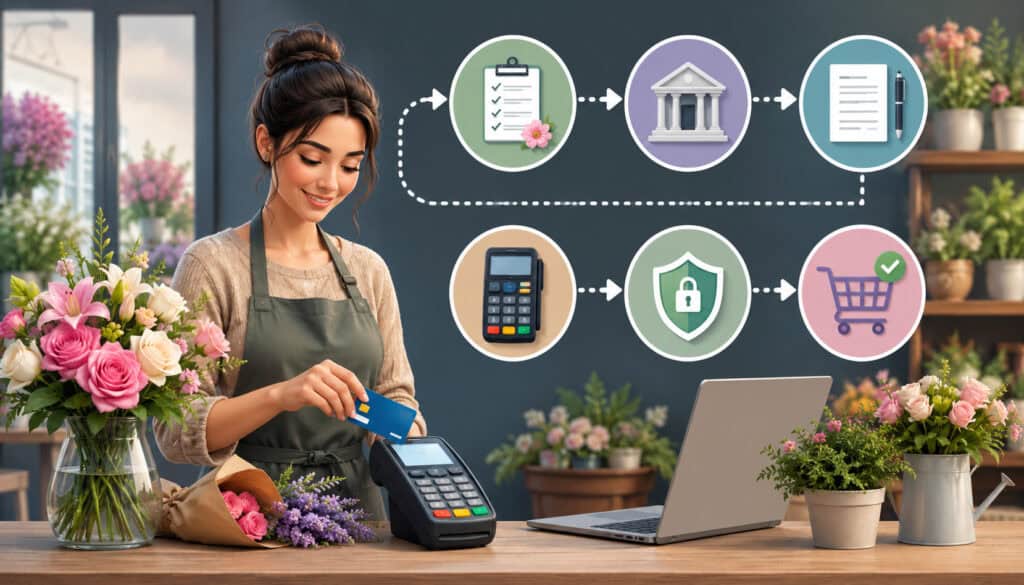
Start by mapping how your shop accepts payments today and how you want to accept them in the future. Include walk-in sales, phone orders, ecommerce orders, social media inquiries, wedding deposits, delivery payments, payment links, invoices, and recurring floral plans. This helps you choose the right merchant services instead of adding tools one at a time.
Next, choose a merchant account that fits floral business payment processing. Share your average ticket, peak ticket, seasonal volume, delivery model, ecommerce plans, and event deposit process. The more accurately your account reflects your real activity, the smoother your approval and settlement experience should be.
Then configure your payment gateway and POS system. Your website checkout should connect securely to the gateway, while the POS should handle front-counter sales, taxes, delivery fees, receipts, order notes, and reporting. If your ecommerce system and POS integrate, orders can flow into one place rather than requiring staff to re-enter details.
Set up mobile payments for deliveries, pop-ups, installations, and off-site events. Test tap, chip, keyed, invoice, and online transactions before launch. Refund a test order, issue a receipt, close a batch, and verify that reports match deposits.
Train staff on payment workflows. Employees should know how to process payments, issue refunds, confirm delivery details, avoid storing card numbers manually, and document customer approvals.
Setup checklist:
- Choose a merchant account.
- Connect the payment gateway.
- Configure the POS system.
- Integrate ecommerce tools.
- Enable mobile and contactless payments.
- Test all payment workflows.
- Train employees.
- Review reports and deposits after launch.
Payment Methods Floral Businesses Should Accept
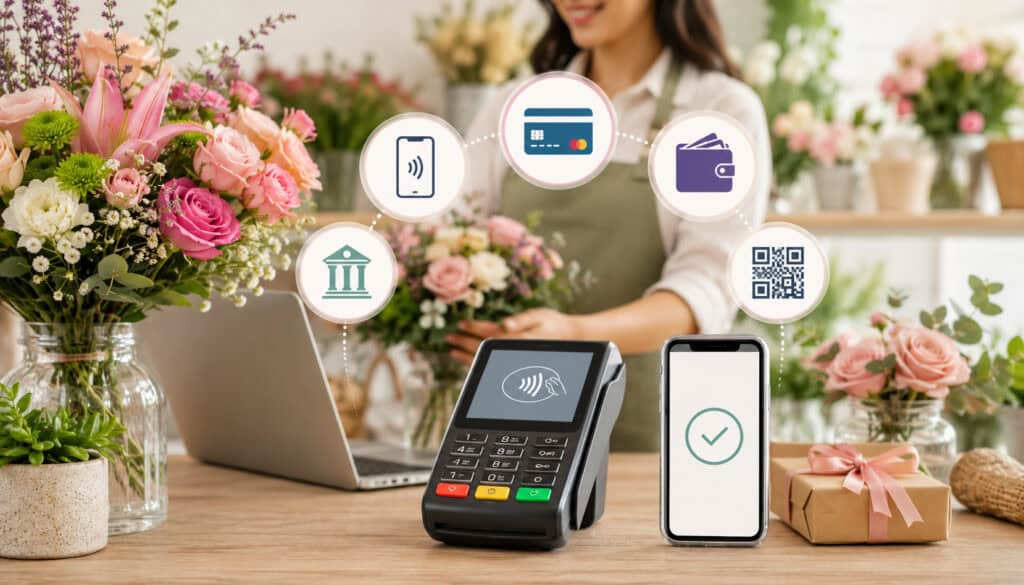
A strong merchant services setup guide for floral businesses should include multiple payment methods because floral customers buy in different ways. A walk-in customer may tap a card at the counter, while an event customer may prefer an invoice. A delivery customer may pay through an online checkout, and a repeat corporate customer may need recurring billing.
Credit and debit cards are essential for most florists. They support quick counter checkout, phone orders, invoices, and ecommerce payments. Contactless payments can speed up busy lines and create a cleaner checkout experience.
ACH payments may be useful for large event balances, corporate accounts, or recurring floral programs. They are not always ideal for urgent delivery orders, but they can reduce card processing costs for larger invoices.
Payment links are useful when customers order through messaging, phone calls, or custom consultations. Instead of taking card details over the phone, staff can send a secure link. This improves security and creates a cleaner record of payment authorization.
Florist recurring billing solutions can support weekly office arrangements, monthly lobby flowers, subscription bouquets, and standing delivery accounts. Recurring billing should include clear customer authorization, billing schedules, cancellation terms, and receipt delivery.
Ecommerce and Delivery Payment Setup for Florists
Florist ecommerce payments must be built around speed, clarity, and trust. Customers often place flower orders during emotional or time-sensitive moments, such as birthdays, anniversaries, sympathy occasions, and celebrations. Checkout should help them complete the order confidently without calling the shop for basic questions.
A strong online flower shop checkout should include arrangement options, delivery date availability, recipient information, delivery address, card message, substitution policy, delivery fee, taxes, and order confirmation. Customers should receive a digital receipt and confirmation immediately after payment.
Delivery payment systems should also support documentation. This may include address verification, delivery status updates, driver notes, timestamps, photos when appropriate, and proof of delivery. These records can help resolve disputes when a customer claims an order was late, missing, or not as expected.
Clear substitution language is important because floral inventory changes quickly. If a specific bloom is unavailable, the customer should understand whether the shop may substitute similar colors, equal value stems, or designer’s choice products.
Delivery workflows should connect payment, order details, and fulfillment. When payment systems and delivery systems are disconnected, staff may miss notes, duplicate orders, or struggle to verify disputes.
Payment Security Best Practices for Floral Businesses

Payment security should be part of daily operations, not only a technical setup task. Floral businesses handle in-person cards, online checkout, phone orders, invoices, and sometimes stored customer profiles. Each channel should be reviewed for safe card handling.
Encryption protects payment data during transmission, while tokenization replaces sensitive card details with secure tokens. These tools help reduce the risk of exposing card data and limit what staff can access. A secure gateway and modern POS system can make these protections easier to maintain.
PCI-aware workflows are essential. Staff should not write card numbers on paper, store card details in spreadsheets, text card information, or keep payment data in customer notes. Refunds should be handled through approved systems with proper permissions.
Fraud controls should be configured for ecommerce and phone orders. Address checks, CVV requirements, velocity controls, order review rules, and clear approval steps can reduce risky transactions. High-value delivery orders, rushed orders, mismatched billing details, and unusual pickup requests may need extra review.
User permissions also matter. Not every employee needs access to refunds, reporting, stored customer profiles, or gateway settings. Assign roles based on responsibility.
Common Merchant Account Challenges for Florists
Florists may experience merchant account challenges because their payment patterns can change quickly. A shop may process modest weekday sales, then suddenly see a large increase during a floral holiday or wedding weekend. If the merchant account was not set up with realistic seasonal volume, the processor may review activity more closely.
Chargebacks are another common issue. Floral disputes may involve delivery timing, arrangement appearance, substitutions, duplicate orders, missed card messages, or customer misunderstanding. Because flowers are perishable and often delivered to someone other than the buyer, documentation is especially important.
Refunds can also create friction. Customers may request refunds because of late delivery, unavailable flowers, dissatisfaction with substitutions, or event changes. A clear refund and substitution policy should appear on receipts, invoices, and ecommerce checkout pages.
Some florists may face rolling reserves or funding reviews if they process high-value event deposits, have limited processing history, or experience unusual spikes. Good documentation, transparent sales practices, and accurate underwriting details can reduce surprises.
Fraud prevention is especially important for card-not-present orders. Rushed high-value orders, mismatched billing and delivery details, and customers unwilling to verify information should be reviewed carefully.
Common Payment Setup Mistakes Flower Shops Should Avoid
One major mistake is choosing payment tools without ecommerce support. A flower shop may begin with a simple countertop terminal, then later struggle to accept online orders, payment links, deposits, or delivery payments. It is better to choose tools that support growth from the start.
Another mistake is weak refund and substitution communication. Floral products vary by season and availability, so customers should know how substitutions are handled before they pay. Clear policies reduce misunderstandings and help staff respond consistently.
Manual card storage is a serious risk. Writing card numbers on paper, saving them in notes, or storing them in email creates avoidable exposure. Use tokenized customer profiles or secure invoices instead.
Poor POS integration can also cause problems. If online orders, in-store sales, and delivery payments are handled in separate systems, reporting becomes harder and staff may miss important details.
Ignoring delivery documentation is another common issue. Without delivery records, timestamps, customer approvals, and order notes, the shop may have limited evidence during a dispute.
Finally, many shops fail to review merchant statements. Fees, downgrades, chargebacks, refunds, and batch issues should be reviewed regularly so problems are caught early.
Best Practices for Successful Floral Payment Processing
The best floral payment setups are integrated, documented, and easy for staff to use. Start with a connected POS, gateway, and ecommerce checkout whenever possible. This reduces duplicate entry and keeps orders, payments, customer notes, and reports in one workflow.
Offer multiple payment methods, but keep each method secure. Cards, mobile wallets, invoices, payment links, ACH, and recurring billing can all be useful when matched to the right use case. For example, payment links may work well for custom phone orders, while recurring billing may be better for weekly office flowers.
Monitor seasonal volume increases before they happen. If your shop expects a major spike, review processing limits, staffing, inventory, delivery capacity, and website checkout performance ahead of time.
Document deliveries carefully. Use order confirmations, delivery notes, proof of delivery, and customer communication logs. These records can reduce disputes and help staff answer questions quickly.
Send automated receipts and confirmations. Customers should know that payment was successful, the order was received, and the delivery or pickup details are correct.
Review chargeback reports, refund trends, and declined transaction patterns. These reports can reveal operational issues, fraud attempts, unclear policies, or checkout problems.
What are merchant services for floral businesses?
Merchant services for floral businesses include the accounts, software, hardware, and security tools needed to accept electronic payments. This may include a merchant account, POS system, payment gateway, ecommerce checkout, invoice tools, mobile card readers, and recurring billing options.
For florists, merchant services must support more than simple counter payments. A complete setup should handle walk-in purchases, online flower orders, delivery transactions, phone payments, event deposits, refunds, and customer receipts.
How do flower shops accept online payments?
Flower shops accept online payments through an ecommerce website connected to a secure payment gateway. The customer selects an arrangement, enters delivery or pickup details, provides payment information, and receives an order confirmation after approval.
The best online flower shop checkout should be mobile-friendly and easy to follow. It should show delivery fees, taxes, substitution policies, card message fields, and confirmation details before the customer completes payment.
What payment methods should florists accept?
Florists should usually accept credit cards, debit cards, contactless payments, mobile wallets, online invoices, payment links, and phone payments through secure tools. ACH may also be useful for larger event invoices or recurring corporate accounts.
The right mix depends on the shop’s sales model. A retail-heavy shop may prioritize POS and contactless checkout, while an event-focused florist may need deposits, invoices, and recurring billing.
Are florist ecommerce payments secure?
Florist ecommerce payments can be secure when the shop uses a reputable payment gateway, encrypted checkout, tokenization, fraud controls, and PCI-aware workflows. Staff should avoid manually storing card data or accepting payment details through insecure channels.
Security also depends on daily habits. Use strong passwords, staff permissions, refund controls, and regular payment reviews to reduce risk.
Why do floral businesses experience chargebacks?
Floral businesses may experience chargebacks because orders are customized, perishable, time-sensitive, and often delivered to someone other than the buyer. Disputes may involve delivery timing, substitutions, product appearance, duplicate orders, or unclear refund policies.
Good documentation helps reduce chargeback risk. Keep receipts, customer approvals, delivery records, order notes, substitution notices, and refund communication.
What should florists look for in POS systems?
Florists should look for POS systems that support inventory, delivery fees, taxes, custom notes, discounts, customer profiles, staff permissions, reporting, and ecommerce integration. A florist POS should make it easy to manage both quick retail sales and detailed custom orders.
Reporting is also important. Sales trends, refund activity, best-selling items, and seasonal performance can help owners make better decisions.
How can flower shops reduce payment disputes?
Flower shops can reduce disputes by using clear checkout policies, accurate product descriptions, delivery documentation, automated receipts, and written substitution terms. Staff should confirm custom orders, event deposits, delivery addresses, and card messages before fulfillment.
For high-value or unusual orders, extra verification may be helpful. This protects both the customer and the shop.
What is needed to set up a florist merchant account?
A florist merchant account setup usually requires business details, ownership information, bank account details, expected processing volume, average ticket size, refund policy, and website information if ecommerce payments are accepted.
Florists should also explain seasonal peaks, event deposits, delivery payments, phone orders, and online sales. Accurate setup details help reduce processing interruptions later.
Conclusion
A strong merchant services setup guide for floral businesses helps flower shops accept payments securely, manage online and in-store transactions, support delivery orders, prepare for seasonal demand, and reduce payment disputes.
The right setup brings together floral merchant accounts, payment gateways, flower shop POS systems, ecommerce checkout, mobile payments, invoices, recurring billing, security controls, and staff training. When these pieces work together, florists can spend less time fixing payment problems and more time serving customers.