
Flower shops run on timing, trust, and emotion. Customers often buy flowers for birthdays, sympathy arrangements, weddings, anniversaries, last-minute apologies, and same-day celebrations.
That means payment mistakes do more than create accounting issues. They can delay deliveries, damage customer relationships, create refund disputes, and increase chargeback risk.
The most common payment mistakes flower shops make usually happen because floral businesses handle many order types at once. A single day may include walk-in purchases, phone orders, online flower deliveries, custom event deposits, sympathy arrangements, delivery add-ons, substitutions, and rush orders. Each payment path creates its own risks.
Strong payment management helps flower shops protect revenue, reduce disputes, and keep service consistent during busy periods. It also helps teams avoid florist payment processing mistakes that often go unnoticed until they become chargebacks, failed payments, delayed deposits, or customer complaints.
Why Flower Shops Face Unique Payment Challenges
Flower shops are not simple retail businesses. They sell perishable products, custom designs, time-sensitive delivery, and emotional experiences. A customer is rarely just buying stems; they are buying a birthday surprise, a wedding centerpiece, a funeral tribute, or a same-day gesture that must arrive on time and look appropriate.
This creates unique florist merchant services challenges. Walk-in sales are usually straightforward, but phone orders, delivery payments, online orders, and event deposits require more documentation.
A customer may pay for flowers that are delivered to someone else, which means the cardholder, recipient, and delivery location may all be different. If a dispute happens later, the shop must prove the order was authorized, fulfilled, and delivered correctly.
Flower shops also face seasonal spikes. Valentine’s Day, Mother’s Day, graduation periods, wedding season, and sympathy-related surges can push transaction volume far above normal levels. If the payment processor flags the spike as unusual, deposits may be delayed or reviewed.
Another challenge is expectation management. Flowers are natural products, so exact colors, bloom sizes, and seasonal availability can vary. If substitution policies are unclear, customers may dispute the charge even when the shop delivered a fair replacement.
Common Payment Mistakes Flower Shops Make
The most common payment mistakes flower shops make usually fall into four categories: weak documentation, poor checkout setup, unclear policies, and disconnected systems. These issues can happen in-store, online, over the phone, or during delivery.
A florist may have a beautiful website, skilled designers, and loyal customers, but still lose money because payment workflows are not built for floral operations. For example, a phone order without AVS verification, a delivery without proof, or a vague substitution policy can all create preventable disputes.
Here is a practical overview of frequent flower shop payment processing errors and how to fix them.
| Payment Mistake | Why It Happens | Potential Business Impact | Recommended Solution |
| Taking too many manual phone payments | Staff enter card details quickly during busy periods | Higher fees, fraud exposure, chargebacks | Use secure payment links, AVS, CVV, and documented authorization |
| Weak refund and substitution policies | Policies are hidden, vague, or not accepted at checkout | “Not as described” disputes and refund conflicts | Show policies on product pages, checkout, and receipts |
| Ignoring seasonal volume changes | Holiday order spikes exceed normal processing patterns | Holds, reviews, delayed deposits | Notify processor before peak periods and monitor volume |
| Poor ecommerce checkout design | Mobile checkout, address fields, or payment gateway fails | Abandoned carts and duplicate charges | Test checkout regularly across devices |
| No proof of delivery | Drivers rely on memory or handwritten notes | Lost chargeback cases | Capture time, address, photo, and recipient details |
| Outdated POS setup | Inventory, delivery, and payment tools are disconnected | Manual errors and reporting gaps | Use integrated POS and ecommerce systems |
| Unclear billing descriptor | Customer does not recognize the charge | Friendly fraud and support calls | Use a recognizable descriptor and clear receipts |
| Weak staff training | Seasonal staff process payments inconsistently | Refund errors, duplicate charges, compliance gaps | Create payment handling checklists and role-based permissions |
Accepting Too Many Manual Phone Payments
Phone orders are common in floral retail, especially for sympathy arrangements, last-minute gifts, and customers who prefer personal service. However, accepting too many manually keyed card payments is one of the most common payment mistakes flower shops make.
Manual entry creates higher risk because the card is not physically present. If staff write down card numbers, repeat card details aloud, or store information in notebooks, the shop creates security and compliance problems. Even when staff are careful, keyed transactions may cost more and can be harder to defend if the customer later claims the purchase was unauthorized.
Manual phone payments can also create errors. A staff member may mistype a card number, enter the wrong billing ZIP code, charge the wrong amount, or forget to add delivery fees. During busy floral holidays, these mistakes multiply because staff are rushing.
A better approach is to use secure payment links, virtual terminals with AVS and CVV checks, and emailed invoices. The customer can enter card details directly, while the shop keeps a cleaner authorization trail.
For higher-value orders, staff should confirm the buyer’s name, billing address, phone number, email, delivery address, and order details before processing the payment.
Weak Refund and Substitution Policies
Flowers are seasonal, perishable, and naturally variable. That makes substitution policies essential. A bouquet photo may show pink roses and white lilies, but supply conditions, freshness, and timing may require a comparable replacement. If customers do not understand that before paying, disputes become more likely.
Weak refund policies also create florist billing problems. Customers may expect a full refund if the recipient is unavailable, the delivery address is wrong, or the arrangement looks slightly different from the photo. Without clear terms, staff may handle each complaint differently, which leads to inconsistent service and more disputes.
Good policies should explain:
- When substitutions may happen
- Whether color, flower type, container, or overall style may vary
- How same-day cancellations work
- Whether delivery fees are refundable
- What happens if the recipient refuses delivery
- How freshness complaints should be reported
- What proof customers should provide for damaged flowers
The policy should not be hidden in a footer. It should appear near product descriptions, at checkout, in order confirmations, and on receipts. For online orders, the checkout should record policy acceptance.
This is especially important for custom arrangements, sympathy flowers, and event work. These orders often involve subjective expectations, emotional circumstances, and higher ticket sizes. Clear documentation protects both the customer and the shop.
Ignoring Seasonal Processing Changes
Seasonal demand is a major source of flower shop merchant service mistakes. A shop that normally processes moderate daily volume may suddenly process several times that amount during major floral occasions. To a payment processor or risk system, that sudden spike can look unusual.
If the processor is not prepared, the shop may face funding delays, transaction reviews, or account questions. This can be stressful when the business also needs cash flow for extra inventory, temporary labor, delivery help, and packaging supplies.
Seasonal spikes also increase fraud risk. Criminals often target busy periods because staff are distracted and order volume is high. Suspicious orders may include expensive arrangements, rushed delivery, mismatched billing and delivery details, unusual card behavior, or customers who pressure staff to skip verification.
Florists should prepare before peak periods by reviewing processing limits, expected volume, refund workflows, fraud filters, and settlement timing. Staff should know when to escalate suspicious orders instead of approving them quickly just to keep the line moving.
Flower Shop Merchant Service Mistakes

Flower shop merchant service mistakes often begin when owners choose a processor based only on advertised rates. Low rates may look attractive, but merchant services are more than pricing. Florists need a setup that supports in-store checkout, ecommerce, phone orders, mobile payments, delivery documentation, seasonal spikes, and clear reporting.
One common mistake is failing to compare the full cost structure. Processing statements can include interchange, assessments, processor markup, monthly fees, gateway fees, PCI-related fees, batch fees, chargeback fees, equipment leases, and early termination penalties. A low headline rate may not reflect the true monthly cost.
Another mistake is signing restrictive contracts without understanding cancellation terms. Flower shops need flexibility because their technology needs may change as they add online ordering, delivery routing, subscriptions, event invoicing, or mobile payments. Long equipment leases and cancellation penalties can make it expensive to upgrade.
Weak POS integration is another issue. If the merchant account does not connect with the florist POS, ecommerce site, inventory tool, or accounting system, staff may need to reconcile payments manually. Manual reconciliation increases the risk of missed refunds, duplicate charges, incorrect order totals, and delayed reporting.
Florists should also avoid payment systems that do not support ecommerce. Online ordering is now a core sales channel for many shops, and floral ecommerce payment issues can directly affect revenue. A processor should support secure checkout, fraud filters, payment links, stored customer tokens, refunds, reporting, and mobile-friendly payment pages.
Helpful internal resources include guides on credit card processing for flower shops and best payment processing solutions for flower shops, both of which expand on choosing systems that fit floral workflows.
Floral Ecommerce Payment Issues

Online flower shop payment mistakes can cost sales before a customer ever completes checkout. A customer may find the perfect arrangement, add a delivery date, write a card message, and then abandon the order because the payment page fails or feels confusing.
Common floral ecommerce payment issues include declined transactions, duplicate charges, unclear delivery fees, missing ZIP code validation, weak mobile checkout, slow page load times, and address entry problems. These errors are especially damaging for same-day delivery because customers are often in a hurry.
Mobile checkout deserves special attention. Many floral orders are placed from phones, often by customers who need a quick gift. If the payment page is hard to navigate, the card fields are difficult to use, or digital wallets are unavailable, customers may leave.
Delivery address mistakes are another major risk. A customer may enter the recipient’s address in the billing field, forget an apartment number, or select the wrong delivery date. If checkout does not clearly separate billing details, recipient details, and delivery instructions, the shop may fulfill the order incorrectly and then face a refund request.
Florists should test checkout regularly by placing sample orders. Test different devices, browsers, payment methods, delivery dates, coupon codes, add-ons, and failed payment scenarios. Staff should also understand what customers see after payment, including confirmation emails and receipts.
A well-designed ecommerce checkout should include:
- Clear product descriptions
- Visible substitution policy
- Separate billing and delivery fields
- Delivery date and fee confirmation
- Secure payment options
- Order review before payment
- Digital receipt after purchase
- Fraud checks that do not block legitimate buyers unnecessarily
For shops improving online workflows, this internal guide on POS integration for online and in-store floral sales is a helpful next read.
Delivery Payment and Chargeback Problems
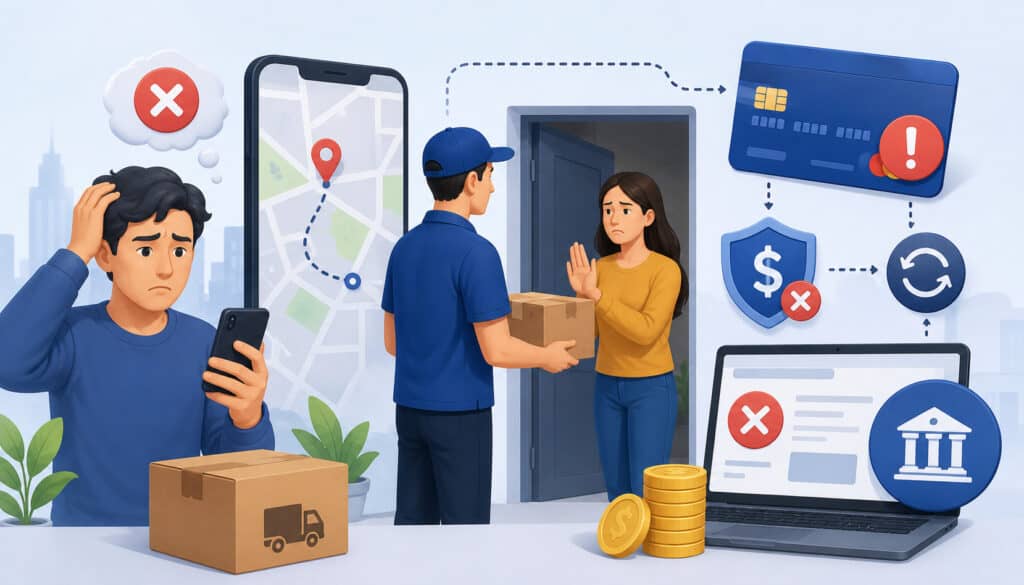
Floral delivery payment issues are uniquely difficult because the person paying is often not the person receiving the flowers. A buyer may send flowers to a workplace, hospital, event venue, funeral home, school, apartment building, or gated property. If the recipient does not receive the arrangement directly, the buyer may later question whether delivery happened.
Chargeback prevention for florists depends heavily on proof of delivery. A delivery record should show the date, time, address, delivery method, driver note, and ideally a photo. For higher-value orders, a recipient name or signature can be useful.
Contactless delivery adds another layer of complexity. Leaving flowers at a door may be appropriate, but it can also lead to disputes if the recipient does not see the arrangement, weather damages the flowers, or the order is left at the wrong location. Delivery instructions should be documented, and drivers should follow consistent procedures.
Unauthorized transaction disputes are also common with delivery orders. A customer may claim they did not place the order, especially if the billing descriptor is unclear or the order was placed by phone. Shops should keep AVS, CVV, email, phone, and order confirmation details when available.
Refund requests should be handled quickly but carefully. If the shop refunds too quickly without documenting the issue, it may lose both revenue and product. If it refuses every complaint, it may invite chargebacks. The best approach is a documented resolution process.
Useful documentation includes:
- Order confirmation
- Payment authorization details
- Product description
- Substitution policy acceptance
- Delivery route record
- Delivery photo
- Recipient or location note
- Customer communication history
- Refund or remake offer
For a deeper look at dispute handling, see this guide on how to win a chargeback dispute as a florist. For broader dispute education, this informational chargeback guide explains how chargebacks work and why documentation matters.
Florist POS and Payment System Mistakes
Florist POS mistakes often happen when shops use generic retail systems that do not match floral workflows. A flower shop needs more than a cash register. It needs order tracking, delivery scheduling, custom arrangement notes, customer history, deposits, add-ons, substitutions, inventory visibility, and payment reporting.
An outdated POS can create several flower shop payment processing errors. Staff may manually add delivery fees, forget taxes, split deposits incorrectly, or fail to connect a payment to the right order. If the ecommerce platform is separate from the in-store POS, inventory may not update in real time, which can lead to overselling seasonal flowers.
Disconnected reporting is another problem. If in-store payments, online payments, phone orders, and delivery payments are tracked in different systems, reconciliation becomes slow and error-prone. Owners may struggle to identify refunds, chargebacks, unpaid invoices, duplicate payments, or missing deposits.
Manual invoicing can also create issues for weddings, events, corporate accounts, and recurring floral subscriptions. A customer may pay a deposit, then make partial payments, then add changes later. Without a structured invoicing workflow, staff may undercharge, overcharge, or lose track of balances.
Tax and delivery fee settings should be reviewed carefully. Incorrect settings can lead to undercollection, customer complaints, or messy month-end reporting. Shops should also configure discounts, coupons, delivery zones, and add-ons so staff do not need to calculate totals manually.
A good florist POS should support:
- Integrated card payments
- Online and in-store order sync
- Delivery fee rules
- Customer profiles
- Product and add-on management
- Deposit and invoice tracking
- Digital receipts
- Refund permissions
- Sales and settlement reports
- Inventory notes for perishable products
For operational guidance, this florist POS setup guide explains features that help floral shops manage sales, inventory, customers, and delivery more efficiently.
Payment Security Best Practices for Flower Shops
Payment security should be part of daily operations, not something reviewed only after a problem. Florists handle card-present payments, card-not-present payments, online checkout, stored customer profiles, invoices, and sometimes recurring billing. Each payment path needs secure handling.
Encryption helps protect card data while it moves through payment systems. Tokenization replaces sensitive card details with a secure token, allowing repeat purchases or future billing without exposing full card numbers. This is especially useful for corporate flower accounts, subscriptions, event installments, and repeat customers.
PCI-aware workflows are also important. Staff should not write card numbers on paper, store card details in spreadsheets, text card numbers, or keep card information in customer notes. Even well-meaning shortcuts can create serious security risks.
Secure checkout systems should use trusted payment gateways, fraud filters, address verification, CVV checks, and clear confirmation pages. For ecommerce orders, fraud filters should be tuned carefully. Filters that are too weak may allow suspicious orders, while filters that are too strict may block legitimate customers.
User permissions matter too. Not every employee needs access to refunds, reports, stored customer profiles, or manual payment entry. Role-based permissions help reduce accidental errors and internal misuse.
Refund controls are another overlooked security measure. Shops should define who can issue refunds, when manager approval is required, and how refund reasons are documented. This protects revenue and creates a useful audit trail.
Common Merchant Account Problems Florists Face
Common florist merchant account problems often appear when payment patterns change. A flower shop may operate smoothly for months, then suddenly face questions because transaction volume rises, average ticket size increases, chargebacks climb, or online orders expand quickly.
Rolling reserves are one possible issue. A processor may hold a percentage of sales temporarily to manage perceived risk. This can affect cash flow, especially when the shop needs funds for inventory, labor, and delivery costs. Florists should understand reserve terms before signing any agreement.
Processing holds can also happen when a processor reviews unusual activity. Sudden spikes, large event payments, multiple refunds, or a rise in disputes may trigger a review. While reviews are not always avoidable, they are easier to manage when the shop has clear records.
Chargeback monitoring is another concern. If dispute ratios rise, a merchant account may face higher fees, stricter review, or even termination. Because florists deal with perishable goods and third-party delivery recipients, they should monitor disputes carefully and address root causes.
Some florists may also face high-risk classification concerns if they process many card-not-present orders, large event deposits, recurring subscriptions, or elevated chargebacks. A strong payment history, clear policies, fraud controls, and delivery documentation can help reduce concerns.
Account reviews are easier when the shop can provide:
- Recent processing statements
- Refund and chargeback reports
- Website policies
- Proof of delivery procedures
- Business model explanation
- Seasonal volume expectations
- Event deposit terms
- Fraud prevention practices
The key is not to wait until a hold or review occurs. Florists should build clean records from the start and communicate proactively before major seasonal volume changes.
Best Practices to Improve Floral Payment Processing
Improving floral payment processing does not require a complete overhaul all at once. Many shops can reduce florist payment processing mistakes by tightening a few critical workflows: checkout, delivery proof, refund handling, staff training, and statement review.
Start with integrated POS and ecommerce systems. When online orders, in-store sales, customer profiles, delivery notes, and payments connect in one workflow, staff make fewer manual errors. Integrated systems also make it easier to reconcile deposits, refunds, chargebacks, and open balances.
Document deliveries consistently. Every delivery should have a record, even when the order seems routine. Same-day orders, sympathy deliveries, office deliveries, and high-value arrangements deserve extra care because they are more likely to involve disputes.
Send digital receipts and confirmations. Customers should receive clear order details, delivery date, billing name, shop contact information, and policy links. Clear receipts reduce confusion and help prevent “I do not recognize this charge” disputes.
Set clear refund policies. Staff should know when to offer a remake, store credit, partial refund, full refund, or manager review. The goal is to resolve real issues fairly while preventing unnecessary losses.
Monitor seasonal transaction spikes. Before peak periods, review processing limits, fraud filters, staffing, delivery procedures, and refund workflows. After peak periods, analyze disputes and failed payments to identify preventable issues.
Train staff on payment handling. Seasonal employees should know how to process cards, use payment links, avoid storing card data, document delivery issues, and escalate suspicious orders.
Review merchant statements regularly. Look for rising effective rates, new fees, chargeback costs, gateway fees, batch fees, and equipment charges. Reviewing statements helps catch flower shop merchant service mistakes before they become long-term expenses.
What are common payment mistakes flower shops make?
Common payment mistakes flower shops make include relying too heavily on manual phone payments, using unclear refund policies, failing to document deliveries, choosing payment systems without ecommerce support, and not preparing for seasonal transaction spikes.
Many shops also make the mistake of using disconnected tools for POS, online ordering, delivery, and accounting.
These mistakes can lead to chargebacks, duplicate charges, failed payments, delayed deposits, customer complaints, and higher processing costs. The best fix is to create a consistent payment workflow across every sales channel.
That means secure checkout, clear receipts, documented policies, proof of delivery, staff training, and regular merchant statement reviews.
Why do florists experience more chargebacks?
Florists experience more chargebacks because many orders are card-not-present, time-sensitive, emotional, and delivered to someone other than the buyer.
A cardholder may dispute a transaction because the flowers were not received, looked different than expected, arrived late, or appeared under a billing name they did not recognize.
Chargebacks also happen when substitution policies are unclear or delivery documentation is weak. Since flowers are perishable, it can be difficult to prove condition and quality after the fact.
Florists can reduce chargebacks by capturing order details, policy acceptance, delivery photos, timestamps, recipient notes, and customer communication records.
How can flower shops reduce payment disputes?
Flower shops can reduce payment disputes by improving communication before and after payment. Product pages should explain size options, substitutions, delivery timing, cancellation rules, and freshness expectations.
Checkout should confirm the delivery address, delivery date, fees, and customer contact information before payment is submitted.
After purchase, the customer should receive a digital receipt and order confirmation. For delivery orders, the shop should document fulfillment and delivery with photos, timestamps, driver notes, and recipient details when possible.
Staff should also respond quickly to complaints and document any remake, refund, or replacement offer.
Are phone payments risky for florists?
Phone payments can be risky because they are manually keyed and usually card-not-present. This increases exposure to fraud, chargebacks, entry errors, and data security problems.
Risk increases further if staff write down card numbers, store card details in order notes, or skip billing verification during busy periods.
Florists do not need to eliminate phone orders, but they should make them safer. Use secure payment links, hosted invoices, virtual terminals with AVS and CVV checks, and documented authorization steps.
Staff should confirm the buyer’s details, billing information, delivery information, and total amount before completing the transaction.
How can florists improve online checkout?
Florists can improve online checkout by making the payment process fast, clear, mobile-friendly, and secure.
Customers should be able to review the bouquet, size, add-ons, delivery fee, delivery date, recipient address, billing details, and substitution policy before paying. A confusing checkout increases abandoned carts and customer service issues.
It is also important to test checkout regularly. Place sample orders using different devices, browsers, payment methods, coupon codes, delivery zones, and failed card scenarios. Fix broken fields, unclear error messages, duplicate charge risks, and slow-loading pages before high-volume periods.
What payment methods should flower shops accept?
Flower shops should usually accept major cards, debit cards, contactless payments, digital wallets, online payments, invoices, and secure payment links. The best mix depends on how the shop sells: in-store, online, by phone, through delivery, or through event contracts.
The goal is to give customers convenient options without creating unnecessary risk. For example, secure online checkout is better than taking card numbers through email or text.
For events and corporate accounts, invoices and tokenized payment methods can help track deposits, balances, and recurring billing more safely.
How can florists reduce fraud risks?
Florists can reduce fraud risks by using AVS, CVV checks, fraud filters, order review rules, secure checkout, and documented delivery procedures.
Suspicious signs include rushed high-value orders, mismatched billing and delivery information, multiple failed cards, unusual delivery instructions, and customers pressuring staff to bypass verification.
Staff training is essential. Employees should know when to pause an order and ask for manager review. For high-risk orders, shops can require additional confirmation, verified contact details, signature delivery, or secure payment links.
Fraud prevention should be stronger during peak floral periods when rushed teams are more likely to miss warning signs.
What should florists look for in merchant services?
Florists should look for merchant services that support in-store payments, ecommerce, phone orders, delivery payments, refunds, chargeback management, reporting, and POS integration. The system should fit floral workflows rather than forcing the shop into generic retail processes.
Pricing matters, but it should not be the only factor. Shops should review contract terms, equipment costs, gateway fees, support quality, settlement timing, fraud tools, ecommerce compatibility, and cancellation terms. A good setup should help reduce florist merchant services challenges, not create more manual work.
Conclusion
The common payment mistakes flower shops make can quietly reduce profit, delay cash flow, and damage customer trust. Manual phone payments, weak refund policies, poor delivery documentation, disconnected POS tools, unclear ecommerce checkout, and seasonal processing surprises can all lead to chargebacks, disputes, payment delays, and higher costs.
The good news is that most florist payment processing mistakes are preventable. Flower shops can protect revenue by using secure payment tools, documenting deliveries, setting clear policies, training staff, reviewing merchant statements, and choosing systems that support both in-store and online sales.
Better payment workflows do not just reduce risk. They also improve customer experience, speed up checkout, simplify reconciliation, and help staff focus on what matters most: creating beautiful arrangements and delivering them reliably.