
Florists do not sell a simple, static product. They sell timing, trust, freshness, emotion, customization, and delivery coordination—all wrapped into one transaction. That is why payment processing challenges in the floral industry are different from the problems faced by many standard retailers.
A flower shop may accept a walk-in card payment in the morning, take a phone order for a sympathy arrangement at noon, process an online checkout for same-day delivery in the afternoon, invoice a wedding client in the evening, and issue a partial refund the next day because a specific bloom was unavailable. Each of those transactions carries different risk, documentation needs, customer expectations, and processing costs.
The most common pressure points include seasonal payment spikes, online flower shop payments, custom orders, substitutions, refunds, delivery payment issues, chargebacks, and card-not-present transactions. Florists also need secure checkout tools, reliable florist POS systems, accurate receipts, strong refund controls, and clear communication between sales, design, delivery, and accounting.
When these systems are disconnected, small problems become expensive. A missed delivery note can become a dispute. A vague substitution policy can become a refund request. A manually keyed phone order can become a chargeback. A seasonal rush can expose weak reporting, slow terminals, or poor fraud controls.
This guide explains the most important floral industry payment processing issues and offers practical ways to reduce risk, improve customer experience, and keep transactions running smoothly.
Why Payment Processing Is Different for Floral Businesses
Florist payment processing is unique because flower shops rarely operate through one sales channel. A typical shop may handle walk-in purchases, phone orders, online checkout, delivery payments, event deposits, wedding invoices, sympathy arrangements, subscription orders, and corporate accounts. Each channel creates a different payment workflow.
Walk-in sales are usually straightforward. A customer chooses an arrangement, pays at the counter, and receives the product immediately. These card-present transactions are generally easier to verify because the cardholder is physically present, and the POS can collect chip or contactless payment data.
Phone and online orders are more complex. The person paying may not be the recipient. The arrangement may be delivered later. The customer may request a specific delivery window, message card, vase, color palette, or substitution instruction. These details matter because they become evidence if a dispute occurs.
Event and wedding orders add another layer. Florists may collect deposits weeks or months before fulfillment. The final invoice may change as flower availability, labor, delivery, rentals, and design scope change. That makes florist invoicing, partial payments, stored customer records, and clear written agreements especially important.
Sympathy arrangements can also be sensitive. Customers may order under emotional pressure and expect precise delivery timing. If a funeral service, memorial, or visitation has a narrow delivery window, even a small operational error can create a refund request.
Seasonal rushes make everything harder. High order volume can overwhelm staff, inventory, phone lines, online checkout, fraud screening, and delivery routes. A payment system that works during normal weeks may fail when orders surge.
For a deeper look at floral payment setup options, this guide on payment processing solutions for flower shops is a helpful related resource.
Common Payment Processing Challenges in the Floral Industry
Many flower shop payment processing problems come from the same root issue: floral orders are often customized, time-sensitive, and fulfilled after payment. That creates more room for misunderstanding than a standard retail transaction.
A customer may pay for a “designer’s choice” bouquet but expect it to look like a photo. Another customer may request roses, but the shop may need to substitute due to availability. A third customer may pay online but enter the wrong delivery address. In each case, the payment itself may process correctly, yet the transaction can still become disputed if expectations are unclear.
Floral business transaction processing issues also increase when staff rely on manual workflows. Writing down card details, entering payments later, separating online orders from POS orders, or tracking refunds in spreadsheets can create errors. Manual systems also make it harder to prove what happened if a customer questions a charge.
The table below summarizes common challenges and practical solutions.
| Challenge | Why It Happens | Practical Solution |
| Seasonal payment spikes | Holidays, weddings, graduations, and event periods create sudden order volume | Notify your processor of expected volume changes, test terminals, train seasonal staff, and review settlement limits |
| Card-not-present transactions | Phone, online, invoice, and delivery orders are paid without the cardholder present | Use secure checkout, AVS, CVV, fraud filters, and detailed order records |
| Chargebacks | Customers dispute freshness, delivery timing, substitutions, duplicate billing, or unauthorized transactions | Keep receipts, delivery proof, photos, policies, and customer communication records |
| Refund confusion | Custom designs, substitutions, and partial cancellations complicate refund decisions | Create written refund and substitution policies before checkout |
| Delivery payment issues | Recipient unavailable, wrong address, contactless drop-off, or missing proof | Use timestamps, driver notes, photos, and delivery confirmation messages |
| POS and ecommerce mismatch | Online orders, inventory, taxes, and discounts do not sync with in-store systems | Use integrated florist POS systems and centralized reporting |
| Payment security gaps | Staff key in cards manually or store card information insecurely | Use tokenization, permissions, secure invoicing, and PCI-aware workflows |
| Settlement delays | Volume changes, risk reviews, batching errors, or reserve requirements affect cash flow | Monitor deposits daily and maintain transparent processor communication |
A useful starting point is to map every payment path in the shop: counter, phone, website, invoice, delivery, event deposit, and recurring order. Then identify where errors, disputes, or delays are most likely to happen.
Seasonal Payment Spikes
Seasonal payment spikes are one of the biggest payment processing challenges in the floral industry. Florists can move from normal transaction volume to intense order demand almost overnight.
Major gifting periods, wedding seasons, graduations, school events, corporate events, memorial services, and local celebrations can all create sudden surges.
These spikes affect more than sales. They place pressure on inventory purchasing, staffing, delivery routing, customer service, fraud review, batching, settlement timing, and cash flow.
If a processor sees transaction volume that is far above the shop’s usual pattern, it may trigger additional review. That can delay deposits or create questions about fulfillment risk.
Seasonal spikes also increase the chance of mistakes. Staff may rush through phone orders. Temporary employees may not follow refund or verification procedures. Online checkout may receive more traffic than usual. Customers may place duplicate orders if they do not receive confirmation quickly.
Florists should prepare before peak periods by testing payment terminals, confirming gateway settings, reviewing fraud filters, updating delivery fees, and making sure staff know how to process refunds, partial refunds, tips, deposits, and voids.
Card-Not-Present Transactions
Card-not-present transactions are common in flower shops because customers often order by phone, online, through invoices, or for delivery to someone else. These payments are convenient, but they can carry higher fraud and dispute risk because the cardholder is not physically present at checkout.
A florist may receive a phone order from a buyer sending flowers to a hospital, office, hotel, venue, or residence. The billing address, delivery address, recipient name, and cardholder name may all be different. That does not mean the order is fraudulent, but it does mean the shop needs better verification and documentation.
Online flower shop payments create similar concerns. Fraudsters may target perishable delivery businesses because goods are difficult to recover after fulfillment. If the transaction later turns out to be unauthorized, the florist may lose the payment and the product.
Good controls include address verification, CVV checks, order velocity rules, clear confirmation emails, IP review where available, and manual review for high-risk orders. Large orders, rush orders, unusual delivery instructions, and mismatched information should receive extra attention.
Card-not-present risk can also be reduced by sending secure payment links instead of writing down card numbers. Secure invoicing protects both the customer and the business.
Refunds, Substitutions, and Customer Disputes
Refunds and substitutions are unavoidable in floral retail. Flowers are perishable, seasonal, and affected by availability, weather, supplier quality, delivery timing, and design constraints. A shop may need to replace a specific flower variety, adjust a color palette, or use comparable stems to maintain value and freshness.
The problem is not substitution itself. The problem is unclear expectation setting. If a customer believes the arrangement must look exactly like an online photo, even a reasonable substitution may feel disappointing.
If delivery happens later than expected, the customer may ask for a refund even if the arrangement arrived fresh. If a recipient is unavailable, the buyer may blame the shop even when the address or instructions were incomplete.
These situations can lead to chargebacks, especially when the customer bypasses the shop and disputes the transaction with the card issuer. A chargeback guide such as this overview of how chargebacks work can help merchants understand the dispute process.
Florists should use clear product descriptions, visible substitution policies, delivery terms, and refund rules. Photos, delivery timestamps, customer messages, and signed approvals can help defend valid transactions.
Florist Merchant Account Challenges

Florist merchant account challenges often appear when the business model is more complex than a processor expects. A flower shop may look like a simple retail merchant, but its payments can include card-present sales, card-not-present orders, ecommerce transactions, deposits, invoices, delivery fees, and high seasonal volume swings.
Approval requirements may depend on the shop’s processing history, average ticket size, expected monthly volume, refund rate, chargeback history, ecommerce activity, and fulfillment model. A newer florist may have limited processing history, while an established shop may have seasonal spikes that appear unusual unless properly explained.
Chargeback history is especially important. If a shop has frequent disputes related to delivery, substitutions, duplicate charges, or customer dissatisfaction, a processor may view the account as higher risk. That can affect pricing, settlement timing, reserve requirements, or approval conditions.
Settlement timing also matters. Florists often buy inventory before receiving final payment deposits. If deposits are delayed during peak periods, cash flow can tighten quickly. Shops that handle weddings, events, or large corporate orders may need reliable funding schedules and clear policies for deposits and partial payments.
Pricing transparency is another common issue. Florists should understand how rates differ for in-person, keyed, online, invoice, and mobile payments. They should also review monthly fees, gateway fees, PCI-related fees, chargeback fees, batch fees, equipment costs, and early termination terms.
A good merchant account setup should support the way the florist actually sells. That includes online checkout, phone order workflows, mobile delivery options, recurring billing if needed, and integration with florist POS systems.
Flower Shop Payment Processing Problems With Online Orders
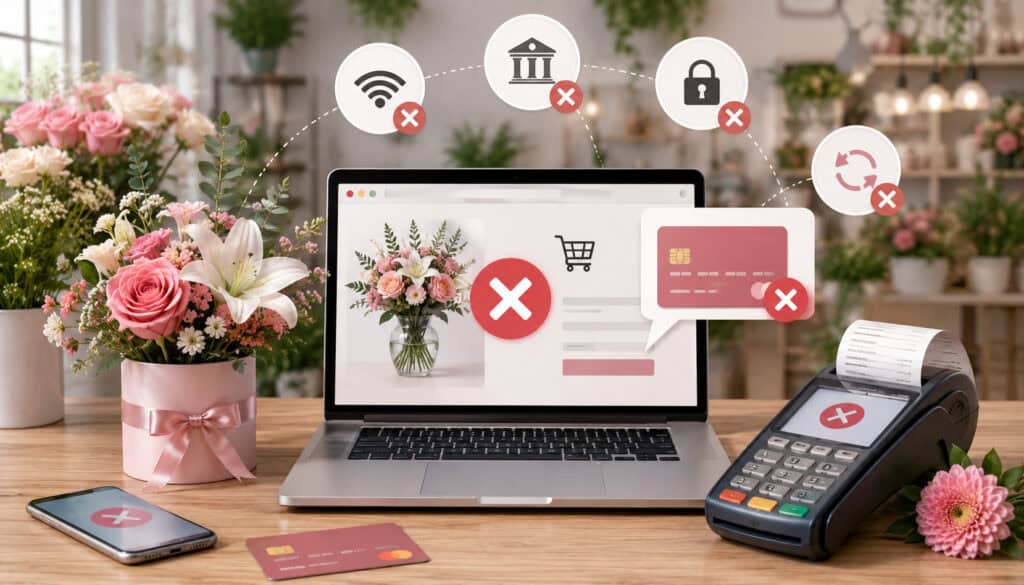
Online flower shop payments can increase revenue, but they also introduce technical, operational, and fraud-related challenges. Customers expect a fast checkout, accurate delivery options, secure payment pages, and immediate confirmation. When any part of that experience fails, trust drops quickly.
Common ecommerce problems include declined payments, duplicate authorizations, gateway errors, address mismatches, failed confirmation emails, incorrect delivery dates, abandoned carts, and fraud screening that blocks legitimate customers. A customer who is ordering flowers for an urgent occasion may not retry checkout if the process feels confusing.
Delivery date selection is especially important. Many ecommerce platforms are built for shipping products, not local floral delivery. If the checkout page allows unavailable delivery dates, wrong ZIP or postal zones, missing service fees, or unclear cut-off times, the shop may have to contact customers after payment. That creates friction and may lead to cancellations or refund requests.
Product customization also complicates floral ecommerce payments. Customers may add gift messages, delivery notes, color preferences, vase upgrades, chocolates, balloons, sympathy ribbons, or special instructions. If these options do not flow into the POS or order management system, staff may miss details.
Fraud screening must be balanced. Overly strict filters can block real customers during high-volume periods, while weak filters can allow risky orders. Florists should review fraud rules before peak demand and monitor unusual orders, especially large same-day deliveries, multiple cards from the same customer, or mismatched billing and delivery details.
For more detail on online and in-store payment coordination, see this guide on handling online and in-store payments for flower shops.
Managing Delivery and Payment Confirmation Issues
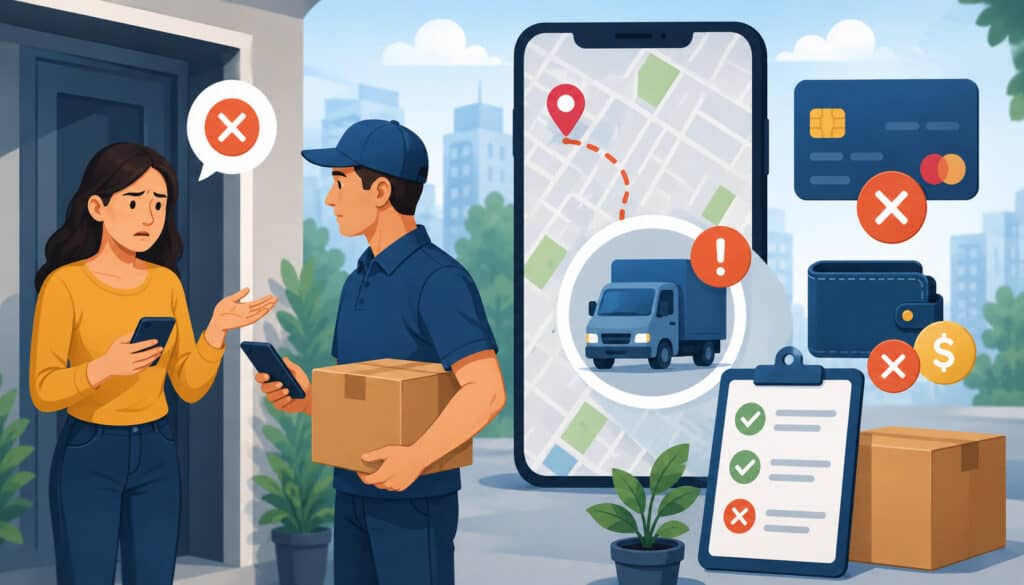
Delivery is where many floral business transaction processing issues become visible. The customer often pays before the order is fulfilled, and the recipient may be someone else entirely. That creates a gap between payment, fulfillment, and satisfaction.
Common delivery payment issues include wrong addresses, unavailable recipients, locked buildings, incomplete apartment numbers, hospitals or facilities with special receiving rules, offices that close early, weather delays, and contactless delivery confusion. If the customer later claims the flowers were not delivered, the shop needs clear proof.
Proof of delivery can include driver timestamps, GPS records, recipient signatures, delivery photos, staff notes, call logs, and confirmation messages. Even when signatures are not practical, a photo of the arrangement at the delivery location can be valuable. The key is consistency. Staff should follow the same documentation process for every delivery.
Contactless delivery requires extra care. Leaving flowers at a door may be acceptable in some cases, but not when weather, security, or recipient availability creates risk. The customer should understand when contactless delivery is used and what happens if the recipient is unavailable.
Payment confirmation also matters. Customers should receive receipts that clearly show the order total, delivery fee, taxes, discounts, payment method, delivery date, and shop contact information. If a customer recognizes the charge and understands the order details, the likelihood of a dispute decreases.
Florists should also train delivery staff to report problems immediately. A failed delivery attempt should not sit unresolved until the customer complains. Fast communication can turn a potential chargeback into a simple reschedule.
POS and Ecommerce Integration Challenges
Florist POS systems are most useful when they connect sales, inventory, payments, customer records, delivery, reporting, and ecommerce. When the POS and online store do not integrate well, errors multiply.
Inventory syncing is a major challenge. Flowers are perishable, seasonal, and often sold as components of arrangements rather than single units.
A shop may have roses, greenery, vases, ribbons, and add-ons moving across walk-in sales, online orders, and event designs. If inventory is not updated across channels, customers may purchase items that are no longer available.
Tax settings, delivery fees, service charges, discounts, and promotional codes can also create issues. If online checkout calculates fees differently than the POS, the shop may lose margin or confuse customers. Receipts should match what the customer saw at checkout.
Product customization is another area where standard retail systems may fall short. Florists need fields for gift messages, delivery notes, enclosure cards, substitution preferences, design style, color palette, occasion, delivery window, and recipient instructions. If these details do not transfer cleanly, staff may rely on manual notes, which increases the risk of mistakes.
Reporting is equally important. Shops need to see sales by channel, payment type, product category, delivery zone, employee, event order, and refund reason. Without integrated reporting, it is difficult to identify where flower shop payment processing problems are coming from.
A good integration should reduce duplicate entry, prevent missed orders, support refunds and partial payments, and help reconcile deposits. It should also make chargeback response easier by keeping order details, payment records, and delivery documentation in one place.
For additional POS planning, this article on POS systems for flower shops offers helpful context.
Payment Security Best Practices for Florists
Payment security is essential for florists because shops often handle a mix of in-person cards, phone orders, online checkout, invoices, and stored customer preferences. Weak security practices can expose customer data, increase fraud risk, and damage trust.
The Payment Card Industry Data Security Standard provides technical and operational requirements designed to protect payment account data, including controls around secure systems, access, monitoring, and data protection through the official PCI Security Standards Council.
Florists should avoid writing down card numbers, storing card details in notebooks, saving payment information in unsecured spreadsheets, or sending card data through email or text. Secure payment links, tokenization, and hosted checkout pages are safer options.
Tokenization is especially useful for repeat customers, subscriptions, corporate accounts, and event clients. Instead of storing the actual card number, the system stores a token that can be used for future authorized payments. This reduces exposure if internal records are accessed improperly.
Encryption helps protect payment data during transmission. Secure checkout pages, updated gateways, and properly configured ecommerce tools reduce risk for online flower shop payments.
Employee permissions are also important. Not every staff member should be able to issue refunds, view sensitive customer details, change payment settings, or discount large orders. Role-based permissions create accountability and reduce internal mistakes.
Fraud filters should be reviewed regularly. Useful controls may include AVS, CVV, transaction velocity checks, high-ticket review, IP monitoring, and manual review rules for unusual orders. Refund controls should also be clear, especially during seasonal rushes.
Common Mistakes Floral Businesses Should Avoid
Many florist payment processing problems are preventable. The challenge is that bad habits often seem convenient until a dispute, refund issue, or security concern exposes them.
One common mistake is relying too much on phone orders without secure payment tools. Phone orders are important for florists, but manually writing card details or rushing verification increases risk. Secure payment links and virtual terminals are safer than handwritten card storage.
Another mistake is using vague refund and substitution policies. Customers may not understand that floral designs can vary based on freshness and availability. If policies are not visible before payment, disputes become harder to defend.
Poor delivery documentation is also risky. A shop may know it delivered the arrangement, but without proof, it may struggle during a chargeback. Delivery notes, photos, timestamps, and customer communication records can make a major difference.
Outdated POS systems create another problem. If the system cannot manage online orders, delivery notes, partial payments, refunds, inventory, and reporting, staff will build manual workarounds. Manual workarounds often create errors.
Florists should also avoid ignoring merchant statements. Processing costs can change based on transaction mix, card type, fees, and chargebacks. Reviewing statements helps identify hidden costs and unusual patterns.
Other mistakes include:
- Storing card information manually
- Failing to train seasonal staff
- Not matching deposits to daily batches
- Ignoring duplicate payment complaints
- Using unclear product photos or descriptions
- Not documenting customer-approved substitutions
- Allowing too many employees to issue refunds
- Failing to review chargeback reasons
Best Practices for Smoother Floral Payment Processing
Smoother florist payment processing begins with clear systems. Florists should make it easy for customers to pay, easy for staff to fulfill orders, and easy for the business to prove what happened.
Secure online checkout should be a priority. Customers need confidence that their payment is protected and that their order details are captured correctly. Checkout should include delivery date, recipient information, delivery notes, substitution preferences, gift message, and clear pricing.
Delivery documentation should be consistent. Every delivery should have a status update, timestamp, and proof where practical. Staff should know what to do if the recipient is unavailable or the address is incomplete.
Substitution policies should be visible before payment. Customers should understand that flowers may vary based on freshness and availability, and that substitutions will maintain comparable style and value when possible.
Seasonal planning should happen before order volume surges. Florists should review expected volume, staff permissions, hardware readiness, fraud filters, refund procedures, and processor limits. Temporary staff should be trained on payment acceptance, receipt handling, and dispute-sensitive details.
Integrated POS and ecommerce tools can reduce errors. When online orders, in-store sales, inventory, customer records, and delivery workflows connect, the shop spends less time fixing mistakes.
Chargeback prevention should be proactive. Clear receipts, accurate descriptors, delivery proof, product photos, confirmation emails, and responsive customer service can reduce disputes.
Florist invoicing should be professional and detailed. Event clients should receive invoices that explain deposits, payment deadlines, cancellation terms, design scope, delivery fees, setup fees, and balance due.
Best practices include:
- Use secure payment links for remote payments
- Keep card data out of notebooks and spreadsheets
- Document delivery consistently
- Publish refund and substitution policies
- Monitor seasonal volume and settlement timing
- Train staff on fraud warning signs
- Review payment statements monthly
- Keep POS, gateway, and ecommerce tools updated
- Track chargeback reasons and fix recurring issues
What are common payment processing challenges in the floral industry?
Common payment processing challenges in the floral industry include seasonal payment spikes, card-not-present transactions, chargebacks, refund requests, delivery payment issues, online checkout errors, POS integration problems, and payment security concerns.
Florists often accept payments before fulfillment, which increases the importance of clear documentation.
Custom arrangements, substitutions, and delivery timing can also create disputes. A customer may question a charge if the final arrangement differs from expectations, arrives late, or is delivered to the wrong location. Strong receipts, policies, and delivery proof help reduce these problems.
Why do florists experience more card-not-present payments?
Florists often take payments by phone, online checkout, invoice, or delivery order. In many cases, the buyer is not the recipient, and the billing address may differ from the delivery address. This makes card-not-present transactions a normal part of florist payment processing.
These transactions can carry more fraud and dispute risk because the cardholder is not physically present. Florists can reduce risk with secure payment links, AVS, CVV, confirmation emails, fraud filters, and manual review for unusual orders.
How can flower shops reduce chargebacks?
Flower shops can reduce chargebacks by documenting orders, confirming delivery, using clear receipts, publishing refund and substitution policies, and responding quickly to customer concerns. Photos, timestamps, signed approvals, and written communication can help support valid transactions.
Chargebacks often happen when customers feel surprised or ignored. Clear communication before and after payment is one of the best prevention tools. For more detail, this guide on winning a chargeback dispute as a florist is a useful resource.
What payment methods should florists accept?
Florists should generally accept chip cards, contactless cards, mobile wallets, online payments, secure invoices, and payment links. Depending on the business model, they may also need deposits, partial payments, recurring billing, and card-on-file options.
The best mix depends on the shop’s sales channels. A delivery-heavy florist needs strong remote payment tools, while a walk-in shop needs fast terminals and POS integration. Event-focused florists should prioritize invoicing, deposits, and clear payment schedules.
How do seasonal spikes affect payment processing?
Seasonal spikes can increase transaction volume, average ticket size, refund requests, fraud attempts, and delivery pressure. If the payment processor is not prepared for unusual volume, deposits may be reviewed or delayed.
Florists should plan ahead by checking hardware, training staff, reviewing fraud rules, confirming settlement expectations, and notifying payment partners of expected spikes. Seasonal readiness protects both revenue and customer experience.
Are online flower shop payments secure?
Online flower shop payments can be secure when the shop uses trusted checkout tools, encryption, tokenization, fraud filters, and PCI-aware workflows. Security also depends on staff behavior, website maintenance, and access controls.
Florists should avoid collecting card details through unsecured forms, email, text, or handwritten notes. Secure payment links and hosted checkout pages are safer options for online flower shop payments and florist invoicing.
How can florists handle refunds and substitutions?
Florists should handle refunds and substitutions through clear written policies. Customers should know before payment that floral products may vary based on freshness, availability, and design interpretation. Substitutions should preserve comparable value and style whenever possible.
When a refund is appropriate, staff should document the reason, amount, approval, and customer communication. Partial refunds may be better than full refunds when the issue affects only part of the order, such as a delivery delay or missing add-on.
What should florists look for in merchant services?
Florists should look for merchant services that support in-store payments, online checkout, secure invoicing, card-not-present controls, POS integration, delivery documentation, refund management, and transparent pricing. Strong support during seasonal rushes is also important.
The right flower shop merchant services should match the way the florist actually operates. A shop that handles phone orders, weddings, deliveries, subscriptions, and ecommerce needs more than a basic card reader.
Conclusion
Payment processing challenges in the floral industry can be managed with the right mix of secure tools, clear policies, staff training, and operational discipline. Florists face unique risks because they handle perishable products, emotional purchases, custom designs, delivery timing, substitutions, refunds, and card-not-present transactions.
The most effective shops treat payment processing as part of the full order lifecycle. They use secure checkout, document delivery, clarify substitution rules, integrate POS and ecommerce systems, monitor seasonal payment spikes, review merchant statements, and respond quickly to disputes.
With strong florist POS systems, reliable flower shop merchant services, secure online flower shop payments, and proactive chargeback prevention, floral businesses can reduce payment friction and focus more energy on designing memorable arrangements.