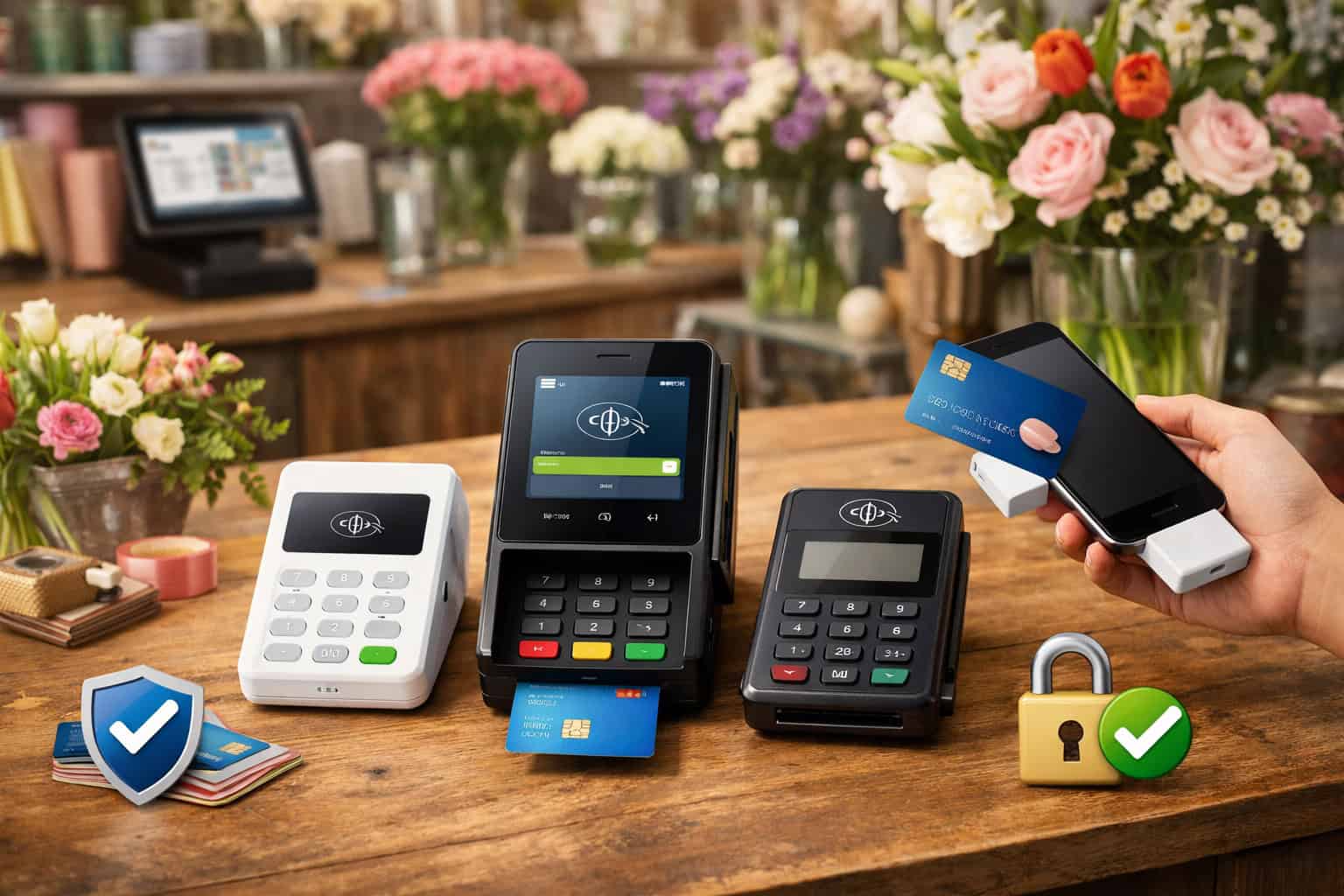
By Dominic Andrews March 11, 2026
Florists handle a unique mix of payment situations. One customer may walk in and buy a wrapped bouquet in under two minutes. Another may place a high-value wedding order weeks in advance.
A delivery driver may need to collect payment on the spot, while a busy shop during Valentine’s Day or Mother’s Day has to move long lines quickly without sacrificing accuracy or security.
That is exactly why the top EMV-compliant card readers for florists deserve close attention. The right payment hardware does more than accept cards.
It helps protect customer data, supports faster checkout, reduces headaches during rush periods, and gives flower businesses more flexibility across the counter, in the studio, on delivery routes, and at special events.
Many florists already know they need to accept chip cards, tap-to-pay transactions, and digital wallets. What is not always clear is which type of reader works best for a flower shop’s daily workflow. A small studio florist may need a lightweight mobile device.
A retail shop may need a dependable countertop terminal connected to a full POS system. A wedding florist may need both. Choosing well means looking beyond brand names and thinking about how payments actually happen in your business.
This guide breaks down what EMV-compliant card readers are, why they matter for flower businesses, which types of devices make the most sense, and what features are worth prioritizing.
It also explains how to compare EMV card readers for florists, credit card readers for flower shops, and other florist payment solutions based on real-world use instead of marketing hype.
By the end, you will have a clearer path to selecting the right setup for your business model, sales environment, and customer experience goals.
What EMV-Compliant Card Readers Are and Why Florists Need Them
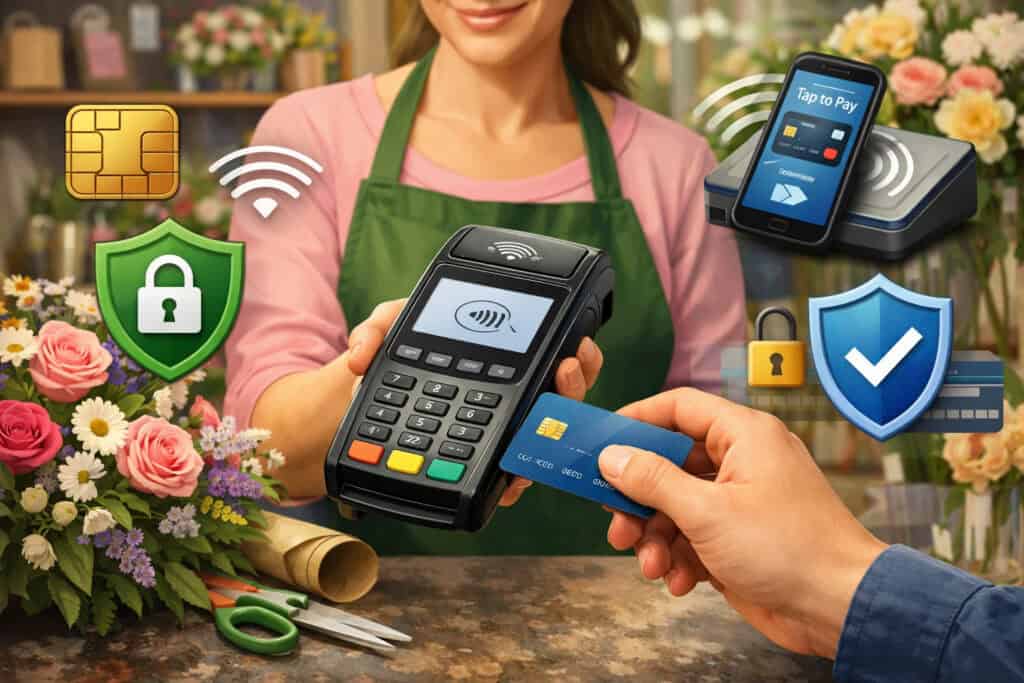
EMV-compliant card readers are payment devices that can securely process chip-enabled card transactions. When a customer inserts a chip card, the card and payment terminal work together to create a unique transaction code. That is different from older magnetic stripe transactions, which rely on static card data that is easier to copy or misuse.
For florists, EMV matters because flower sales often involve both impulse purchases and emotionally important purchases. Customers buying sympathy arrangements, anniversary flowers, wedding florals, or holiday bouquets expect a checkout process that feels smooth and trustworthy.
A shop using outdated payment hardware can create friction at the register and may raise concerns about security, especially when customers are paying larger amounts.
There is also a practical business reason to upgrade. Payment acceptance is no longer limited to a front counter. Many flower businesses take payments at design consultations, curbside pickup, delivery stops, trade events, and seasonal pop-ups.
That means EMV payment terminals for florists need to support a variety of sales environments while keeping the payment process secure.
Another reason EMV matters is customer behavior. Many buyers now expect to pay by tapping a card or phone instead of swiping or using cash. A card reader that only handles older payment methods can slow the sale down and make the business feel outdated.
In contrast, EMV credit card machines for florists that also support contactless payments help create a smoother checkout experience, especially during busy periods.
Florists also benefit from reduced confusion when staff members have a clear, modern payment process. A reliable EMV reader can guide employees through chip insertion, tap acceptance, and digital wallet payments with fewer errors. That matters when new seasonal staff are helping during high-volume periods.
EMV vs. Magnetic Stripe vs. Contactless Payments
Understanding the difference between these payment types helps florists choose the right hardware with confidence.
- EMV chip payments require the card to be inserted into the reader. The transaction is authenticated using the chip, which provides stronger protection than a swipe. This is one of the main reasons chip readers are considered a better choice for shops that want more secure payment acceptance.
- Magnetic stripe payments happen when a card is swiped. While some customers still carry cards with a stripe, swiped payments are based on older technology. Many businesses still keep swipe capability as a backup, but it should not be the main payment method for a modern flower shop.
- Contactless payments let customers tap a card, phone, or smartwatch on the terminal. These transactions usually rely on NFC technology and are popular because they are fast and convenient. For florists, tap acceptance can be especially helpful during peak periods, sidewalk sales, and busy retail rushes.
In many cases, the best secure card readers for flower shops accept all three forms of payment. That flexibility matters because not every customer pays the same way.
Some will insert a chip card, some will tap a card, and others will use a phone wallet. A versatile reader helps the business stay ready for all of them without creating delays or awkward moments at checkout.
Why EMV Matters Specifically in a Flower Business
A flower business is not like every other retail operation. Payment needs change depending on the occasion, location, and pace of the sale. A florist may take quick over-the-counter payments in the morning, invoice a corporate client in the afternoon, and process an in-person card payment at an event setup later that day.
That variety makes secure, flexible hardware especially important. EMV-enabled payment devices for florists help support trust in settings where the payment amount can vary widely.
A customer buying a single bouquet may not think much about the terminal, but a customer putting down a deposit for wedding florals will notice whether the business looks organized and professional.
Flower shops also deal with time-sensitive orders. If payment equipment is unreliable during a rush, it can disrupt service, delay order flow, and frustrate customers who may already be shopping under stress or on a deadline. Good payment hardware does not solve every operational challenge, but it removes one major point of friction.
That is why florists should think about EMV not as a compliance checkbox, but as part of delivering a strong customer experience. Reliable florist payment terminals support confidence, speed, and convenience in one of the most personal retail categories.
Types of EMV Card Readers Flower Businesses Can Use
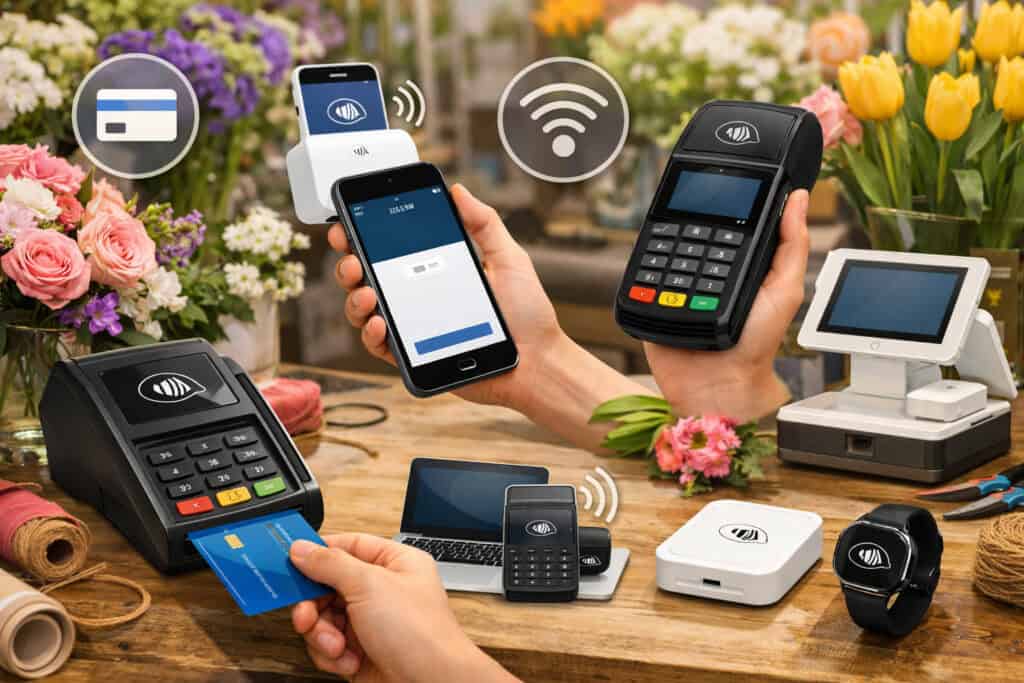
Not every florist needs the same hardware. The right choice depends on where you accept payments, how often you move around, whether you use POS software, and how much volume you process during normal weeks and peak seasons. Understanding the main reader categories makes it easier to narrow down the best fit.
The broad market for credit card readers for flower shops includes countertop terminals, mobile readers, wireless handheld devices, smart terminals, and integrated POS readers. Some are designed for simple transactions. Others are built to support a larger system that includes inventory, order management, customer history, and reporting.
Florists should avoid assuming that bigger means better. A full-featured smart terminal may be great for one business and unnecessary for another. Likewise, a very basic mobile device may work fine for a delivery-focused florist but feel too limited for a busy storefront. The goal is to match the device to the sales environment and workflow.
A flower shop also does not have to use only one type of reader. Many operations benefit from a mixed setup. For example, a shop may use a countertop device at the register and a portable unit for deliveries or special events. A florist studio may use a mobile reader for consultations while keeping a second reader in the workspace for pickups.
Countertop Terminals for Fixed Checkout Areas
Countertop terminals are a strong choice for retail flower shops with a dedicated checkout area. These devices are usually placed at the register and may connect through ethernet, Wi-Fi, or both. They are designed for stability, consistent power, and easy use during frequent transactions.
For florists with steady walk-in traffic, countertop EMV credit card machines for florists often make a lot of sense. They are usually easy for customers to understand and can support chip, swipe, and contactless payments from one fixed point.
Staff members also tend to find them straightforward to use during peak traffic because the device stays in place and follows a consistent process.
This type of reader is especially useful in flower shops that already have a POS system or want one. Many countertop terminals can integrate with inventory tracking, sales reporting, customer data, and receipt printing. That can help streamline checkout while keeping order details organized.
The tradeoff is mobility. A countertop unit is not ideal for a florist who frequently needs to take payments across the shop, curbside, or on delivery. It works best when the bulk of transactions happen at a central payment station.
Mobile Card Readers for Flexible Selling
Mobile card readers for florists are small, portable devices that usually connect to a smartphone or tablet. They are popular with newer businesses, florist studios, market vendors, and delivery-based operations because they are lightweight and relatively easy to carry.
These readers are useful when payments do not happen at a fixed counter. A florist making deliveries may need to accept a card at the customer’s location. A wedding florist may need to process a final payment at a venue. A market vendor may need quick mobile checkout from a tablet stand. In these situations, portability matters as much as payment acceptance.
Many mobile devices support chip and tap transactions, making them a practical option for florists who want EMV and contactless functionality without committing to a larger terminal. Some also connect directly with mobile POS apps, which can help manage simple item sales, taxes, and digital receipts.
The main limitation is that very small readers may feel less robust in high-volume retail settings. They can work well for flexible sales, but a florist with heavy daily in-store traffic may want something sturdier as the primary checkout device.
Wireless Handheld Devices for Delivery and On-the-Go Payments
Wireless handheld terminals sit between countertop readers and compact mobile readers. They are portable, but more self-contained than devices that depend heavily on a separate phone or tablet. Many come with built-in screens, batteries, and wireless connectivity.
For flower businesses that do frequent deliveries, on-site event work, or curbside transactions, these can be some of the top EMV-compliant card readers for florists. They are often more professional-looking than a tiny plug-in reader and can handle chip, tap, and sometimes receipt options directly from the device.
Delivery florists especially benefit from this category. A driver does not always want to depend on a separate phone accessory setup when collecting payment at the door.
A wireless handheld terminal can make the process feel faster and more polished. It also reduces the chance that a disconnected mobile accessory or drained phone battery will interrupt a sale.
These devices are also useful for shops with line-busting needs during holidays. Staff can take a handheld device to the sales floor or entrance area and process customers before they even reach the main counter.
Smart Terminals for Shops That Want More Than Payment Acceptance
Smart terminals combine payment acceptance with broader software capabilities. They often have touchscreens, app support, digital receipt tools, and the ability to run payment-related or retail-related functions from one device.
For florists who want more than a basic payment terminal, smart devices can be appealing. They may support item lookup, order notes, customer information, tipping settings when needed, and business apps.
This can be useful for shops that want compact but capable flower shop payment processing equipment without relying on a traditional register setup.
A smart terminal may fit well in a boutique flower shop, a design-forward studio, or a store that wants a modern checkout experience with fewer separate hardware pieces. Some businesses also like using smart terminals as backup devices when the main POS station is busy.
The main question to ask is whether the added functionality genuinely helps your workflow. If your shop only needs straightforward payment acceptance, a smart terminal may offer more than you need. But if you want flexibility and a cleaner hardware footprint, it may be worth the extra investment.
Integrated POS Readers for Full Retail Management
Integrated POS readers connect directly to a broader point-of-sale system. For many established flower shops, this is one of the strongest long-term options because payment acceptance becomes part of a larger retail operation.
With this setup, the reader works alongside software that can handle product categories, custom arrangements, order tracking, employee permissions, customer profiles, inventory counts, and reporting. This is particularly valuable when a florist sells both grab-and-go items and special-order arrangements.
Integrated florist POS hardware can also help reduce mistakes. Instead of manually entering sale totals into a standalone terminal, the sale flows from the POS system to the payment device. That can improve accuracy during busy periods when staff are juggling customer questions, packaging, phone calls, and order modifications.
This type of setup works especially well for larger or more established retail flower businesses, but smaller florists should consider it too if they want better visibility into sales and stock. A fuller system often requires more planning upfront, yet it can save time and improve control as the business grows.
Key Features to Look for in a Florist Card Reader
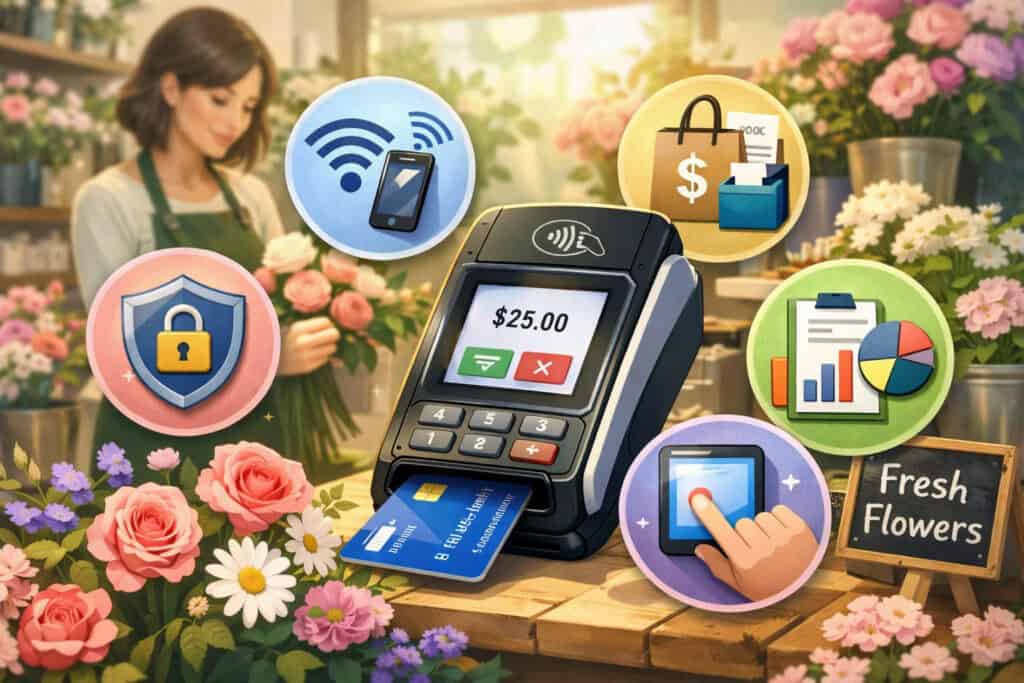
Choosing from the many EMV card readers for florists becomes easier once you know which features actually matter in a flower business. It is easy to get distracted by device design, promotional pricing, or brand familiarity. What matters more is how well the reader fits the day-to-day realities of your operation.
Florists often work in fast, seasonal, and visually oriented environments. That means payment hardware should not be difficult to manage or awkward to use. It should be dependable during rush periods, simple enough for part-time staff to learn, and flexible enough to support both everyday sales and special-order situations.
At minimum, the best secure payment terminals for retail florists should support chip acceptance and contactless payments. Beyond that, the right feature set depends on whether the reader will be stationary or mobile, whether you need it to integrate with a POS system, and whether your team needs printed or digital receipts.
It is also important to think beyond the payment itself. A good terminal contributes to the customer experience. It helps the shop feel current, organized, and easy to do business with. When a customer is buying flowers for a meaningful occasion, the payment process should feel polished rather than clunky.
Payment Method Flexibility and Customer Convenience
A florist reader should accept the major ways customers want to pay today. That includes chip cards, magnetic stripe as a backup, and NFC-enabled contactless payments. Devices that support digital wallets can also make checkout easier for customers who prefer to pay with a phone or smartwatch.
This flexibility matters more than many flower businesses realize. Some customers want to insert a card for larger orders. Others expect to tap and go for smaller purchases. Event clients may use different cards than walk-in buyers. A reader that can handle all of these situations reduces friction and keeps checkout from becoming an obstacle.
The best contactless payment devices for florists are especially helpful when speed matters. During holidays, even a few seconds saved per transaction can make a noticeable difference in line flow. Contactless payments are also useful at market booths and event venues where customers may want a quick, smooth transaction.
At the same time, florists should not sacrifice reliability for novelty. A terminal should be easy for customers to understand. If the chip slot is awkward or the contactless zone is confusing, transactions slow down. Good payment hardware combines multiple payment options with a clear, user-friendly design.
Portability, Battery Life, and Connectivity
Many flower businesses need more than one checkout location. That makes portability an important feature, especially for delivery-focused operations, wedding florists, and shop owners who sell at markets or community events.
Portable card readers for flower delivery businesses should be lightweight enough to carry but durable enough for regular movement. Battery life matters because a device that dies mid-route or midway through a long event creates avoidable stress.
Wireless connectivity matters just as much. A portable unit should maintain a stable connection whether it uses Wi-Fi, cellular capability, or another supported method.
Inside a retail shop, portability can still be useful. Staff may want to take payments at the design counter, help curbside pickup customers, or reduce congestion at the main register during peak periods. A device that moves easily can support better service, provided it remains dependable.
Before choosing a reader, florists should think honestly about where the device will be used most often. A portable device sounds appealing, but not every business needs one as its main unit. In some cases, the best setup is a stable countertop reader for the shop plus a secondary portable unit for delivery and event sales.
POS Compatibility, Receipts, and Ease of Use
One of the most overlooked features in EMV payment terminals for florists is compatibility. A card reader should work well with the software and workflow the shop already uses or plans to use. If the terminal does not integrate smoothly with your POS, online order system, or receipt process, staff may end up doing extra manual work.
For florists, compatibility can affect more than just payments. It may influence product tracking, sales reports, customer records, refund handling, and order notes. A reader that talks to your system can create a cleaner process from checkout to bookkeeping. One that operates in isolation may lead to duplicate steps and more room for error.
Receipt options also matter. Some customers want a printed receipt, especially for larger or business-related orders. Others prefer text or email receipts. A terminal that supports both can meet different preferences without slowing down checkout.
Ease of use may be the most important feature of all. Flower shops often bring on extra staff during busy seasons, and those employees may not have much time to learn a complicated device.
Clear prompts, responsive screens, and intuitive workflows make a big difference. The best chip card readers for flower shops should feel simple for both staff and customers.
How Different Florist Business Models Affect Card Reader Needs
Not every flower business operates the same way, so not every card reader setup should look the same. This is where many merchants make mistakes.
They choose hardware based on what seems popular rather than what fits their actual workflow. A florist should choose based on how the business sells, where payments happen, and what type of checkout experience customers expect.
A neighborhood flower shop with steady walk-in traffic has very different needs from a studio florist focused on weddings and event work. A flower delivery company needs portability and battery life. A market-based florist needs quick setup and reliable mobile acceptance. A multi-location operation needs consistency, reporting visibility, and scalable hardware.
This is why comparing the top EMV-compliant card readers for florists requires more than reading a product list. The best device is the one that supports your business model with the fewest compromises.
The sections below break down what different florist operations should prioritize when choosing among EMV credit card machines for florists, smart terminals, portable readers, and integrated POS systems.
Retail Flower Shops and Boutique Storefronts
Retail flower shops usually need a dependable front-counter payment setup. Customers walk in, browse arrangements, ask questions, and pay at a designated checkout area. In this environment, speed, reliability, and ease of use are essential.
A countertop terminal or integrated POS reader is often the strongest fit for this type of florist. It gives staff a stable station for processing bouquet sales, custom arrangement orders, add-on gifts, and same-day pickup transactions.
These businesses often benefit from secure card readers for flower shops that also support digital receipts and customer-facing checkout prompts.
Retail florists should also think about line flow during peak dates. During major floral holidays, the register area can become crowded fast. A device that accepts tap-to-pay can help move transactions along. Some shops may also benefit from a second portable or wireless device to handle overflow when the main line gets long.
For boutique storefronts, presentation matters too. The checkout experience should feel professional and polished. A modern, well-integrated payment device helps reinforce that the shop is organized and customer-focused.
Studio Florists, Wedding Florists, and Event-Based Businesses
Studio florists and wedding-focused businesses often work differently from retail stores. They may not have constant walk-in traffic, but they do handle consultations, deposits, milestone payments, and on-site event activity.
Their payment needs are less about front-counter speed and more about flexibility, professionalism, and support for high-value orders.
For this model, a mobile or wireless smart terminal can be a strong choice. It allows the florist to accept payments during consultations, at venue walkthroughs, or on event days. Clients making larger purchases often appreciate a clean, easy way to pay by chip or digital wallet rather than dealing with awkward manual payment steps.
These businesses should look for EMV-enabled payment devices for florists that feel polished in front of clients. The payment device becomes part of the overall brand experience. A clunky or outdated terminal can make even a well-run florist seem less prepared.
Compatibility also matters here. A wedding florist may need the payment device to work well with invoicing, itemized estimates, or order tracking systems. While not every event florist needs a full POS setup, the chosen hardware should support a smooth client journey from initial deposit to final payment.
Delivery-Based Florists, Market Vendors, and Multi-Location Operations
Delivery-based florists need mobility above all. A reader used in this environment should be easy to carry, quick to wake up, and reliable during on-the-go transactions. It also needs strong battery performance and practical connectivity. A portable or handheld wireless reader is often the best match.
For these businesses, portable card readers for flower delivery businesses should support both chip and contactless payments, because customers may want the flexibility to insert a card or tap a phone at the door. The device should also be tough enough to handle frequent movement between vehicle, customer site, and shop.
Market vendors have similar needs but add another layer: fast setup. A florist selling at outdoor markets, fairs, or seasonal pop-ups needs mobile hardware that is easy to unpack, connect, and use quickly.
Compact tap-to-pay card readers for flower shops can work very well here, especially when paired with a tablet or phone-based POS app.
Multi-location flower businesses need consistency. That often means integrated readers tied to the same software system across all locations. Standardized flower shop payment processing equipment can make staff training easier, improve reporting, and help ensure customers have a similar checkout experience no matter which location they visit.
Costs, Compatibility, and Setup Factors to Understand
Card readers are not just a hardware decision. They also involve payment processing, software compatibility, setup time, maintenance, and everyday usability. Florists comparing EMV card readers for florists should think about total operating fit, not just upfront cost.
A low-cost reader can end up being expensive if it lacks features the business needs or creates extra manual work. A more advanced device can be worth the investment if it improves speed, reporting, customer convenience, or staff efficiency. The key is to look at value in context.
This is especially important for flower businesses because sales patterns can be uneven. A shop may have moderate everyday volume and then experience sharp spikes during holidays and events. That means hardware has to perform well under pressure, even if it seems lightly used during slower weeks.
Compatibility should also be viewed as a business decision, not just a technical detail. If your payment device does not work smoothly with your sales system, receipt flow, or mobile environment, that friction shows up in staff workload and customer experience.
Device Costs, Processing Fees, and Long-Term Value
The sticker price of a terminal is only one part of the equation. Florists should also consider payment processing fees, software subscriptions, accessory costs, replacement policies, and whether the device requires additional hardware like receipt printers, stands, or tablets.
For a small flower studio, a basic mobile EMV reader may be enough to get started at a manageable cost. For a busy retail florist, it may make more sense to invest in a more advanced terminal or integrated POS reader if it improves efficiency and reduces manual steps.
Processing fees deserve careful attention too. Even the best EMV payment terminals for florists are only part of the payment picture. The pricing model behind the terminal affects profitability over time. A florist should understand whether rates vary by payment type, card-present status, or device class.
Long-term value often comes from matching hardware to actual workflow. A more expensive reader can still be the smarter buy if it lasts longer, supports your sales channels better, and reduces checkout friction. Cheap hardware that staff dislike or customers struggle to use can cost more in lost time and frustration.
Software Compatibility, Setup Time, and Training
Before choosing a reader, florists should confirm how well it works with their current or planned systems. This includes POS software, inventory tools, order management, mobile apps, and receipt delivery. Even simple flower businesses benefit from checking compatibility upfront.
For example, if a shop uses software to manage custom orders, daily inventory, and customer pickups, a reader that integrates with that workflow can save time and reduce entry errors. If the terminal does not connect properly, staff may have to type totals manually or track sales in separate places.
Setup time is another practical concern. Some readers are nearly plug-and-play, while others require more configuration. A flower business should think about when the setup will happen and whether it can be completed comfortably before a holiday rush or major event season.
Training matters as well. Seasonal and part-time staff are common in floral retail, and payment hardware should not require lengthy instruction. The best secure card readers for flower shops are easy to learn, easy to troubleshoot, and clear enough to use confidently during busy shifts.
Common Mistakes to Avoid When Choosing a Card Reader
Florists often focus on what a terminal can do in ideal conditions, but the better question is how well it handles everyday reality. The wrong reader can create slowdowns, confuse staff, frustrate customers, and limit flexibility just when the business needs it most.
One common mistake is buying based only on price. Another is choosing a device because it looks modern without confirming whether it fits the shop’s workflow. Some florists also underestimate how much payment setup affects front-end operations, especially during seasonal volume spikes.
Avoiding these mistakes can save money and reduce disruption. It also leads to a better checkout experience, which matters in a category where emotions, timing, and service quality play a major role in customer satisfaction.
Choosing Hardware That Does Not Match Your Sales Environment
A payment device should reflect where and how you sell. A fixed countertop terminal may be ideal for a busy storefront, but it can be limiting for a florist who spends much of the week on deliveries or event setups. Likewise, a tiny mobile reader may not hold up well as the main checkout device in a high-traffic retail shop.
Florists sometimes buy the most flexible-looking device without thinking about the practical tradeoffs. Portability can be useful, but if the device is too small, easy to misplace, or awkward for customers to use at the counter, it may not be the best primary option.
A better approach is to evaluate the actual sales environment. Consider transaction volume, checkout space, power access, staff workflow, and whether customers pay mostly at the register or in other locations. The right answer often comes from that operational view, not from a product brochure.
The best EMV credit card machines for florists are the ones that fit naturally into the business’s real sales patterns.
Ignoring Peak Seasons, Backup Needs, and Staff Workflow
Another mistake is evaluating payment hardware based only on a normal day. Florists need equipment that can handle rush periods, seasonal staffing, and occasional technology hiccups. If a device works fine on a slow Tuesday but struggles during a holiday line surge, it may not be a good fit.
Holiday spikes often reveal the weaknesses in payment setups. Slow screen response, weak battery life, confusing prompts, or limited connectivity can become major problems when the shop is packed. That is why florists should test devices under realistic conditions whenever possible.
Backup planning matters too. A flower business should think about what happens if the main terminal goes down, connectivity drops, or a portable reader is not charged. Having a secondary reader or alternate payment path can prevent service disruption.
Staff workflow is just as important. A terminal that requires too many steps, manual entries, or troubleshooting actions can increase pressure on employees during busy hours. Smooth hardware supports smoother service.
Best Practices for Secure and Smooth Card Acceptance in a Flower Business
Good payment acceptance is about more than having the right machine. It also depends on how the terminal is used, where it is placed, how staff are trained, and whether the business maintains a consistent checkout process. Even the best EMV card readers for florists perform better when supported by strong habits.
For flower businesses, this matters because checkout is often happening alongside many other tasks. Staff may be wrapping bouquets, checking order notes, answering phone calls, restocking coolers, and assisting multiple customers at once. A clear payment process helps reduce mistakes in a fast-moving environment.
Security also plays a direct role in customer trust. People buying flowers for personal occasions want the transaction to feel safe and professional. That expectation applies whether they are paying in-store, at a market booth, or at the front door during a delivery.
Train Staff on Payment Flow, Refunds, and Device Handling
Every employee who touches checkout should understand the basics of the payment process. That includes when to prompt for chip insertion, how to guide tap-to-pay, what to do if a card does not read properly, and how to handle refunds or voids according to shop policy.
This is especially important in florist operations that hire extra help during busy seasons. Temporary staff may learn quickly, but only if the payment process is clearly defined. A simple cheat sheet near the register or a short training session can prevent many avoidable errors.
Staff should also know how to care for the device itself. Portable readers should be charged consistently, stored safely, and checked before leaving for deliveries or events. Countertop terminals should be kept clean, positioned securely, and tested regularly.
Clear training helps protect both the business and the customer experience. When staff appear confident during checkout, customers notice.
Keep Checkout Fast, Secure, and Customer-Friendly
The best payment flow feels almost invisible. Customers should understand where to tap or insert, when the transaction is processing, and how to receive a receipt. Confusing device placement, cluttered counters, or inconsistent instructions can make checkout feel harder than it needs to be.
Position matters. In-store readers should be easy for customers to reach without awkward stretching or handoffs. Portable devices should be presented clearly so customers know where to insert or tap. If the terminal is customer-facing, make sure the screen is visible and readable.
Regular maintenance helps too. Keep software up to date, test connectivity, and check that accessories are working as expected. Small issues often turn into bigger disruptions when they are ignored.
For florists using secure payment terminals for retail florists, the goal is not only fraud reduction but a checkout experience that feels efficient and trustworthy. Fast, clear, secure payments support the overall service experience and can leave customers with a stronger impression of the business.
How to Choose the Right EMV-Compliant Reader for Your Florist Operation
Choosing among the top EMV-compliant card readers for florists becomes much easier when you focus on fit instead of features alone. The best reader is not necessarily the one with the longest feature list.
It is the one that supports your business model, transaction flow, staffing pattern, and customer experience goals without adding unnecessary complexity.
Start with your core payment environment. If most transactions happen at a fixed checkout station, a countertop or integrated POS reader is often the strongest choice.
If your business frequently takes payments at venues, delivery stops, consultations, or outdoor events, portability should move higher on your priority list. If you do both, a mixed setup may be ideal.
Then think about your sales complexity. A shop that mostly sells ready-made bouquets may need a simple but fast device. A florist managing custom orders, event deposits, gift add-ons, and inventory may benefit from a more integrated system. A reader should support the way you ring up sales, not force you into a workflow that feels unnatural.
Also consider customer expectations. Modern buyers often want quick chip and contactless acceptance. They also want a business that feels organized and trustworthy. A polished payment process helps reinforce both.
Finally, evaluate the practical details:
- Does the reader accept chip, swipe, and contactless payments?
- Is it easy for staff to learn and customers to use?
- Does it work with your POS or order workflow?
- Is it durable enough for your sales environment?
- Can it handle rush periods without slowing down?
- Does it support your receipt preferences?
- Is it appropriate for your current business size and likely future growth?
For many florists, the right answer is not one universal product category. It is the right combination of credit card readers for flower shops, mobile devices, or integrated terminals based on how the business actually operates.
A thoughtful setup helps you protect payments, move customers through checkout more smoothly, and stay flexible as your flower business evolves.
FAQ
Q.1: What does EMV mean on a card reader for a florist?
Answer: EMV refers to the chip-card technology used in modern payment transactions. An EMV-compliant card reader can process chip-enabled cards by having the customer insert the card into the device. For florists, that means stronger payment security than relying mainly on swiped magnetic stripe transactions.
Many of the best EMV card readers for florists also support contactless tap payments and digital wallets. In practice, that gives flower businesses more flexibility and a more current checkout experience.
Q.2: Do florists need both chip and contactless payment acceptance?
Answer: In most cases, yes. Chip acceptance is important for secure in-person transactions, while contactless acceptance helps speed up checkout and supports customer convenience. Many shoppers now expect to tap a card or phone when buying flowers in-store or at events.
A reader that supports both methods is usually a smarter long-term choice than one that handles only a limited payment type. It also helps the business stay flexible during busy periods.
Q.3: Are mobile card readers a good option for flower delivery businesses?
Answer: Yes, mobile and portable readers can be an excellent fit for delivery-focused florists. They allow staff to accept payment at the door, at event sites, or during off-site consultations. The key is choosing a device with solid battery life, dependable connectivity, and easy chip and tap acceptance.
Portable card readers for flower delivery businesses are especially useful when the florist does not want to depend entirely on invoicing or prepayment before delivery.
Q.4: What is the best type of card reader for a retail flower shop?
Answer: A retail flower shop usually benefits from a countertop terminal or an integrated POS reader. These devices provide a stable checkout experience, support repeated daily transactions, and often work well with broader shop management tools.
That said, some shops also keep a secondary mobile or wireless unit for curbside pickups, line busting during holidays, or event sales. The best setup often includes a dependable primary terminal plus added flexibility.
Q.5: Can a florist use one reader for both in-store and off-site sales?
Answer: Sometimes, yes, but not always ideally. A wireless smart terminal or handheld device may work well in both environments if the sales volume is moderate and the device is durable enough.
However, a busy shop may still prefer a fixed register terminal for daily in-store traffic and a separate portable device for delivery or event work. Using the same device everywhere may sound efficient, but florists should think about charging, transport, wear and tear, and checkout flow before relying on a single unit.
Q.6: How important is POS compatibility when choosing florist payment terminals?
Answer: It is very important. POS compatibility affects how smoothly payments, receipts, product tracking, and reporting fit together. If the terminal works well with your existing or planned system, staff can process transactions more efficiently and reduce manual entry.
For florists with custom orders, inventory needs, or multiple sales channels, compatibility can make a major difference in day-to-day operations.
Q.7: What should florists avoid when comparing card readers?
Answer: Florists should avoid focusing only on the upfront hardware price. A reader that seems inexpensive may not support the payment types, mobility, or software compatibility your business needs. It is also wise to avoid choosing a device without considering peak-season use, staff training needs, or backup planning.
When comparing EMV payment terminals for florists, it is better to think about operational fit, customer experience, and long-term usefulness than price alone.
Conclusion
Choosing among the top EMV-compliant card readers for florists is really about choosing a payment experience that matches how your business works.
Florists need payment hardware that can handle everyday bouquet sales, special-order deposits, event transactions, delivery payments, and holiday rushes without creating extra friction for staff or customers.
The best setup is one that combines security, ease of use, and flexibility. For some businesses, that means a dependable countertop terminal at the register.
For others, it means mobile or wireless EMV credit card machines for florists that travel easily between consultations, venues, and delivery routes. For many, it means using a mix of devices to support multiple sales environments.
As you compare secure card readers for flower shops, focus on the details that truly affect performance: chip acceptance, contactless payments, battery life, connectivity, receipt options, POS compatibility, durability, and staff usability.
Think about where your customers pay, how fast transactions need to move, and what kind of checkout experience reflects your brand best.
A strong payment setup does more than process cards. It supports trust, speeds up service, reduces avoidable stress, and helps your flower business stay ready for both daily orders and high-pressure sales periods. When you choose thoughtfully, your card reader becomes a helpful part of the business instead of one more thing to manage.